Gas Water Heater Replacement in Long Beach, CA
Replace an Aging, Leaking, or Unreliable Gas Water Heater
An aging gas water heater can become less dependable, develop leaks, or struggle to meet your household's hot water needs. Long Beach Water Heater helps homeowners connect with service specialists who can evaluate replacement options, equipment sizing, and installation considerations.
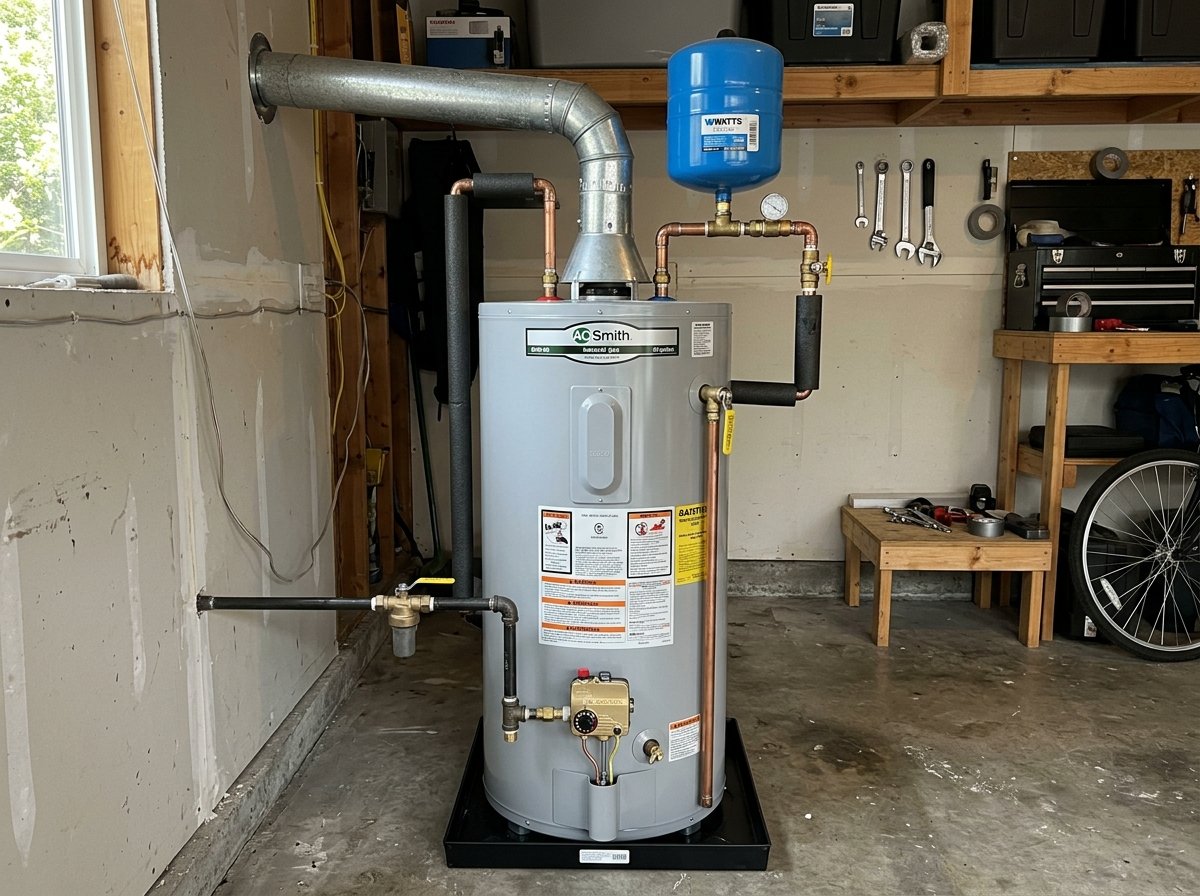
- Check the age and condition of your existing tank.
- Consider household hot water demand and recovery rate.
- Review venting, gas supply, and installation compatibility.
Signs It May Be Time to Replace Your Gas Water Heater
Not every gas water heater problem requires a new unit. However, certain warning signs can indicate that replacement may be more practical than continued repairs.
The Storage Tank Is Leaking
A leak from the tank body itself often indicates deterioration that cannot be reliably corrected through a routine component repair. External plumbing leaks are different and may be repairable.
The Unit Requires Frequent Repairs
Repeated service problems can make continued repairs less attractive, particularly when several components are deteriorating.
The Heater Is Near or Beyond Its Expected Service Life
Many conventional gas storage water heaters last roughly 8–12 years, although actual service life varies. Age is one factor, not an automatic reason for replacement.
Hot Water Supply No Longer Meets Household Needs
A change in household size or hot water usage may make the existing tank capacity unsuitable.
Corrosion or Deterioration Is Visible
Rust, corrosion, or deterioration around the tank or connections deserves evaluation to determine the extent of the problem.
Repair Costs Are Becoming Difficult to Justify
When a repair is expensive relative to the condition and remaining useful life of the heater, replacement may provide better long-term value.
Should You Repair or Replace Your Gas Water Heater?
The right decision depends on the equipment's condition, the diagnosed problem, and the cost of available options.
Repair May Be Appropriate
- A replaceable component has failed (such as a thermocouple, pilot assembly, or temperature control valve).
- The storage tank is sound with zero internal corrosion, seam seepage, or base pooling.
- The unit has otherwise been dependable throughout its working history.
- The repair cost is reasonable relative to the unit's remaining operational lifespan.
- The equipment still comfortably meets household hot water volume requirements.
Replacement May Be Appropriate
- The storage tank has failed, developed cracks, or is actively leaking from the inner cylinder.
- The equipment suffers from repeated breakdowns and persistent pilot or burner issues.
- Multiple components are deteriorating simultaneously (e.g., valve, venting, burner chamber).
- The current storage capacity is insufficient for your family's hot water routine.
- Repair costs are high relative to the price of a brand-new, warranted replacement heater.
How to Choose the Right Replacement Gas Water Heater
Tank size alone does not determine whether a heater can meet a household's hot water needs. Professional sizing balances physical storage volume, heat energy input, and usage patterns.
Storage Tank Capacity
Tank capacity indicates how much water the heater stores (typically 40, 50, or 75 gallons in residential gas models). It represents your immediate reserve for morning showers and fixtures.
First-Hour Rating (FHR)
First-hour rating estimates how much hot water a storage water heater can deliver during a period of heavy use under specified test conditions, combining storage and recovery speed.
Household Demand
Accurate sizing considers the total number of occupants and overlapping peak demands, such as simultaneous showers, washing machines, and dishwashers running during morning hours.
Recovery Performance
Gas burners have distinct BTU/hr inputs (typically 34,000 to 50,000+ BTU) that determine how quickly incoming cold water can be brought up to set temperature after hot water is drawn.
Available Installation Space & Clearances
Modern high-efficiency tanks feature thicker insulation and larger outer jacket diameters than units manufactured a decade ago. The replacement unit must fit doorways, alcoves, utility closets, and maintain required manufacturer combustible clearances.
Gas Water Heater Options for Replacement
Explore the operational characteristics, installation requirements, and system considerations across common residential gas water heater categories.
What Needs to Be Checked Before Replacing a Gas Water Heater?
A replacement water heater must be compatible with the home's existing conditions and current applicable requirements. A new unit should not be assumed to fit simply because it has the same nominal tank capacity.
Existing Gas Supply & Piping Diameter
Gas pipe sizing (1/2" vs 3/4"), operating pressure, and gas shutoff valve condition must supply adequate fuel volume for the replacement unit's BTU rating.
Venting System Type & Condition
The chimney liner, double-wall Type B gas vent, or direct-vent configuration must have proper diameter, slope, and roof clearances without deterioration.
Combustion Air Requirements
Gas burners consume oxygen during combustion. Enclosed utility closets require upper and lower combustion air louver vents to prevent backdrafting.
Water Supply & Shutoff Valves
Cold water isolation valve functionality, dielectric unions, flexible water connectors, and thermal expansion tank provisions require evaluation.
Installation Clearances & Doorways
Modern foam-insulated water heaters are wider and taller than older tanks. Physical dimensions must clear doorways and maintain side/top clearances.
California Seismic Restraint Strapping
California Plumbing Code mandates two heavy-gauge steel earthquake straps bolted into wall studs in the upper and lower third of the storage cylinder.
T&P Relief Valve & Drain Pan Discharge
Temperature & pressure safety valves require rigid, gravity-sloped copper or CPVC discharge piping terminating safely to an approved exterior location or drain pan.
Access Route for Equipment Removal
Hallways, stairs, crawlspaces, or attic access ladders must safely support dolly transport for removing the heavy, water-logged old tank and placing the new unit.
Gas Venting and Safety During Water Heater Replacement
Natural gas water heaters involve combustible fuel and combustion byproducts including carbon monoxide (CO), nitrogen dioxide, and water vapor. Replacement requires strict adherence to manufacturer specifications, draft hood alignment, combustion air sizing, and venting integrity.
- Draft hood spillage verification
- Gas leak soap-bubble & electronic testing
- Carbon monoxide detector verification
- City inspection readiness compliance
What Affects Gas Water Heater Replacement Cost in Long Beach?
The total cost depends on the selected equipment, installation conditions, and required work. A professional evaluation helps establish a realistic scope and estimate without hidden surprises.
Equipment Capacity & Tank Size
Different storage capacities (e.g., 40-gallon vs. 50-gallon vs. 75-gallon commercial-grade residential units) have different baseline equipment costs.
Efficiency Rating & Model Selection
Higher-efficiency atmospheric units, electronic damper models, or power-vent systems involve different manufacturing technology and component costs.
Venting Modifications & Material Requirements
Re-connecting to an existing B-vent chimney is straightforward, whereas replacing degraded flue pipes, modifying roof boots, or running power-vent lines alters project scope.
Gas Piping & Water Connection Upgrades
Replacing corroded shutoff valves, adding dielectric unions, installing an expansion tank, or upgrading flexible stainless lines ensures code compliance.
Installation Location & Accessibility
A ground-level garage installation typically requires less labor than carrying equipment through narrow attic ladders, basements, or compact hallway closets.
Local Permitting & Inspection Fees
City of Long Beach building safety permits and third-party municipal plumbing inspection fees represent standard project administrative requirements.
Old Unit Removal, Draining & Disposal
Draining sediment-heavy water, disconnecting the fuel supply safely, hauling away the old cylinder, and environmentally responsible metal recycling.
What Happens During a Gas Water Heater Replacement?
Understand the structured step-by-step process when coordinating with a qualified local water heater specialist for your Long Beach home.
Initial Phone Inquiry
The homeowner describes the current water heater and the reason replacement is being considered (active leak, advanced age, or failing hot water capacity).
Existing Equipment Assessment
A qualified service specialist may evaluate the tank condition, gas shutoff valve, venting configuration, clearances, and household hot water demands.
Equipment Selection & Proposal Review
Appropriate replacement options are considered based on capacity, efficiency, and installation compatibility, followed by a clear project scope review.
Old Equipment Disconnection & Removal
The gas line is isolated and capped, the storage tank is drained, plumbing connections are severed, and the old unit is safely hauled away.
New Equipment Installation
The replacement unit is installed according to manufacturer instructions, seismic strapping is secured, gas lines connected, and venting verified.
Testing & Final Operational Review
The specialist fills the tank, purges air, lights the pilot/burner, tests for gas leaks and draft hood venting, adjusts temperature, and explains maintenance.
Gas Water Heater Replacement Considerations for Long Beach Homes
Local architecture, coastal conditions, and California building regulations introduce specific requirements when replacing a gas water heater in Long Beach.
Garage vs. Interior Utility Closet Access
In Long Beach homes, water heaters in garages must adhere to physical collision barrier protections and, for older models, elevation requirements if flammable vapors could be present. Interior closet installations require strict combustion-air ventilation.
California Title 24 & Seismic Restraints
California Health and Safety Code mandates seismic bracing to resist earthquake movement. Replacement units must also meet Title 24 California energy standards and Ultra-Low NOx emissions limits established by the South Coast Air Quality Management District (SCAQMD).
City of Long Beach Permitting Requirements
Water heater replacement may require permits and inspections depending on the work and applicable local requirements. Confirm current requirements with the City of Long Beach Building and Safety Bureau or a qualified local professional.
Questions to Ask Before Choosing a Replacement Water Heater
Equip yourself with practical questions to ensure you select the most dependable, properly sized gas water heater for your home.
Gas Water Heater Replacement Assistance in Long Beach and Nearby Communities
Connecting homeowners across Long Beach and adjacent coastal South Bay and Orange County communities with qualified water heater service specialists.
Frequently Asked Questions About Gas Water Heater Replacement
Common questions regarding tank sizing, equipment longevity, venting compatibility, and replacement planning.
Replacement may be appropriate when the storage tank is leaking, the unit has recurring failures, or repairs are no longer economical. Age and overall condition should be considered together.
Many conventional gas storage water heaters last roughly 8–12 years, but actual service life varies with maintenance, water conditions, installation, and usage.
Possibly, but the correct choice depends on household demand, installation space, venting, gas supply compatibility, and applicable requirements.
Not always. Venting requirements depend on the model and system configuration. A professional should confirm compatibility.
A conversion may be possible, but it can require changes to gas supply, venting, plumbing, or electrical connections. Professional evaluation is important.
Equipment size, efficiency, venting, installation location, connection modifications, permits, and removal of the old unit can all affect cost.
Permit requirements depend on current local rules and the scope of work. Confirm the requirements with the City of Long Beach Building and Safety Bureau or a qualified local professional.
The best choice depends on the problem, tank condition, repair cost, reliability, and expected remaining service life.
Explore Related Water Heater Services
Discover other residential water heater repair, replacement, and installation services available in Long Beach.
Gas Water Heater Repair
Professional troubleshooting for pilot lights, gas control valves, burners, and temperature issues.
View Gas Repair Guide →General Water Heater Replacement
Comprehensive tank replacement guidance across gas, electric, and high-capacity residential systems.
View Replacement Hub →Water Heater Installation
Professional installation services for new construction, property remodels, and energy upgrades.
View Installation Guide →Emergency Water Heater Repair
Urgent phone coordination for active tank leaks, burst fittings, and sudden loss of hot water.
View Emergency Service →Tankless Water Heater Services
Continuous hot water solutions, annual descaling, conversions, and tankless repairs.
View Tankless Hub →Electric Water Heater Repair
Dedicated diagnostics for 240V dual heating elements, thermostats, and electrical controls.
View Electric Repair Guide →Considering Gas Water Heater Replacement in Long Beach?
Whether your current gas water heater is leaking, aging, or no longer meeting your household's hot water needs, call Long Beach Water Heater to discuss available professional replacement assistance.
Phone-based inquiries. Service availability and arrangements depend on the specialist.