Electric Water Heater Repair in Long Beach, CA
When your electric water heater stops producing hot water, repeatedly trips the 240-volt circuit breaker, or leaves your family with lukewarm showers, prompt professional diagnosis is essential. Long Beach Water Heater Services connects property owners directly with certified, insured plumbing and electrical specialists experienced in troubleshooting heating elements, dual thermostats, high-limit reset switches, and electrical wiring across Long Beach.
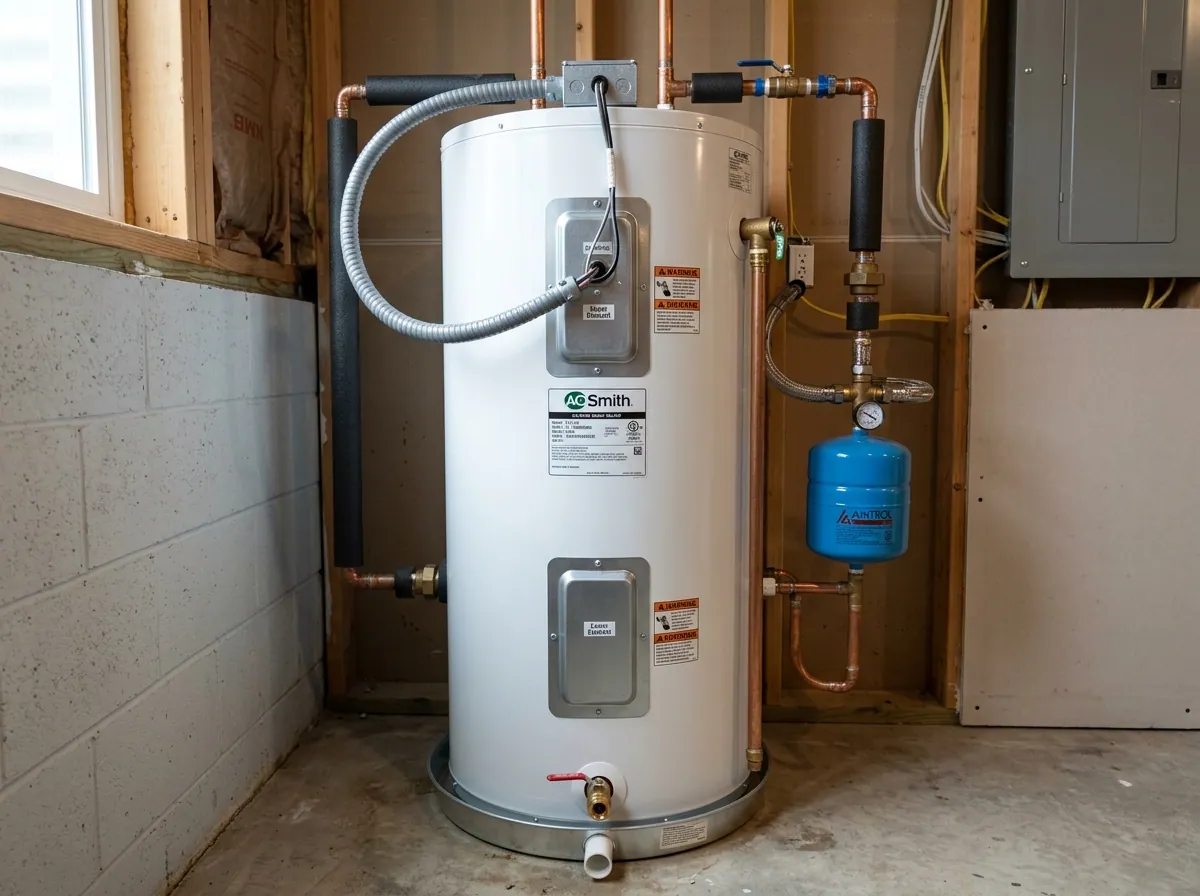
Professional Electric Water Heater Repair Services in Long Beach
Electric storage water heaters provide dependable, quiet hot water for numerous condominiums, multi-family complexes, historic bungalows, and all-electric single-family homes across Long Beach, California. Operating on dedicated 240-volt electrical circuits through Southern California Edison (SCE), these systems rely on a pair of high-wattage electric immersion elements, staged thermostats, and safety cutoffs rather than combustible fossil fuels. However, intense thermal stress, electrical cycling, and the dense mineral scale characteristic of Southern California tap water eventually cause mechanical and electrical components to fail.
High-Voltage 240V Diagnostics
Executing an effective electric water heater repair requires comprehensive knowledge of both plumbing mechanics and high-voltage electrical safety. Unlike gas water heaters that rely on pilot lights and thermocouple millivolts, electric systems carry dangerous 240-volt current at up to 30 amps.
Testing live electrical terminals, inspecting high-limit switches, and evaluating immersion elements requires calibrated digital multimeters, specialized element wrenches, and strict adherence to electrical safety protocols.
Local Independent Specialists
Long Beach Water Heater Services bridges the gap between frustrated property owners and qualified, local plumbing and electrical contractors.
Whether you require prompt residential electric water heater repair for a 50-gallon tank in Bixby Knolls, emergency diagnostics for a luxury condo in Belmont Shore, or advice on top rated electric water heater repair, local contractors deliver transparent diagnostics, honest repair-versus-replacement assessments, and lasting repairs.
Common Electric Water Heater Problems We Address
Electric water heaters provide reliable performance for years, but when component degradation occurs, specific operating symptoms alert homeowners that service is needed. Recognizing these warning signs allows you to request professional electric hot water heater repair before a minor electrical glitch escalates into water damage or total heating loss:
Total Absence of Hot Water
When faucets produce only ice-cold water, power has completely stopped reaching the heating elements. This symptom usually points to a tripped 240V double-pole circuit breaker, an activated Emergency Cutoff (ECO) reset switch, a burnt upper thermostat, or a severed power connection.
Insufficient or Rapidly Running Out of Hot Water
If showers start warm but turn freezing within two to three minutes, the lower heating element or lower thermostat has likely failed. The upper element only heats the top third of the tank, leaving the majority of storage capacity cold.
Inconsistent Temperature Fluctuations
Water cycling randomly between scalding hot and tepid indicates electrical resistance drift or faulty thermostat bimetallic contact discs. When thermostat contacts pit or corrode, they fail to regulate consistent tank water temperatures.
Loud Knocking, Hissing, or Boiling Sounds
Long Beach tap water contains dissolved calcium carbonate that settles around the lower immersion element. As trapped water boils beneath mineral scale, it creates distinct knocking, popping, or tea-kettle whistling sounds, causing premature element burnout.
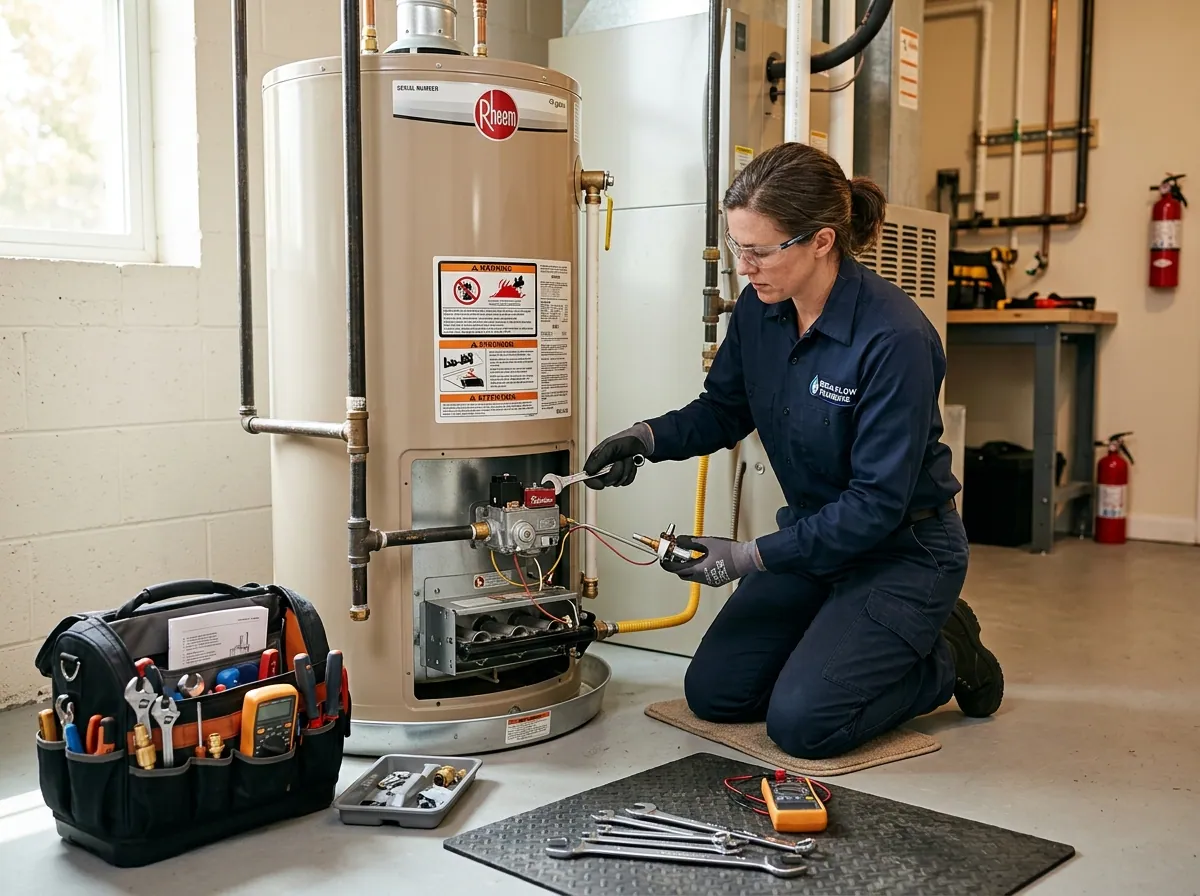
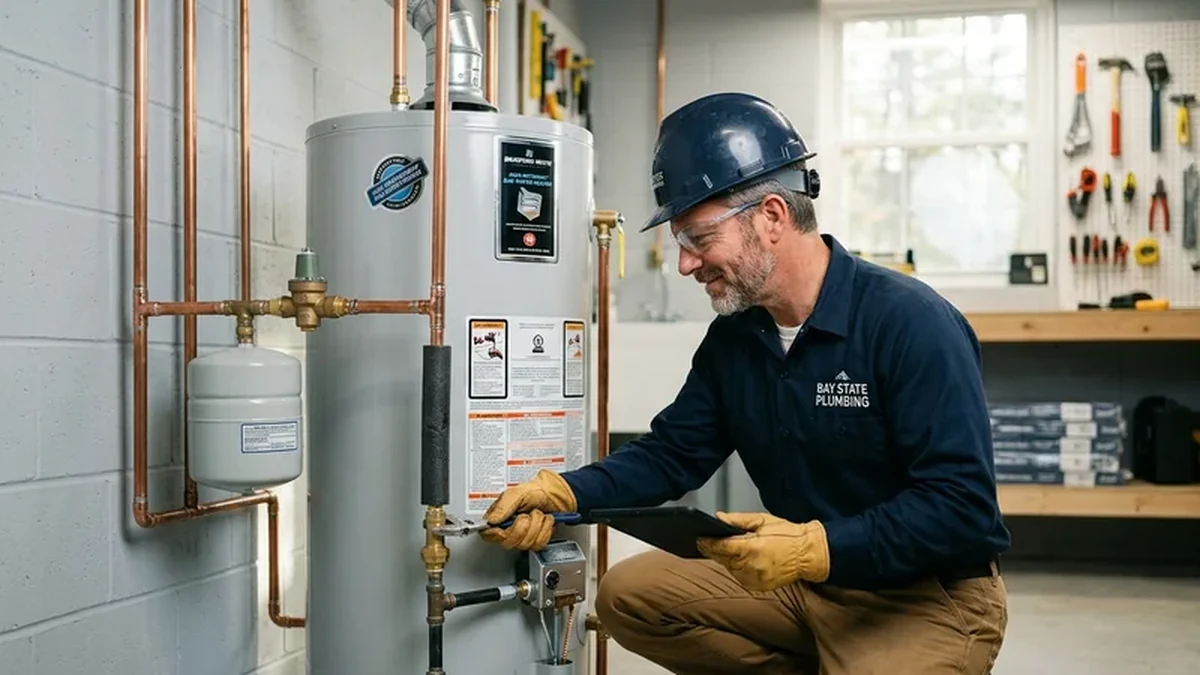
A professional technician testing terminal connections and plumbing fittings on a residential electric storage water heater in Long Beach, CA.
Electric Water Heater Not Producing Hot Water?
Discovering that your electric water heater is not heating can instantly disrupt daily household routines. Because electric water heaters function as integrated electro-mechanical appliances, complete hot water failure can stem from electrical supply interruptions, safety device activations, or component failures:
Tripped 240V Double-Pole Circuit Breaker
Electric water heaters draw between 3,500 and 5,500 watts of power across a dedicated 30-amp, 240-volt circuit breaker. An electrical power surge, loose terminal screw, or internal short circuit inside a heating element will cause the breaker to trip instantly to protect the residence from an electrical fire.
Tripped High-Limit Reset Switch (ECO)
Located directly on the upper thermostat behind the upper metal access panel, the red High-Limit Energy Cutoff (ECO) button acts as a critical safety mechanism. If water temperatures exceed 170°F due to a stuck thermostat switch, the ECO trips, severing all 240V power to prevent scalding steam explosions.
Burnt-Out Upper Heating Element
Standard residential electric water heaters utilize non-simultaneous element staging. Power routes directly to the upper thermostat and upper heating element first. If the upper element burns out or breaks continuity, the circuit never completes, and electrical current cannot route down to the lower element.
Defective Upper Thermostat Switch
The upper thermostat contains an internal single-pole, double-throw (SPDT) switch that directs electrical current back and forth between upper and lower elements. Mechanical failure or scorched contact points inside this switch prevent electricity from reaching either heating element.
If you discover that resetting the red button or flipping the breaker only restores hot water for a few hours before tripping again, do not continue resetting it. Repeated trips indicate an active electrical short circuit or severe thermostat malfunction that requires professional electrical diagnosis.
Electric Water Heater Heating Element Problems
Heating elements represent the primary workhorses of your electric water heater. Constructed from a coiled nichrome resistance wire encased within an insulating magnesium oxide powder and sheathed in copper or high-grade Incoloy alloy, these immersion rods convert 240V electrical current into intense heat. When homeowners encounter heating failures, electric water heater heating element repair and replacement are the most common solutions.
| Heating Element Position | Primary Operating Function | Symptoms of Element Burnout | Diagnostic Test Method |
|---|---|---|---|
| Upper Heating Element | Heats the top 30% of tank volume first upon cold fill; controls primary power staging. | Complete total lack of hot water; cold water at every faucet. | Multimeter resistance test across terminals; open loop (infinite ohms / OL) indicates broken internal wire. |
| Lower Heating Element | Heats remaining 70% of tank after upper thermostat satisfies; sustains continuous hot water volume. | Water heats lukewarm; showers turn cold in 2 to 3 minutes; very slow recovery rate. | Multimeter continuity check; normal reading is 10 to 16 ohms for standard 4500W element. |
Why Heating Elements Fail in Long Beach Homes
In Long Beach and neighboring coastal communities, water mineral hardness is the leading cause of element failure. As hard minerals precipitate out of heated water, they form a thick, rock-like crust over the lower element. This mineral blanket insulates the heating element from the surrounding water, causing the internal nichrome wire to overheat to extreme temperatures until it melts, fractures, or splits its outer sheath.
Another frequent failure cause is "dry-firing." If electrical power is restored to a newly drained or partially filled water heater, an energized element will overheat and burn out in less than 30 seconds without surrounding water to dissipate heat. Professional technicians always verify complete tank filling before restoring electrical breakers.
Electric Water Heater Thermostat and Control Problems
Modern residential electric storage water heaters utilize dual thermostats that work in coordinated harmony to regulate temperature safely. When you experience erratic water temperatures, scalding output, or sudden power shutoffs, professional electric water heater thermostat repair or replacement resolves the underlying control malfunction.
Dual Thermostat Staging Operation
The upper thermostat acts as the master controller, directing current to the upper element until water in the top third of the tank reaches the setpoint (typically 120°F). Once satisfied, the upper thermostat switches power down to the lower thermostat, which energizes the lower element to heat the remainder of the tank. If either control fails to switch, hot water production collapses.
High-Limit Energy Cutoff (ECO) Tripping
The red ECO button mounted on the upper thermostat is a mandatory emergency safety disconnect. It trips whenever tank water approaches 170°F to 180°F. A tripping ECO almost always indicates that a thermostat contact has welded shut or that a shorted heating element is continuously receiving current even when the thermostat has signaled to turn off.
Thermostat Bimetal Drift & Calibration
Thermostats detect water temperature through a sensitive bimetallic concave disc pressed firmly against the outer steel wall of the tank. Over years of thermal expansion and contraction, this disc can loosen, oxidize, or suffer calibration drift, causing inaccurate readings and fluctuating water temperatures.
Thermostat Replacement vs. Recalibration
Thermostats are factory-sealed safety components. Attempting to bend, clean, or recalibrate internal contacts is unsafe. When a thermostat switch demonstrates high electrical resistance or fails continuity testing, licensed technicians replace the assembly with an OEM-spec replacement part to maintain certified safety standards.
Electrical Supply and Circuit Breaker Issues
Water heaters represent one of the heaviest electrical loads in a residential property. A standard 4,500-watt residential water heater draws 18.75 amps across two 120-volt legs of a 240-volt split-phase service. Any deterioration in your home's electrical distribution infrastructure can mimic water heater mechanical failure:
- Tripping Double-Pole Circuit Breakers: When an immersion heating element fractures, 240-volt current leaks into the surrounding water, causing a direct path to ground. This ground fault instantly trips the 30-amp double-pole breaker. If the breaker trips again immediately after reset, an electrical short is present.
- Scorched Terminal Connections & Loose Lugs: Due to continuous thermal expansion cycles, screw terminals securing the heavy 10-gauge copper branch circuit wires to the upper thermostat can loosen over time. Loose connections create high electrical resistance, resulting in arcing, melted insulation, burned wire nuts, and burnt thermostat bodies.
- Undersized Wiring or Dedicated Circuit Sharing: Building codes mandate that residential electric water heaters operate on an independent, dedicated branch circuit with 10 AWG copper wire and a 30-amp breaker. In older Long Beach properties with modified electrical wiring, improper shared circuits can lead to voltage drops and nuisance tripping.
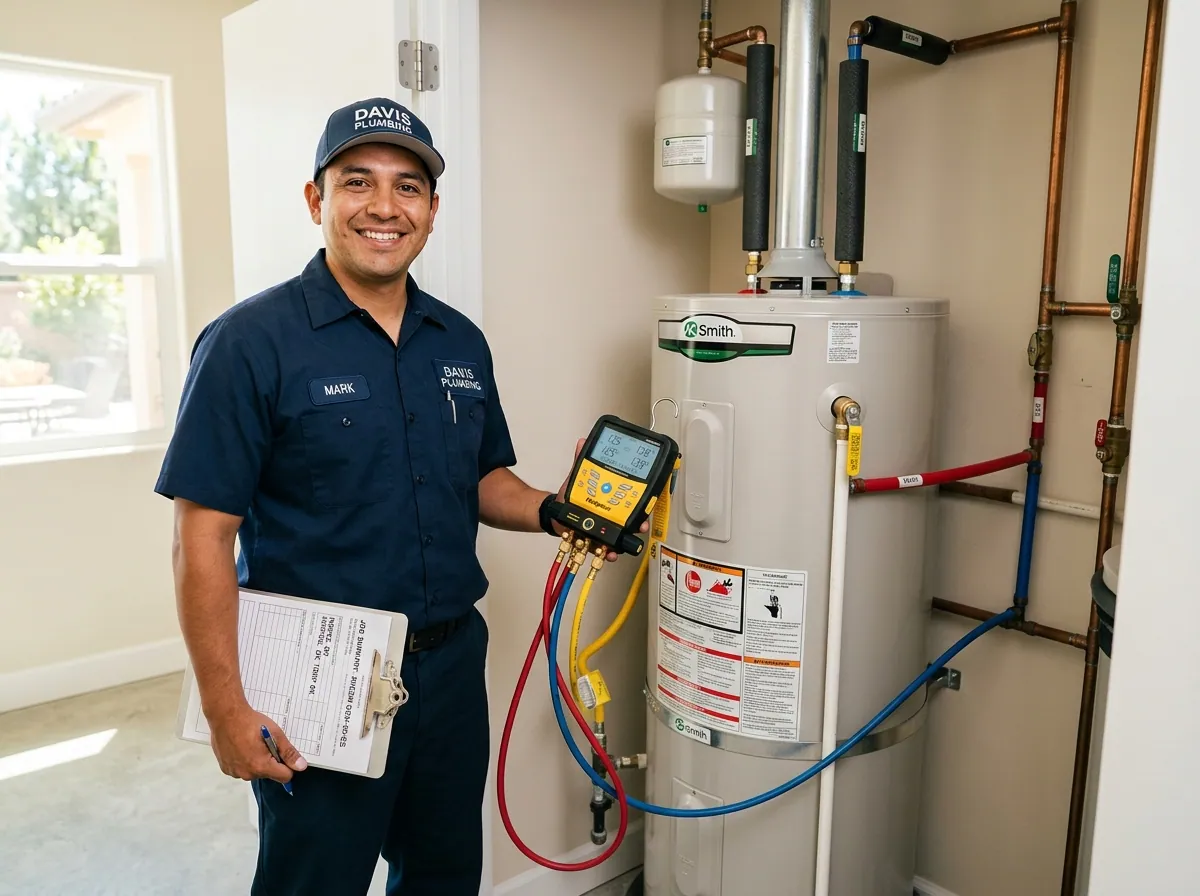
A certified technician utilizing a digital multimeter to test voltage, continuity, and resistance across electric water heater terminals in Long Beach.
Electric Water Heater Leaks and Tank Integrity
Discovering water pooling beneath an electric water heater is a major concern for homeowners. Determining whether the appliance can be repaired or must be replaced depends entirely on pinpointing the exact source of moisture:
Heating Element Gasket Leaks
Both upper and lower heating elements screw or bolt directly into female spuds welded into the side of the tank, sealed by heavy-duty rubber O-ring gaskets. Over time, heat and pressure can degrade these gaskets, causing water to weep past the threads and drip down behind the electrical access panels. Replacing the gasket and element solves the leak without replacing the tank.
Temperature & Pressure (T&P) Relief Valve
The T&P relief valve is an essential safety valve designed to relieve pressure at 150 PSI or 210°F. If the valve drips constantly, it may be fouled with mineral scale, suffering from thermal expansion pressure spikes, or defective. Replacing the brass T&P valve is an inexpensive, routine repair.
Plumbing Inlet & Outlet Nipple Connections
Corrosion often develops at the top cold water inlet and hot water outlet nipples where copper piping connects to the steel tank. Galvanic corrosion between dissimilar metals can compromise fittings. Plumbers can repair these leaks by installing fresh dielectric unions and flexible stainless steel connectors.
Internal Steel Tank Ruptures (Irreparable)
If water is leaking directly from the bottom seam of the metal outer jacket or bubbling up beneath the bottom insulation, the internal glass-lined steel pressure vessel has rusted through. Once the internal tank cracks, it cannot be welded or sealed; an immediate tank replacement is necessary to prevent catastrophic structural flooding.
How Much Does Electric Water Heater Repair Cost in Long Beach?
In Long Beach and the surrounding Southern California coastal basin, standard residential electric water heater repair costs generally range between $150 and $450 for typical component failures. Because electric storage water heaters feature modular components, fixing a heating issue is usually much more affordable than a full system replacement, provided the internal tank remains structurally sound.
Below is an itemized breakdown of common electric water heater repairs and estimated local price ranges for 2026:
| Repair Service / Component Replacement | Typical Parts Cost | Estimated Labor & Diagnostics | Total Estimated Cost Range |
|---|---|---|---|
| Single Heating Element Replacement | $25 – $55 | $140 – $220 | $165 – $275 |
| Dual Heating Element Replacement (Upper & Lower) | $50 – $100 | $170 – $275 | $220 – $375 |
| Thermostat Replacement (Upper or Lower) | $30 – $65 | $130 – $210 | $160 – $275 |
| Complete Dual Thermostat & High-Limit Overhaul | $60 – $120 | $160 – $250 | $220 – $370 |
| Temperature & Pressure (T&P) Valve Replacement | $35 – $70 | $125 – $200 | $160 – $270 |
| Terminal Wiring Rebuild / Electrical Disconnect Repair | $20 – $50 | $140 – $230 | $160 – $280 |
| Tank Sediment Flush & Anode Inspection | $15 – $40 | $135 – $210 | $150 – $250 |
| Full Tank Replacement (When Tank Ruptured) | $750 – $1,400 | $650 – $1,100 | $1,400 – $2,500+ |
Key Variables Influencing Repair Pricing
- Accessibility of the Water Heater: Units situated in open garages or spacious utility rooms require less diagnostic labor than water heaters tucked into tight attics, crawlspaces, or historic hallway closets.
- Extent of Mineral Scale Accumulation: If an element has become encased in a solid block of calcified sediment, draining and removing the element may require chemical descaling or mechanical extraction techniques.
- Replacement Part Quality: Standard copper elements cost less upfront, while premium high-watt-density Incoloy or resistored elements provide superior corrosion resistance against Long Beach municipal water hardness.
Electric Water Heater Repair vs. Replacement Decision Guide
When faced with an electric water heater malfunction, homeowners frequently evaluate whether it is smarter to invest in a targeted repair or replace the entire appliance. Plumbing professionals utilize the 50% Rule: if the water heater is more than 8 to 10 years old and the repair quote exceeds 50% of the cost of a brand-new unit, replacing the appliance is the more economical, reliable investment.
| Evaluation Factor | When to Repair Your Electric Unit | When to Replace Your Electric Unit |
|---|---|---|
| Appliance Age | Under 8 years old; tank body and glass lining in sound condition. | 10 to 12+ years old; approaching or exceeding manufacturer design lifespan. |
| Nature of Problem | Burned-out element, tripped ECO switch, leaking valve, or failed thermostat. | Leaking steel tank body, bottom weld seam corrosion, or repeated multi-part failures. |
| Repair Frequency | First or second minor component issue over the appliance's lifespan. | Frequent service calls, chronic breaker tripping, and recurring heating outages. |
| Internal Tank Condition | Clear water output; minimal sediment during annual drainage flush. | Rust-colored water, metallic odor, or dense calcified scale blocking elements. |
| Energy Efficiency | Current unit meets baseline energy standards; utility bills remain stable. | Older low-efficiency tank; upgrading to high-efficiency or hybrid heat pump saves money. |
If your water heater has reached the end of its useful service life, browse our comprehensive guide to water heater replacement in Long Beach or explore modern upgrades with our electric water heater installation services.
Our Professional Electric Water Heater Repair Process
When you contact Long Beach Water Heater Services, we connect you with licensed plumbing and electrical contractors who execute a systematic 8-step diagnostic and repair process engineered for maximum safety and lasting performance:
Initial Telephone Assessment
Our telephone dispatch team gathers preliminary information regarding your water heater's brand, age, capacity, and current symptoms (e.g., no hot water, breaker tripping, or leaking) to dispatch an appropriately equipped local contractor.
Safety Lockout/Tagout & Voltage Verification
Upon arrival, the technician locates the dedicated double-pole 240V breaker, switches off power, removes access covers, and verifies zero voltage at the upper thermostat terminals using a calibrated digital multimeter.
Comprehensive Multimeter Diagnostics
The technician tests continuity and resistance (ohms) across upper and lower heating elements, checks thermostat switches, evaluates high-limit ECO cutoff functionality, and tests for ground faults.
Plumbing & Tank Integrity Inspection
The contractor inspects the T&P relief valve, cold water inlet, hot water outlet nipples, drain valve, and tank outer jacket for signs of corrosion, weeping gaskets, or structural tank leaks.
Upfront Written Estimate
You receive a clear, upfront written estimate detailing recommended repairs, required OEM-spec replacement components, and total labor costs before any work begins.
Precision Component Replacement
If replacing heating elements, the technician drains water below the port, extracts the failed component, cleans the threaded spud, installs a new element with a fresh gasket, or mounts fresh thermostats with thermal paste.
Tank Refill & Dry-Fire Prevention
The technician turns on the cold water supply and opens hot water faucets throughout the home to purge all air from the system. Power is never restored until water flows steadily from open faucets, eliminating dry-fire risk.
Live Electrical Load Testing & Calibration
Power is restored, and the technician measures live amperage draw using a clamp meter to confirm proper staging. Thermostats are calibrated to a safe 120°F, covers reinstalled, and the work area left clean.
Electric Water Heater Safety Considerations
Operating and maintaining an electric water heater involves serious electrical and thermal safety hazards. Understanding these risks highlights why DIY troubleshooting can be hazardous to homeowners and property structures:
240-Volt High Voltage Hazards
Unlike 120-volt wall outlets, residential electric water heaters utilize 240-volt split-phase circuits capable of delivering lethal electrical shocks. Contact with energized terminals can cause ventricular fibrillation, severe burns, or electrocution. Never open metal access panels without verifying power disconnect.
Fire Risks from Electrical Arcing
High current draw combined with loose terminal screws creates intense localized electrical resistance and arcing. Arcing can melt wiring insulation, scorch thermostat plastic bodies, and ignite nearby drywall or framing studs if not properly terminated with approved connectors.
Thermal Scalding Dangers
Water heated above 120°F can cause third-degree burns within seconds, particularly to young children and elderly residents. If a thermostat switch fails closed, water can heat to near-boiling temperatures. Certified technicians calibrate thermostats precisely to 120°F per safety codes.
T&P Explosive Pressure Hazards
An electric water heater is a closed pressure vessel. If thermostats malfunction and heat water continuously while the T&P relief valve is blocked or capped, internal pressure can cause a violent tank explosion. Safety valves must never be plugged, capped, or modified.
Electric Water Heater Maintenance Tips for Long Beach Homeowners
Practicing routine preventive maintenance extends the operational lifespan of your electric water heater, maintains peak electrical efficiency, and minimizes unexpected emergency repairs. Licensed plumbing professionals recommend the following high-level homeowner practices:
- Annual Tank Sediment Flushing: Due to coastal Southern California water hardness, calcium scale settles heavily at the bottom of the tank. Draining a few gallons of water through the bottom brass drain valve every 6 to 12 months flushes loose sediment before it calcifies around the lower heating element.
- Inspect the Temperature & Pressure Valve: Visually check the T&P relief valve discharge line for steady dripping. You can gently lift the test lever once a year to ensure water discharges freely and snaps shut cleanly (have a bucket ready beneath the discharge tube).
- Inspect Access Covers for Moisture or Heat Stains: Periodically glance at the upper and lower metal access covers on your water heater. If you observe water staining, rust trails, or scorched paint, an internal element gasket leak or electrical overheating is present and requires professional attention.
- Check the Sacrificial Anode Rod: The internal magnesium or aluminum anode rod sacrifices itself to protect the steel tank from rust. Having a plumber inspect the anode every 2 to 3 years and replace it when depleted adds years to your water heater's operational life.
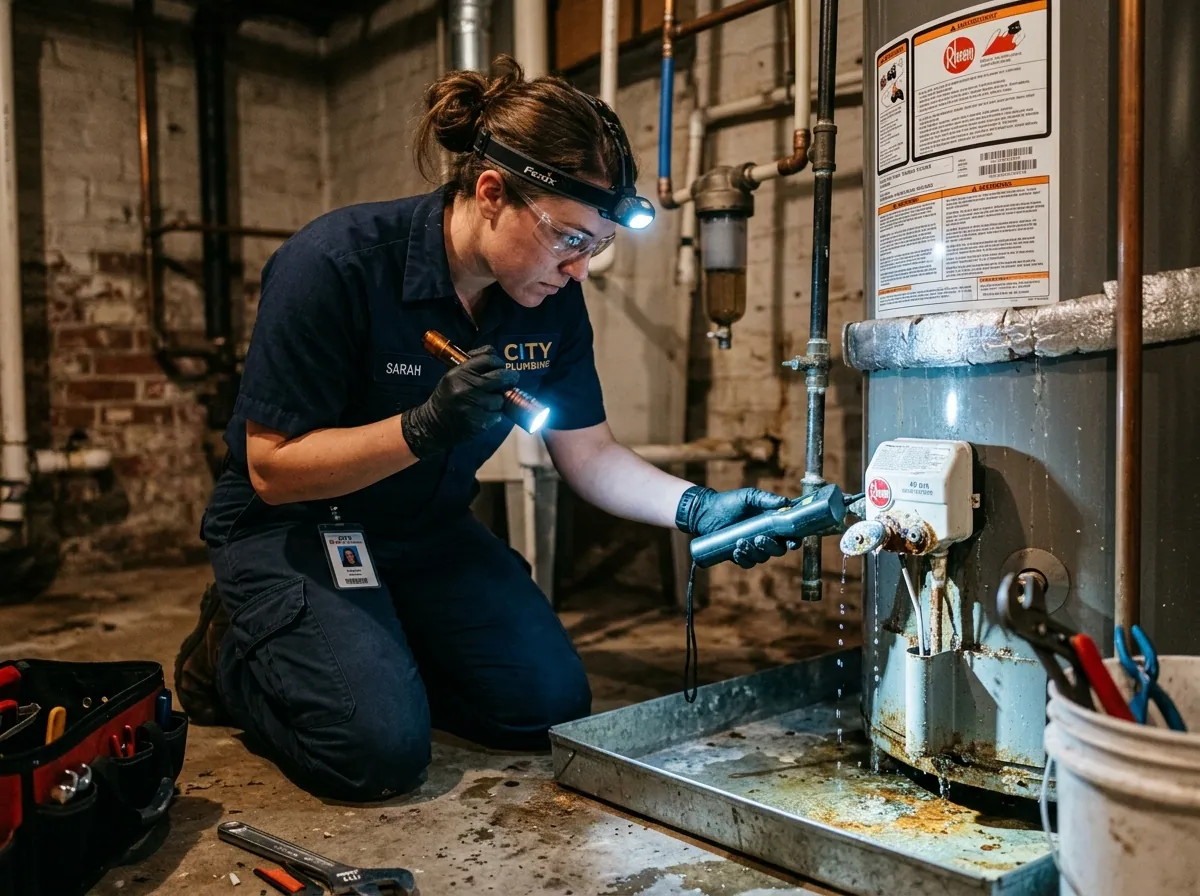
A prompt emergency technician assessing relief valve discharge and tank pressure to safeguard homeowner property.
Local Service Considerations for Long Beach & Coastal Los Angeles County
Operating an electric water heater in Long Beach involves distinct regional factors, from coastal marine environmental conditions to municipal building codes:
- Southern California Edison (SCE) Time-of-Use Rates: Many Long Beach homes operate on SCE Time-of-Use (TOU) electrical rate plans. An improperly functioning water heater with a grounded element running continuously can cause massive spikes in your monthly electricity bill. Restoring proper thermostat staging ensures optimal energy consumption.
- Coastal Marine Air Corrosion: Properties in coastal neighborhoods such as Belmont Shore, Naples, and Peninsula experience airborne salt spray and elevated humidity. High moisture levels accelerate galvanic corrosion on exterior electrical conduit fittings, junction boxes, and water pipe connections.
- Title 24 & Seismic Restraint Mandates: California Plumbing Code mandates double seismic strapping secured into structural studs in the upper and lower third zones of the water heater, along with thermal expansion tanks on closed-loop plumbing systems.
Neighborhood Coverage Across Long Beach
Long Beach Water Heater Services connects property owners searching for electric water heater repair near me and electric hot water heater repair near me with certified local contractors across every neighborhood. Knowing how and when to repair electric water heater systems promptly protects your property from water damage and electrical hazards:
Long Beach Districts
- Belmont Shore & Naples Island
- Bixby Knolls & California Heights
- Downtown Long Beach & Waterfront
- Los Altos & University Park
- Rose Park & Bluff Heights
- Alamitos Beach & Eastside
- Wrigley & Memorial Heights
- El Dorado Park & Park Estates
Adjacent Coastal Cities
- Lakewood
- Signal Hill
- Seal Beach
- Rossmoor
- Cypress
- Carson
- Los Alamitos
Providing dependable electric water heater repair referral dispatch across Long Beach and surrounding coastal communities.
Related Water Heater Services & Resources in Long Beach
Whether your home relies on traditional storage tanks or modern hybrid heat pumps, local specialists handle comprehensive water heater repair (gas & electric). Explore our complete directory of specialized water heating services across Long Beach:
Electric Water Heater Installation
Professional new installations, electrical panel upgrades, and high-efficiency electric tank replacements.
Tankless Water Heater Repair
Troubleshoot flow sensors, error codes, and mineral scale on units needing electric tankless water heater repair and electric tankless water heater repair near me.
Heat Pump Water Heater Services
Expert diagnostic assistance and maintenance for hybrid systems requiring electric heat pump water heater repair or new installations.
Emergency Water Heater Repair
Urgent telephone dispatch for sudden hot water outages, burst tanks, and active electrical shorts.
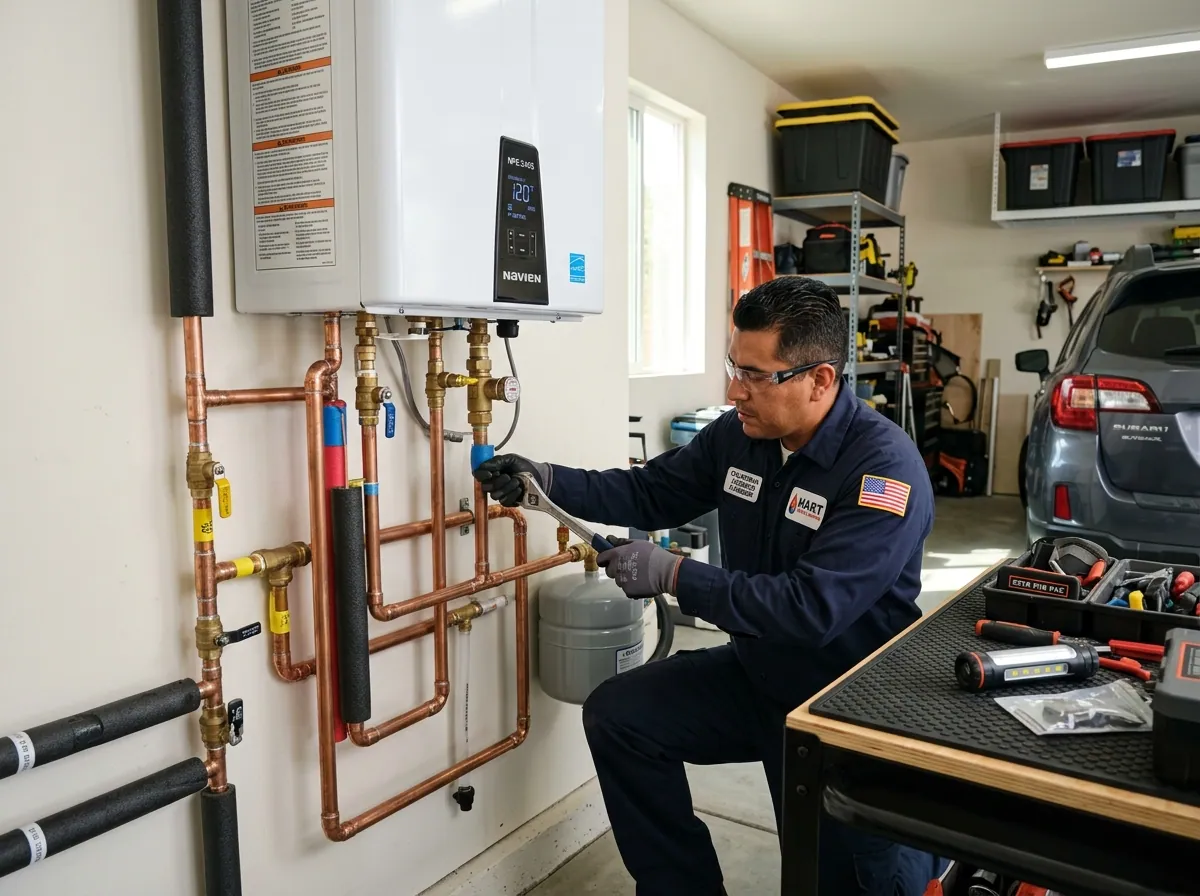
Considering tankless alternatives? Explore our dedicated tankless repair and conversion resources.
Frequently Asked Questions About Electric Water Heater Repair
Find answers to common questions regarding electric water heater diagnostics, repair costs, and safety in Long Beach, California:
In Long Beach, California, standard electric water heater repairs typically cost between $150 and $375. Minor repairs—such as replacing a single heating element, replacing a faulty thermostat, resetting an emergency high-limit cutoff (ECO), or installing a new temperature and pressure (T&P) relief valve—usually fall within this range. More complex electrical diagnostics, dual element replacements with heavy scale flushing, or wiring rebuilds range from $250 to $450. If the internal storage tank has ruptured, full replacement ($1,400 to $2,500+) is required.
When an electric water heater stops heating entirely, the most common culprit is a tripped 240-volt double-pole circuit breaker at your main electrical panel or a tripped red high-limit reset button (ECO) on the upper thermostat. Other primary causes include a burned-out upper heating element (which prevents power from ever reaching the lower element), a failed upper thermostat switch, or a loose wiring terminal connection. A qualified technician uses a multimeter to test voltage and continuity to pinpoint the exact failure point.
Electric water heater heating elements cannot be repaired once the internal nichrome resistance wire breaks, shorts to ground, or burns out; they must be completely replaced. Replacement is a standard, cost-effective service that involves shutting off 240V power, draining water below the element port, unthreading the old damaged element with a specialized socket wrench, installing a new screw-in or bolt-on element with a fresh rubber gasket, refilling the tank to prevent dry-firing, and restoring electrical power.
Common signs of a bad thermostat include water running lukewarm despite standard settings, water becoming scalding hot due to a stuck closed switch, the red high-limit ECO reset button tripping repeatedly, or complete loss of hot water. In dual-element electric tanks, a failed upper thermostat stops all heating, whereas a failed lower thermostat results in lukewarm showers that run out of hot water in just a couple of minutes.
An electric water heater repeatedly tripping its breaker usually indicates a short circuit to ground inside one of the heating elements. When mineral scale corrodes the outer copper or Incoloy sheath of an element, water penetrates the internal electrical wire, creating a direct ground fault that instantly trips the 30-amp breaker for safety. Other potential causes include loose terminal screws causing arcing, undersized electrical wiring, or a malfunctioning double-pole breaker.
It depends on the exact origin of the leak. Leaks originating from the temperature and pressure (T&P) relief valve, upper or lower heating element rubber gaskets, top copper pipe dielectric unions, or the bottom plastic drain valve can easily be repaired with new components. However, if water is pooling under the tank jacket due to an internal steel pressure vessel rupture or bottom weld seam failure, the unit cannot be repaired and requires immediate tank replacement.
Most residential electric water heater repairs take between 1 and 2 hours. This includes complete electrical safety verification (lockout/tagout with a voltage meter), draining necessary water, removing access covers, diagnosing thermostats and elements with a digital multimeter, installing replacement parts, refilling the tank to prevent dry-fire element failure, testing current draw under live electrical load, and cleaning the work area.
Technicians recommend the 50% Rule: if your electric water heater is under 8 to 10 years old and the repair cost is less than half the price of a replacement, repairing the unit (such as replacing an element or thermostat) is the most economical decision. Conversely, if your water heater is over 10 to 12 years old, exhibits heavy internal calcium scale, requires frequent component replacements, or has begun leaking from the tank body, replacing it with an energy-efficient modern system delivers greater long-term value.
Inconsistent hot water is most frequently caused by a burned-out lower heating element, meaning only the upper 30% of the tank heats water. Another frequent cause is a cracked or broken dip tube. The dip tube directs incoming cold water to the bottom of the tank; when it breaks, cold water mixes directly with heated water at the top outlet, causing showers to turn cold within a few minutes.
Yes. Residential electric water heaters operate on dedicated 240-volt electrical circuits drawing up to 30 amps—a voltage level capable of causing severe electrical shock, ventricular fibrillation, electrocution, or house fires if mishandled. Furthermore, turning on power before the tank is completely full of water causes instantaneous 'dry-fire' destruction of heating elements. Professional diagnostics by certified technicians protect your personal safety and home electrical infrastructure.
Expert Guides & Articles for Electric Water Heater Repair
Explore our in-depth diagnostic guides, code requirements, maintenance checklists, and cost breakdowns written specifically for Long Beach property owners.
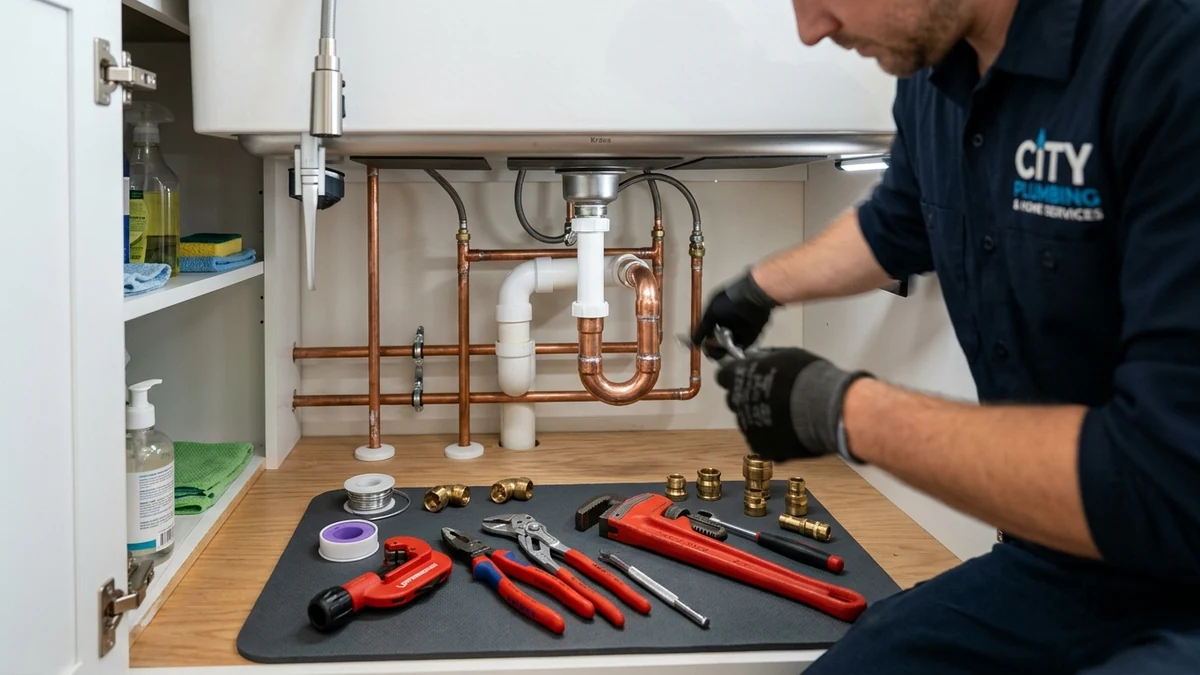
Electric Water Heater Has Power but No Hot Water: What Could Be Wrong?
Breaker is on but water is stone cold? Step-by-step diagnostic guide to tripped ECO reset switches, burned-out upper elements, and thermostat continuity failures.
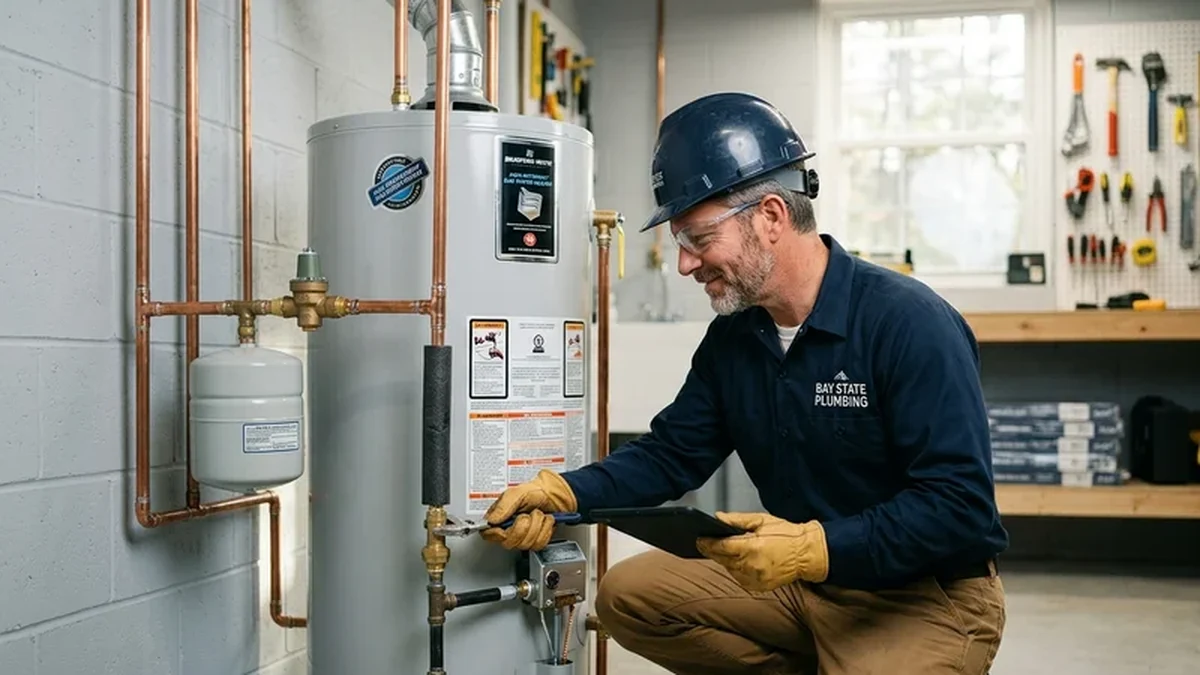
Signs of a Bad Electric Water Heater Heating Element: Diagnosis & Testing
Experiencing lukewarm water or slow recovery? Learn how to identify upper versus lower heating element burnout and how technicians test resistance with a multimeter.
Electric Water Heater Keeps Tripping the Breaker: Causes and Urgent Safety Advice
Does your water heater immediately trip the circuit breaker? Understand electrical short circuits, split heating element sheaths, moisture leaks, and panel issues.
Schedule Your Electric Water Heater Repair Consultation
Don't endure freezing showers, tripped electrical breakers, or scalding water. Call Long Beach Water Heater Services now to connect directly with licensed, certified plumbing and electrical contractors for fast, reliable electric water heater repair.