Tankless Water Heater Replacement in Long Beach, CA
Replace an Aging Tankless System With Equipment Matched to Your Home
If your tankless water heater is experiencing repeated shutdowns, declining hot water performance, or costly component problems, replacement may be worth considering. Long Beach Water Heater helps homeowners connect with service specialists who can evaluate existing tankless systems and discuss compatible replacement options.
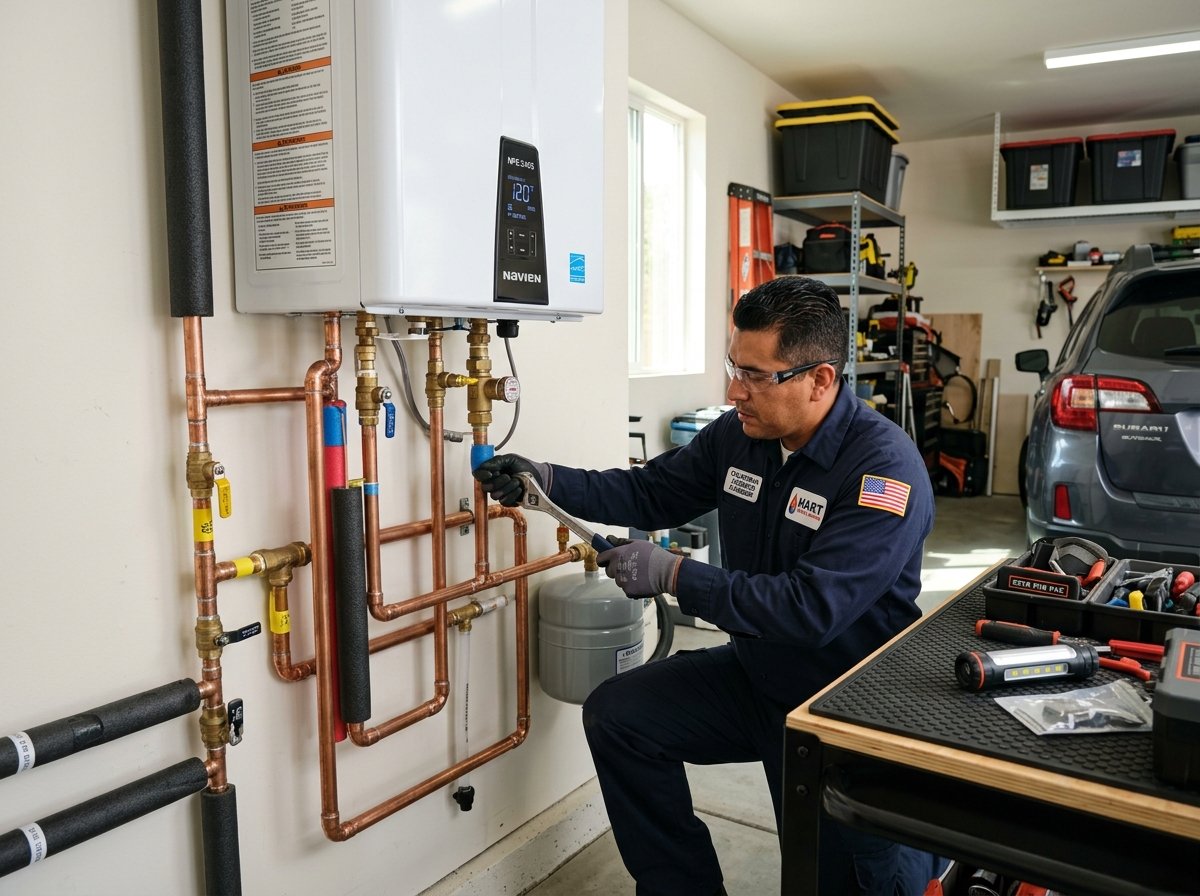
Signs Your Tankless Water Heater May Need Replacement
Tankless water heaters can often be serviced or repaired, but recurring failures, deteriorated components, or changing household needs may make replacement a better long-term option.
1. Repeated Shutdowns or Error Codes
Frequent shutdowns or recurring error codes can indicate unresolved component or system problems. Error codes vary by manufacturer and do not automatically mean replacement is necessary.
2. Declining Hot Water Performance
A tankless unit that struggles to maintain temperature or support normal household demand may have a performance problem, sizing limitation, or deteriorating component.
3. Expensive Heat Exchanger Problems
Heat exchanger deterioration or failure can be a significant repair consideration. The appropriate decision depends on the unit, warranty coverage, and repair cost.
4. Persistent Mineral Scale Problems
Mineral deposits can restrict heat transfer and affect performance. Maintenance may help in some cases, but severe or recurring damage may require a broader evaluation.
5. Frequent Component Repairs
Repeated repair costs may make replacement more attractive, particularly when the equipment is aging and multiple electronic or mechanical components begin to fail.
6. Household Hot Water Needs Have Changed
A unit that previously met household needs may no longer be suitable if simultaneous hot water demand has increased through home additions, new bathrooms, or larger family size.
Should You Repair or Replace Your Tankless Water Heater?
An error code, lack of hot water, or maintenance issue does not automatically mean a tankless water heater needs replacement. Accurate diagnosis matters.
Repair May Be Practical When
Targeted service resolves the diagnosed symptom economically.
- The fault involves a replaceable component (such as an ignition electrode, water flow sensor, or solenoid valve).
- The heat exchanger remains in sound, un-breached condition without internal pinhole leaks.
- The equipment has otherwise been dependable and maintained periodically.
- The estimated repair cost is reasonable relative to equipment age.
- The system still delivers satisfactory flow rates for current household routines.
Replacement May Be Worth Considering When
System degradation impacts overall dependability and efficiency.
- Major components, particularly the primary or secondary heat exchanger, are deteriorating.
- The unit suffers repeated, unpredictable shutdowns during showers or dishwashing.
- Replacement parts for obsolete or discontinued models are difficult to source.
- The current capacity no longer supports simultaneous fixtures, causing temperature drops.
- Repair expenses represent a large percentage of a modern high-efficiency upgrade.
How Much Hot Water Can a Tankless Water Heater Deliver?
Unlike conventional storage tanks that heat a stationary reservoir, tankless water heaters generate hot water continuously on demand. Flow capacity is dictated by physics: flow rate (GPM) depends directly on the required temperature rise.
Understanding GPM & Temperature Rise
A tankless heater rated for 9.0 GPM in hot climates might only deliver 5.0 GPM when groundwater is chilly, because greater heating energy is required to raise colder water to comfortable shower temperatures.
What Does GPM Mean?
GPM stands for gallons per minute. It describes the flow rate of water that a tankless water heater can supply under specified operating conditions.
Why Temperature Rise Matters
Temperature rise is the difference between incoming cold-water temperature and the desired hot-water outlet temperature. A greater temperature rise generally reduces the flow rate a tankless heater can deliver.
Why Household Demand Matters
Simultaneous showers (approx. 2.0–2.5 GPM), sinks (approx. 1.0–1.5 GPM), and washing machines increase the amount of hot water required at one time.
Manufacturer Performance Data
Tankless water heaters have performance ratings that depend on temperature rise and operating conditions. Equipment should be selected using manufacturer specifications and an assessment of household demand.
Gas and Electric Tankless Water Heater Replacement Options
Replacing an existing tankless system requires evaluating whether staying with the current fuel source or exploring a fuel transition is technically viable for your home's infrastructure.
Gas Tankless Water Heaters
- Gas Combustion Heating: High-output natural gas or LP burners rapidly heat copper or stainless steel heat exchangers.
- Gas Supply Sizing: Typically require high BTU inputs (150,000–199,000 BTU/hr), requiring verified supply line diameter (3/4" or dedicated run).
- Direct Venting Requirements: Require category III stainless steel or category IV PVC/polypropylene direct venting systems through sidewalls or roofs.
- Condensate Drainage: Condensing gas models extract heat from exhaust gases, creating acidic condensate requiring dedicated drain lines and neutralizers.
- Electrical Needs: Standard 120V outlet required to power internal circuit boards, ignition controls, and freeze-protection elements.
Electric Tankless Water Heaters
- Electrical Resistance Heating: Multiple copper heating modules energize in stages based on incoming water flow demands.
- Heavy Electrical Capacity: Whole-home electric models draw between 18 kW to 36 kW, requiring multiple dedicated 240V double-pole circuit breakers.
- Zero Combustion Venting: Eliminates roof penetrations, flue pipes, gas piping, and combustion-air louver requirements.
- Potential Service Upgrades: Older Long Beach electrical panels (100–150A) often require a 200A service upgrade to support whole-home units safely.
- Compact Dimensions: Extremely small wall profile makes them ideal for interior closets or secondary point-of-use bathrooms.
Important Infrastructure Note: Switching fuel types can involve substantial changes to existing utility lines and panels. A qualified professional should assess physical feasibility and structural requirements before ordering equipment.
What Must Be Checked Before Replacing a Tankless Water Heater?
Even when replacing an existing tankless unit with another tankless unit, a new model may have different connection locations, venting specifications, electrical draws, or mounting clearances.
Existing Fuel Type
Natural gas, propane (LP), or 240V electricity. Gas pressure must meet manufacturer minimum W.C. (water column) ratings.
Required Hot Water Flow Rate
Peak household demand calculations based on simultaneous fixtures (multiple showers, laundry, and dishwasher running together).
Temperature-Rise Performance
Expected local seasonal groundwater inlet temperatures (typically 55°F–65°F in coastal Southern California) versus target setpoint.
Gas Supply or Electrical Capacity
Verifying adequate gas meter capacity, regulator flow, or electrical panel ampacity without overloading residential service.
Venting System Compatibility
Concentric versus dual-pipe venting material (PVC, CPVC, polypropylene, or stainless steel), length limits, and outdoor termination clearances.
Water Line Connections & Valves
Inlet and outlet pipe diameter (3/4" recommended), service isolation valve kits with drain ports for descaling, and check valves.
Equipment Mounting Clearances
Weight-bearing structural wall backing, required side/top/bottom clearances for servicing, and combustion-air intake louver space.
Condensate Drainage System
For condensing units: gravity drain line routing, freeze protection, and limestone condensate neutralizer cartridges.
How Scale Buildup and Heat Exchanger Condition Affect Replacement Decisions
What Is a Heat Exchanger?
The heat exchanger transfers energy from the heating system to the water flowing through a tankless unit. It features narrow copper or stainless steel passages designed for rapid, efficient thermal conduction.
How Mineral Scale Affects Performance
Municipal water in coastal Southern California carries natural dissolved calcium and magnesium. When water is flash-heated, mineral scale precipitates onto heat exchanger walls, creating an insulating thermal barrier that causes burner overheating and hot spot stress.
When Maintenance May Help
Manufacturer-recommended descaling with food-grade citric or virgin vinegar flushes can help dissolve light to moderate mineral deposits if performed periodically before thermal stress causes metal fatigue.
When Replacement May Be Considered
Severe component deterioration, internal breaches, thermal stress fractures, or recurring high-temperature shutdowns may make replacement more practical and cost-effective than an out-of-warranty heat exchanger swap.
Tankless Water Heater Replacement Safety Considerations
Because tankless systems utilize high-capacity fuel lines, forced-draft blowers, high-amperage electrical circuits, and acidic condensate, safety protocols must be strictly followed according to manufacturer specifications and applicable building codes.
Emergency Safety Notice
If you smell gas, leave the area immediately. Avoid electrical switches and ignition sources, and contact the gas utility (SoCalGas / Long Beach Energy Resources) or emergency services (911) from a safe location. For suspected carbon monoxide exposure, move to fresh air immediately. For suspected electrical hazards, avoid touching damaged or wet electrical panels. Long Beach Water Heater is an informational referral service, not an emergency utility responder.
What Affects Tankless Water Heater Replacement Cost in Long Beach?
The total replacement cost depends on equipment selection and installation conditions. A professional assessment can help establish the work required without guesswork.
Equipment Type & Condensing Tier
Non-condensing gas, ultra-high-efficiency condensing gas, and whole-home electric models have different equipment costs and installation requirements.
Flow Rate & Burner Capacity (GPM)
Higher-demand households requiring 8.0 to 11.0 GPM output require larger heat exchangers and higher BTU input capacity than smaller 5.0 GPM units.
Fuel Infrastructure Modifications
Upsizing gas lines to 3/4" or upgrading the residential electrical service panel (e.g., from 100A to 200A) represents a key infrastructure factor.
Exhaust Venting Configuration
Re-using compatible category III/IV runs versus installing new direct-vent dual pipes through external walls, soffits, or roof flashing.
Mounting Location & Plumbing Adaptation
Reconfiguring water supply headers, installing dedicated isolation service valve kits, and securing structural wall backing.
Condensate Drainage System
High-efficiency condensing models require dedicated PVC drain lines and limestone neutralizing cartridges to prevent pipe corrosion.
City Permits & Safety Inspections
City of Long Beach plumbing and electrical safety permits ensure compliance with California building standards and manufacturer warranties.
Old Equipment Disconnection & Disposal
Safely isolating fuel connections, dismounting the decommissioned unit, and environmentally responsible metal recycling.
What Happens During a Tankless Water Heater Replacement?
Learn what to expect during a professional tankless replacement workflow coordinated through qualified local specialists.
Initial Phone Inquiry
Describe your existing tankless system, fuel source (gas or electric), symptoms (error codes, temperature fluctuations, or heat exchanger leaks), and household hot water demands.
Equipment and Installation Review
A qualified specialist may assess the existing unit, fuel supply lines, electrical connections, venting configuration, and mounting location to verify compatibility.
Replacement Model Selection
Appropriate replacement options are considered based on peak household GPM demand, winter temperature rise, energy efficiency ratings, and structural physical space.
Existing Unit Removal
Qualified personnel safely isolate the fuel supply, shut off water valves, disconnect electrical circuits, dismount the old unit, and remove it following applicable safety standards.
New System Installation
The replacement unit is mounted securely, plumbing connected with service valves, venting installed to manufacturer specifications, and condensate drainage routed appropriately.
Testing and Commissioning
The specialist purges air, tests for gas leaks or electrical integrity, verifies combustion exhaust draft, sets digital temperature controls, and explains maintenance protocols.
How to Care for a Replacement Tankless Water Heater
Proper care protects high-efficiency heat exchangers and preserves manufacturer warranty protections over the life of your investment.
Mineral Scale Management
Conduct periodic descaling flushes using isolation valves and manufacturer-approved descaling solutions to prevent hard mineral deposits from constricting heat exchanger pathways.
Water Quality Considerations
If incoming water has elevated calcium levels, pairing your replacement tankless system with an inline scale inhibitor or water filtration system can help protect internal surfaces.
Clearance & Intake Maintenance
Keep outdoor venting terminals free of shrubbery, lint, or debris. Clean the cold-water inlet filter screen periodically to ensure unrestricted water flow into the burner chamber.
Error Code Monitoring
Modern digital units log error histories. If an error code appears on the control pad, record the number before cycling power to assist technician diagnosis.
Tankless Water Heater Replacement Considerations in Long Beach, CA
Coastal Southern California architectural styles, groundwater temperatures, and California energy standards influence tankless system selection.
Coastal Inlet Water Temperatures
Long Beach municipal tap water typically arrives between 55°F in winter to 65°F in summer. This mild baseline requires a moderate 55°F–65°F temperature rise to achieve 120°F outlet water, allowing tankless units to deliver strong flow output compared to colder inland climates.
California Title 24 & SCAQMD Compliance
Replacement gas tankless models must comply with South Coast Air Quality Management District (SCAQMD) Rule 1121/1146.2 Ultra-Low NOx emissions standards and meet California Title 24 efficiency criteria.
City of Long Beach Permitting Requirements
Tankless water heater replacement may require permits and inspections depending on the work and applicable local requirements. Confirm current requirements with the City of Long Beach Building and Safety Bureau or a qualified local professional.
Questions to Ask Before Choosing a New Tankless Water Heater
Use these ten practical questions when discussing replacement options with a qualified service specialist.
Tankless Water Heater Replacement Assistance in Long Beach and Nearby Areas
Connecting homeowners across Long Beach and adjacent coastal South Bay and Orange County communities with qualified tankless water heater service specialists.
Tankless Water Heater Replacement FAQs
Answers to common questions regarding tankless equipment lifespans, brand conversions, venting, GPM capacity, and scale management.
Replacement may be appropriate when major components fail, repairs become uneconomical, or the equipment no longer meets household needs. A professional diagnosis helps determine whether repair remains practical.
Many tankless models can last around 15–20 years or longer under suitable conditions, but actual lifespan varies by model, maintenance, water quality, and use.
Often yes, but mounting, connections, venting, fuel supply, and performance requirements must be checked for compatibility.
Not necessarily. Venting requirements depend on the specific model and manufacturer instructions. Existing venting must be evaluated before reuse.
GPM means gallons per minute. The hot water flow a tankless heater can deliver depends on its performance rating and the required temperature rise.
It may be possible, but the home's electrical capacity and other installation requirements must be evaluated.
Not always. Some scale-related issues can be addressed through appropriate maintenance. Severe damage or repeated failures may require further evaluation.
Equipment capacity, fuel type, venting, gas or electrical upgrades, plumbing modifications, permits, and installation access can all affect the total cost.
Explore Related Water Heater Services
Discover other residential water heater repair, replacement, and installation options across Long Beach.
Tankless Water Heater Services
Comprehensive maintenance, descaling flushes, sensor diagnostics, and conversions for on-demand systems.
View Tankless Hub →Gas Water Heater Replacement
Dedicated planning guide for aging or leaking atmospheric and power-vent gas storage tanks.
View Gas Replacement →Water Heater Replacement
System upgrades and replacements when aging equipment suffers internal corrosion or repeated heat loss.
View Replacement Hub →Water Heater Installation
New construction and upgrade installations with seismic earthquake bracing, expansion tanks, and code venting.
View Installation Guide →Gas Water Heater Repair
Professional troubleshooting for thermocouples, pilot lights, gas control valves, and burner manifolds.
View Gas Repair Guide →Electric Water Heater Repair
Targeted diagnosis and component replacement for dual 240V heating elements and upper/lower thermostats.
View Electric Repair Guide →Need Help Replacing a Tankless Water Heater in Long Beach?
Whether your existing tankless water heater is experiencing repeated failures, declining performance, or no longer meeting household demand, call Long Beach Water Heater to discuss available professional replacement assistance.
Direct telephone inquiries. Service availability, technician arrangements, and quotes depend on the independent specialist.