Heat Pump Water Heater Installation in Long Beach, CA
Explore Energy-Efficient Hot Water With a Hybrid Heat Pump Water Heater
Heat pump water heaters use heat from the surrounding air to help warm household water, offering an energy-efficient alternative to conventional electric resistance storage heaters. Long Beach Water Heater helps homeowners connect with service specialists who can evaluate installation requirements and discuss suitable heat pump water heater options.
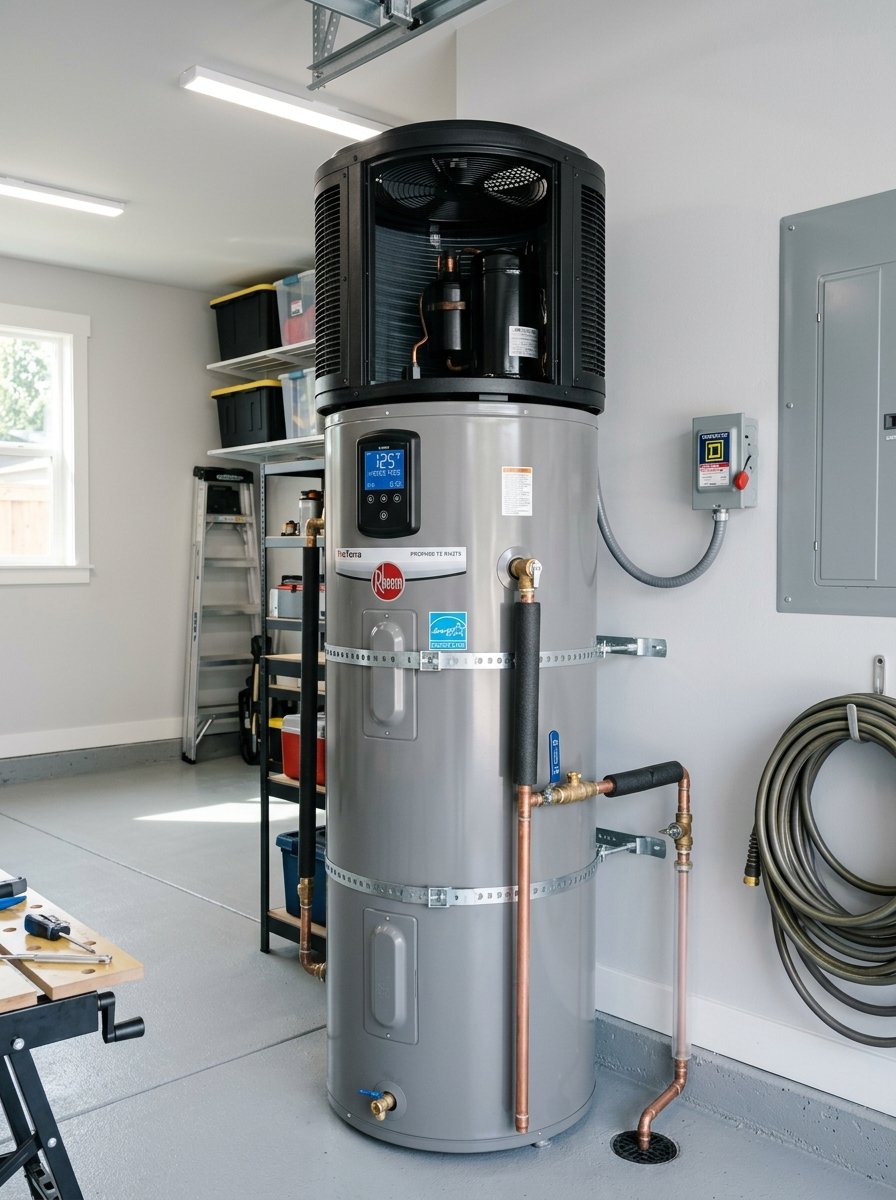
What Is a Heat Pump Water Heater?
A heat pump water heater transfers heat from the surrounding air into stored water rather than relying entirely on electric resistance heating. This heat-transfer approach can use substantially less electricity for water heating under suitable operating conditions.
Compressor & Refrigerant Circuit
An eco-friendly closed refrigerant loop circulates between an evaporator coil and a condenser coil wrapped around or immersed in the storage tank, absorbing ambient heat and releasing it directly into water.
Insulated Storage Tank
The heavy-duty insulated cylinder stores preheated domestic water, maintaining temperature with minimal standby heat loss between household showers and faucet demands.
Air Intake & Exhaust Fan
An integrated top-mounted fan pulls ambient air through the evaporator filter and expels cooler, dehumidified air back into the room or outdoors via optional duct adapters.
Electric Resistance Backup
Most modern residential hybrid units incorporate upper and lower electric resistance heating elements that automatically activate during periods of extreme household hot water demand.
Important Model Clarification: Not every heat pump water heater operates in the same way. Equipment features, physical dimensions, electrical configurations, and operating modes vary by manufacturer and model.
How Does a Heat Pump Water Heater Heat Water?
Instead of generating heat from scratch through electrical resistance or combustion, a heat pump water heater captures warmth that already exists in the ambient air.
Surrounding Air
The unit draws ambient room air across an evaporator coil using its top-mounted fan assembly.
Heat Absorption
Low-temperature refrigerant inside the evaporator absorbs thermal energy from the warmer air and turns into vapor.
Compression
An electric compressor pressurizes the refrigerant gas, raising its temperature and thermal density significantly.
Heat Transfer
Hot pressurized refrigerant passes through a heat exchanger coil, transferring heat directly into stored water.
Hot Water Delivery
The heated water is stored at the setpoint and supplied on demand throughout household plumbing fixtures.
Hybrid Demand Response: Many hybrid heat pump water heaters also include electric resistance elements that can provide supplemental heating depending on the operating mode and household demand.
Why Consider a Heat Pump Water Heater?
Explore the operational advantages of upgrading to hybrid heat pump technology for your Long Beach home.
1. Energy-Efficient Heating
Heat pump technology can use less electricity than conventional electric resistance water heating under suitable conditions by moving heat rather than creating it.
2. Reduced Energy Use
Lower electricity consumption for water heating may reduce operating costs, depending on utility rates, usage patterns, ambient temperatures, and installation conditions.
3. Multiple Operating Modes
Many hybrid models offer user-selectable modes—including Efficiency/Heat Pump Only, Hybrid, High Demand, and Vacation mode—to balance energy savings and recovery speed.
4. Modern Electric Upgrade
Heat pump models can be an attractive upgrade option for homeowners evaluating an aging conventional electric storage water heater or pursuing home electrification.
Is Your Home Ready for a Heat Pump Water Heater?
Heat pump water heaters have unique physical requirements compared to standard tanks. Use this 8-point dashboard to evaluate your property's installation conditions.
Sufficient Air Volume
Heat pump water heaters need access to an appropriate air supply (typically ~700–1,000 cu. ft. or louvered doors/ducting) to extract adequate heat.
Equipment Clearance
The location must provide manufacturer-required clearances around the top fan, air filter screen, and side service access panels.
Suitable Electrical Supply
Electrical requirements vary by equipment design. Some models use dedicated 240-volt circuits, while certain 120-volt plug-in products have different electrical configurations.
Condensate Drainage
Heat pump operation extracts moisture from the air, creating condensation that requires gravity drain lines or a dedicated condensate pump.
Appropriate Location
Garages, utility rooms, basements, or dedicated mechanical spaces are commonly evaluated, subject to equipment specifications.
Noise Considerations
The compressor and fan produce modest operating hums (approx. 45–55 dB). Location selection should consider proximity to bedrooms.
Household Hot Water Demand
The selected storage capacity (50, 65, or 80 gallons) and first-hour rating must match household occupant routines and simultaneous fixtures.
Equipment Accessibility
Hallways, doorways, and stairs must safely accommodate transport and positioning of the taller, heavier hybrid cylinder.
Choosing the Right Installation Location
A heat pump water heater removes heat from the surrounding air and can cool and dehumidify the nearby space. Consider how different placement options perform in Long Beach homes.
Garage Installation
A garage often provides generous room volume, unconditioned ambient warmth, easy condensate drainage routing, and acoustic isolation from living quarters. In coastal Long Beach, garages generally maintain ideal ambient operating temperatures year-round.
Utility Room Installation
A dedicated utility room or laundry space can be suitable if it meets manufacturer cubic volume minimums, has proper clearance for top-mounted air filters, and accommodates condensate piping.
Closet Installation
Enclosed closets can work if equipped with fully louvered doors or manufacturer-approved ducting kits that draw and exhaust air from an adjacent room, attic, or outside.
Other Suitable Locations
Basements or covered exterior utility sheds may also be considered, subject to local temperature ranges, weatherproofing, and manufacturer installation specifications.
Why Airflow and Space Matter for Heat Pump Water Heater Installation
A heat pump water heater depends on surrounding air as its heat source. Restricted airflow or unsuitable ambient temperatures can affect operating efficiency, force reliance on electric backup elements, and increase compressor wear.
Air Intake Requirements
The unit requires unrestricted air passage across the top-mounted evaporator coil. Regular cleaning of the washable air filter screen maintains unobstructed heat transfer.
Cool Air Discharge
The exhaust fan releases air that is roughly 8°F–12°F cooler than the intake. Adequate room volume prevents cool air from recirculating straight back into the intake.
Room Volume Standards
Most manufacturers recommend a minimum unconfined room volume (typically 700 to 1,000 cubic feet). Smaller spaces require louvered doors or approved ducting kits.
Operating Temperature Range
Heat pump modes generally operate efficiently in ambient temperatures between 40°F and 120°F. Southern California's coastal climate stays comfortably within this band year-round.
Heat Pump vs. Traditional Electric Storage Water Heaters
Understand key differences in heating mechanisms, electrical draw, space needs, and equipment characteristics.
| Feature | Hybrid Heat Pump Water Heater | Conventional Electric Resistance Heater |
|---|---|---|
| Heating Method | Transfers heat from ambient air using a compressor; electric elements serve as hybrid backup. | Directly heats water using upper and lower electrical resistance elements inside the tank. |
| Energy Efficiency | Uniform Energy Factor (UEF) typically 3.0 to 4.0+ under suitable ambient conditions. | Uniform Energy Factor (UEF) typically around 0.90 to 0.93. |
| Space & Airflow | Requires sufficient room volume, clearances for air filters, and ambient airflow. | Compact footprint; does not require ambient air volume or room ventilation. |
| Operating Sound | Produces a modest hum (compressor and fan, approx. 45–55 dB during active heating). | Virtually silent operation with no moving mechanical fans or compressors. |
| Condensate Management | Produces condensate as air cools; requires dedicated drain line or pump. | Does not produce air condensation; no condensate drainage needed. |
| Upfront Investment | Higher initial equipment cost; may qualify for electrification incentives. | Lower initial equipment purchase cost. |
Choosing the Right Heat Pump Water Heater Capacity
Choosing the right capacity involves more than counting household occupants. First-hour rating, recovery performance, and patterns of hot water use help determine whether a model can meet household demand.
Why Capacity Sizing Is Unique
Because heat pump compressors heat water more gradually than high-wattage resistance elements, many experts recommend selecting a tank capacity slightly larger (e.g., 65 or 80 gallons instead of 50 gallons) to maximize heat pump efficiency without triggering backup elements.
First-Hour Rating (FHR)
The First-Hour Rating measures how many gallons of hot water the heater can supply in one hour starting with a fully heated tank. Evaluating morning peak routines ensures your family never runs out during simultaneous showers.
Available Physical Dimensions
Hybrid units are taller and slightly wider than older tanks due to the top compressor assembly and extra tank insulation. Verifying ceiling height and doorway clearance avoids installation surprises.
What Installation Connections Need to Be Evaluated?
A seamless installation depends on confirming electrical panel capacity, plumbing headers, and safety fittings.
Dedicated Electrical Circuit
Dedicated 240V, 30A circuit breaker for standard hybrid models, or dedicated 120V circuit for plug-in retrofit products.
Water Connections & Valves
3/4" cold inlet and hot outlet plumbing, dielectric unions, thermal expansion tank, and brass full-port shutoff valves.
T&P Relief Valve & Drain
Code-compliant temperature and pressure relief valve piped with rigid copper to an approved exterior termination point.
Condensate Removal Line
PVC gravity line leading to a floor drain, utility sink, exterior drain, or small automatic condensate pump.
California Seismic Strapping
Mandatory double seismic earthquake bracing secured directly into structural wall framing studs in accordance with California plumbing code.
Air Intake Filter Clearances
Unrestricted space around the top compressor head to remove and clean the washable electrostatic mesh filter.
What Affects Heat Pump Water Heater Installation Cost in Long Beach?
The total installation cost depends on equipment selection and the conditions of the home. A professional evaluation helps determine the necessary work without hidden surprises.
1. Equipment Capacity & Efficiency
Storage tank volume (50-gal vs. 65-gal vs. 80-gal) and compressor efficiency ratings (UEF 3.5 to 4.0+) define baseline equipment costs.
2. Electrical Panel & Circuit Work
Adding a dedicated 240V/30A double-pole breaker and conduit run, or upgrading older electrical service panels to handle modern appliances.
3. Condensate Drainage Installation
Routing a gravity line to an existing drain or installing an automatic condensate removal pump and electrical receptacle.
4. Installation Location & Ventilation
Ground-floor garage setups require less labor than tight interior closets that may need louvered doors or manufacturer ducting adapters.
5. Plumbing & Expansion Tank Updates
Re-piping water lines, installing a thermal expansion tank, and adding brass isolation shutoff valves for code compliance.
6. Old Equipment Removal & Disposal
Safely draining, disconnecting, hauling away, and environmentally recycling the decommissioned gas or electric water heater.
7. City Permits & Inspections
City of Long Beach building safety permits and municipal inspection fees to verify electrical, plumbing, and seismic compliance.
Are Heat Pump Water Heater Rebates Available in Long Beach?
Heat pump water heater incentives may be available through eligible utility, state, regional, or federal programs. Program availability, funding, eligibility, equipment requirements, and application procedures can change.
Potential Electrification Incentive Sources
- Southern California Edison (SCE) Programs: Periodic residential electrification rebates for qualifying ENERGY STAR certified heat pump water heaters.
- State of California Initiatives: Programs like TECH Clean California offer contractor-applied incentives on qualifying heat pump equipment subject to budget availability.
- Federal Energy Tax Credits (Section 25C): Eligible homeowners may qualify for federal tax credits on certified heat pump water heating equipment.
What Happens During Heat Pump Water Heater Installation?
Learn what to expect during a structured installation workflow coordinated through qualified local specialists.
Initial Phone Inquiry
The homeowner describes the existing water heating system, home location, current fuel source, and energy-efficiency goals.
Site Readiness Evaluation
A qualified specialist may evaluate available space, ambient airflow volume, electrical panel capacity, and condensate drainage paths.
Equipment Selection
A suitable model is considered based on storage capacity, first-hour rating, efficiency tier, operating modes, and physical space clearances.
Installation Preparation
Required electrical circuits, plumbing shutoffs, condensate lines, or location prep are addressed by qualified personnel following safety codes.
Equipment Installation
The heat pump water heater is positioned, strapped with seismic bracing, connected to plumbing and power, and condensate drainage verified.
Testing and Homeowner Guidance
A qualified professional verifies compressor operation, tests controls, checks for leaks, and explains operating modes and maintenance.
Heat Pump Water Heater Installation Considerations in Long Beach, CA
Local architecture, coastal weather, and California building codes introduce specific installation considerations for Long Beach property owners.
Ideal Coastal Operating Temperatures
Long Beach experiences mild coastal temperatures throughout the year. This moderate climate creates an ideal operating environment for heat pump water heaters, allowing the compressor to run efficiently without dropping into sub-freezing defrost cycles common in cold-climate regions.
California Title 24 & Seismic Restraints
California Health and Safety Code mandates heavy-duty seismic earthquake strapping in the upper and lower third of the tank. Installation must also adhere to Title 24 energy-efficiency and electrical safety requirements.
City of Long Beach Permitting Requirements
Heat pump water heater installation may require permits and inspections depending on the work and applicable local requirements. Confirm current requirements with the City of Long Beach Building and Safety Bureau or a qualified local professional.
Questions to Ask Before Installing a Heat Pump Water Heater
Equip yourself with practical questions when consulting with local water heater installation specialists.
Heat Pump Water Heater Installation FAQs
Answers to common questions regarding heat pump efficiency, garage placement, electrical needs, noise levels, and rebates.
A heat pump water heater transfers heat from surrounding air into stored water. Many hybrid models also include electric resistance elements for supplemental heating.
They can use substantially less electricity for water heating under suitable operating conditions, but actual performance depends on the equipment, location, and usage.
A garage may be suitable if it meets the model's operating temperature, airflow, clearance, drainage, and other installation requirements.
They need appropriate airflow, but specific air-volume and ventilation requirements vary by manufacturer and model. Some installations may require approved ducting.
Many models use 240-volt electrical connections, but some products have different configurations. The required electrical supply depends on the selected equipment.
They produce some operating noise because they use a fan and compressor. Actual sound levels vary by model and operating mode.
They generally require appropriate condensate management because moisture can condense during heat pump operation. The exact drainage arrangement depends on the model and installation.
Incentives may be available through eligible programs, but availability, funding, and qualification rules change. Check current official program information before relying on a rebate.
Heat Pump Water Heater Installation in Long Beach and Nearby Areas
Connecting homeowners across Long Beach and adjacent coastal South Bay and Orange County communities with qualified water heater service specialists.
Explore Related Water Heater Services
Discover other residential water heater installation, replacement, and repair services available in Long Beach.
Water Heater Installation
Code-compliant installations with seismic earthquake bracing, expansion tanks, and venting systems.
View Installation Guide →Water Heater Replacement
System upgrades when aging equipment suffers internal tank corrosion or recurring breakdowns.
View Replacement Hub →Electric Water Heater Repair
Targeted diagnosis and component replacement for dual 240V heating elements and upper/lower thermostats.
View Electric Repair Guide →Gas Water Heater Replacement
Equipment sizing and venting guidance for aging or leaking residential natural gas water heaters.
View Gas Replacement →Tankless Water Heater Replacement
On-demand GPM sizing, heat exchanger health, and gas/electric tankless compatibility analysis.
View Tankless Replacement →Tankless Water Heater Services
Comprehensive maintenance, descaling flushes, sensor diagnostics, and repair for on-demand systems.
View Tankless Services →Interested in Heat Pump Water Heater Installation in Long Beach?
If you are considering a more energy-efficient water heating system, Long Beach Water Heater can help you explore available professional assistance for heat pump water heater installation and equipment selection.
Phone-based inquiries. Service availability and arrangements depend on the specialist.