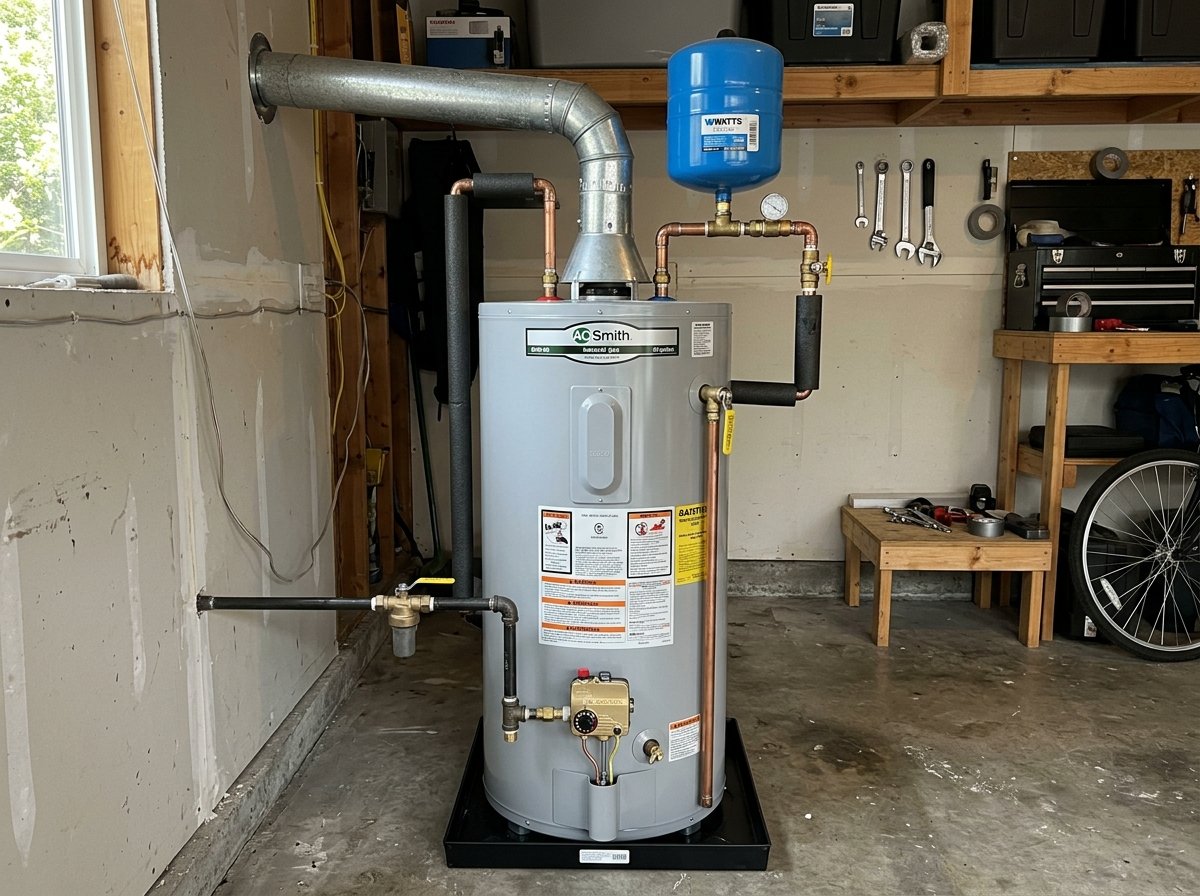
Performance Comparison: Gas vs. Electric
Natural gas and electricity heat water differently, impacting day-to-day hot water availability:
| Criteria | Natural Gas Water Heater | Electric (Resistance & Hybrid) |
|---|---|---|
| First Hour Recovery Rate | Fast (65 – 85 Gallons/Hour) | Moderate (40 – 55 Gallons/Hour) |
| Monthly Operating Cost | Moderate (SoCalGas rates) | Higher (Resistance) / Lowest (Hybrid HPWH) |
| Emissions & Air Quality | Combustion exhaust (Ultra-Low NOx) | Zero local on-site emissions |
| Power Outage Operation | Standard standing pilots still work | Does not heat during blackouts |
| Equipment Upfront Price | Moderate ($1,400 – $2,400) | Low (Standard) to High (Heat Pump) |
Pros and Cons of Natural Gas Water Heaters
Natural gas has historically been the primary water heating fuel in Long Beach:
- Fast Water Heating Recovery: Gas burners deliver 30,000 to 50,000 BTUs, reheating a full tank in nearly half the time of standard electric resistance elements.
- Lower Energy Bills vs Electric Resistance: In Southern California, natural gas per BTU is generally more economical than peak electricity rates from Southern California Edison (SCE).
- Venting Requirements: Gas water heaters require dedicated B-vent or metal chimney flues through the roof to vent carbon monoxide and combustion gases safely.
Pros and Cons of Electric and Hybrid Heat Pump Heaters
Electric water heaters offer simplified installation and clean operation:
- No Flue Vents or Gas Lines Required: Electric units do not produce combustion exhaust, eliminating chimney flues and gas leak risks.
- Quiet Operation: Electric resistance heating elements operate almost silently without ignition clicks or burner roar.
- High-Efficiency Hybrid Heat Pumps: Advanced Heat Pump Water Heaters (HPWH) use heat pump technology to absorb ambient heat from garage air, using up to 70% less electricity than standard resistance units.
California Clean Energy Trends and Building Codes
California Title 24 Energy Standards and regional air quality districts encourage high-efficiency upgrades and electrification. If your home has rooftop solar panels, an electric heat pump water heater can run largely on clean, self-generated electricity, maximizing energy independence.
Frequently Asked Questions
Yes. However, standard electric and hybrid heat pump units require a dedicated 240-volt, 30-amp circuit. If your garage or utility space lacks 240V wiring, an electrician must run a circuit from your main electrical panel.
For standard storage tanks, natural gas is typically less expensive to operate than traditional electric resistance tanks. However, high-efficiency Hybrid Heat Pump Water Heaters (HPWH) can match or beat gas operating costs.
The South Coast Air Quality Management District (SCAQMD Rule 1121) requires all residential gas water heaters sold and installed in Southern California to meet strict nitrogen oxide emission standards of 10 ng/J to protect local air quality.