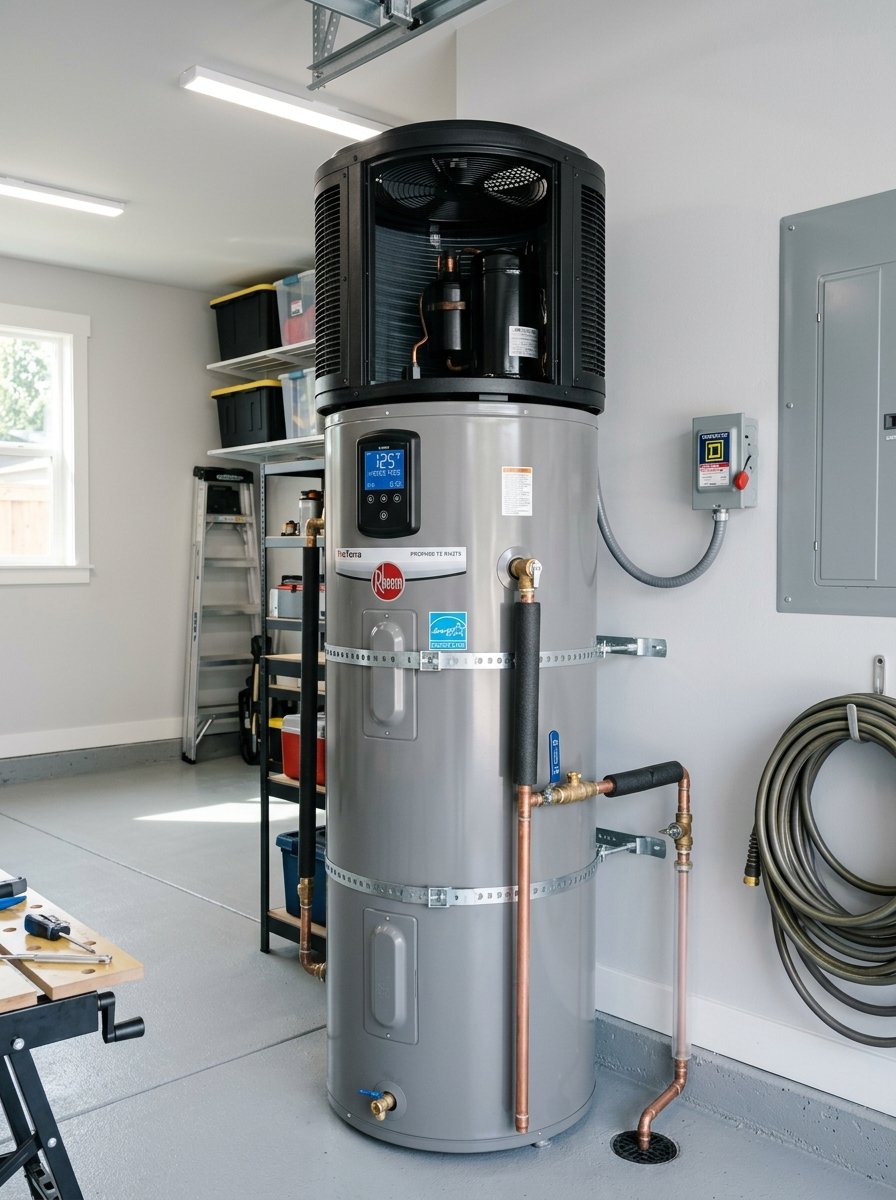
Typical Equipment Lifespan by System Type
Under normal operating conditions and standard municipal water maintenance, expected lifespans vary by technology:
- Standard Gas Storage Tank Heaters: 8 to 12 years.
- Electric Storage Tank Heaters: 10 to 14 years.
- Condensing & Non-Condensing Tankless Systems: 18 to 25 years.
- Hybrid Heat Pump Water Heaters: 12 to 15 years.
Southern California Factors That Accelerate Aging
Homes in Long Beach, Lakewood, Seal Beach, and neighboring coastal communities face specific environmental conditions that impact water heater wear:
- Water Hardness & Mineral Calcification: Water sourced from the Metropolitan Water District and local groundwater wells contains dissolved calcium and magnesium. When heated, these minerals precipitate out as chalky scale, accumulating at the tank bottom and causing overheating and popping noises.
- Coastal Marine Atmosphere: Salt air in beachfront and marina districts (Belmont Shore, Naples, Peninsula) accelerates external oxidation on metal flue vents, galvanized piping, and outer jacket panels.
- Municipal Water Pressure Fluctuations: Street-level water pressure exceeding 80 PSI creates recurring stress on tank welds and copper pipes unless regulated by a functioning pressure reducing valve (PRV).
How to Determine the Exact Age of Your Water Heater
Every water heater features an aluminum manufacturer rating plate sticker. You can decode its serial number to find the exact production year:
- A.O. Smith / State / Reliance: The first two digits of the serial number typically indicate the year (e.g., 1422... was manufactured in 2014).
- Bradford White: Uses a two-letter date code where the first letter represents the year and the second represents the month (e.g., 'G' = 2010, 'H' = 2011, etc.).
- Rheem / Ruud: The month and year are usually the first four digits of the serial number (e.g., 0615... indicates June 2015).
Simple Steps to Extend Your Water Heater's Lifespan
Routine homeowner maintenance can add 3 to 5 years to your water heater's operating life:
- Annual Sediment Flushing: Draining several gallons from the tank bottom washes out loose mineral sediment, maintaining efficient heat transfer.
- Anode Rod Inspection: Replacing the sacrificial anode rod before it completely dissolves keeps the steel tank interior from rusting.
- Thermal Expansion Tank: Installing an expansion tank absorbs hydraulic pressure spikes on closed plumbing systems.
Frequently Asked Questions
If your water heater is over 10 years old and located inside your finished living space or attic, proactive replacement prevents sudden flooding. Units in garages with floor drains can be monitored closely with moisture sensors.
A water softener prevents mineral scale buildup on heating elements and heat exchangers, but the sodium exchanged into the water can accelerate anode rod consumption. Anode rods should be checked annually in softened water homes.
Rusty or discolored hot water, metallic taste, rumbling or popping sounds during heating cycles, and minor weeping around lower tank fittings signal that replacement is approaching.