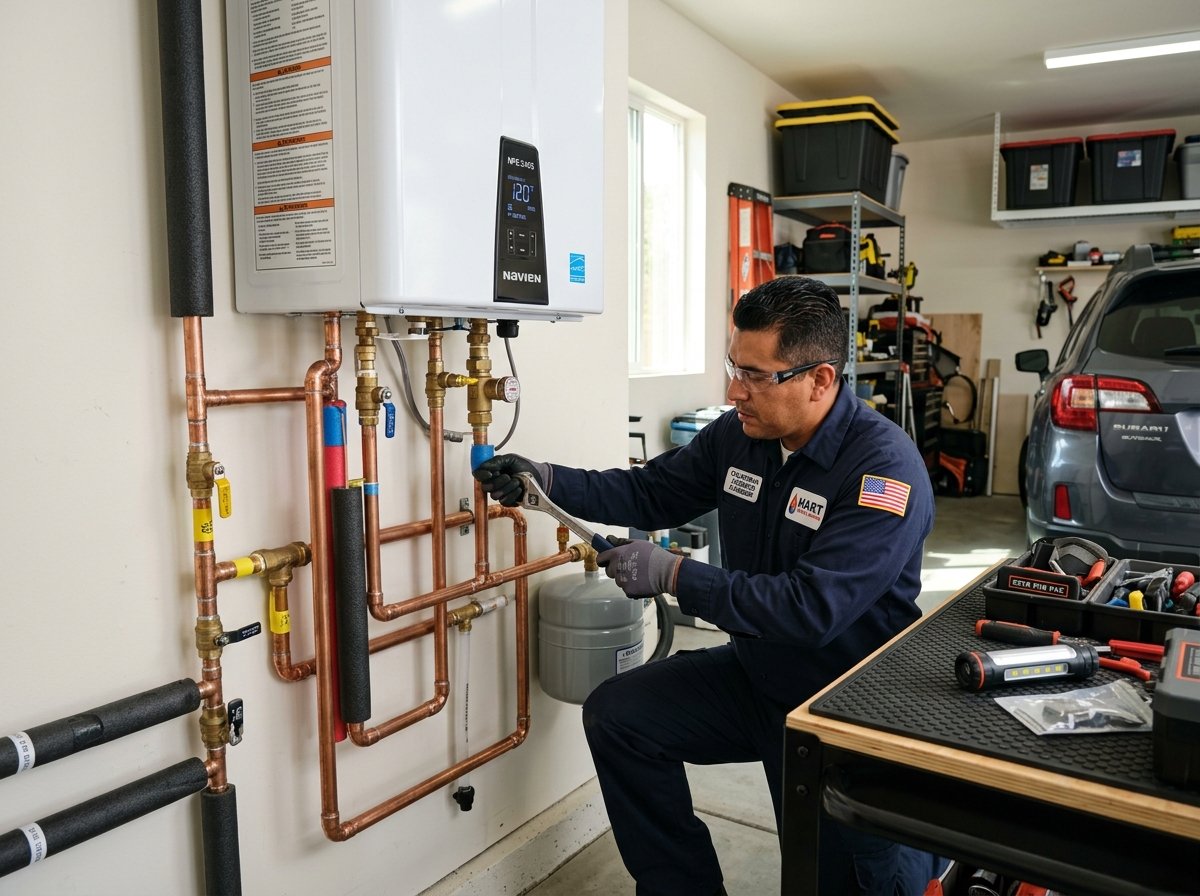
How Tankless and Traditional Systems Differ
Traditional water heaters keep 40 to 75 gallons of water continuously heated inside an insulated steel reservoir 24 hours a day. Whenever water cools, burners or heating elements cycle on, consuming energy even when no one is home (known as standby heat loss).
Tankless water heaters, conversely, operate on an on-demand basis. Cold water travels through a copper or stainless steel heat exchanger only when a hot water tap opens, heating water instantaneously to your programmed temperature setting.
| Feature | Traditional Storage Tank | Tankless (On-Demand) |
|---|---|---|
| Upfront Cost | Lower ($1,400 – $2,400) | Higher ($3,200 – $5,600) |
| Energy Efficiency (UEF) | 0.58 – 0.68 UEF | 0.82 – 0.96 UEF |
| Hot Water Supply | Limited to tank capacity | Continuous (Endless flow) |
| Equipment Lifespan | 8 – 12 Years | 18 – 25 Years |
| Physical Space | Large footprint (14–16 sq ft) | Compact wall-mount (suitcase size) |
| Maintenance Needs | Annual sediment drain | Annual descaling flush |
Advantages of Tankless Water Heaters
- Endless Hot Water: Multiple consecutive showers, laundry loads, and dishwashing can run without waiting 40 minutes for a tank to recover.
- 20% to 35% Lower Energy Consumption: By eliminating standby heat loss, tankless systems reduce monthly natural gas or electricity bills.
- Space Reclamation: Wall-mounted units free up valuable floor space in tight Long Beach garage layouts, basements, or utility closets.
- Extended Operational Life: High-grade components like secondary condensing heat exchangers provide double the operational lifespan of traditional tanks.
- Eliminated Catastrophic Tank Ruptures: Without 50 gallons of standing water, the risk of massive interior flooding from a ruptured tank reservoir is eliminated.
When a Traditional Storage Tank Makes Better Sense
Despite the benefits of tankless systems, conventional storage tanks remain an outstanding, practical choice for many households:
- Budget-Friendly Upfront Investment: For homeowners looking to minimize immediate replacement costs, standard tanks deliver dependable hot water at a lower initial price point.
- Existing Infrastructure Fit: Like-for-like tank replacements utilize existing 1/2-inch gas lines, electrical wiring, and B-vent chimney flues without requiring electrical panel upgrades or exterior wall penetrations.
- Simultaneous Multi-Fixture Flow: Standard tanks can handle simultaneous high-volume fixture draws without output temperature drops.
Making the Right Choice for Your Long Beach Property
If you plan to stay in your home for five years or more, have a large family, or need to reclaim garage space, tankless systems offer compelling long-term value. For rental properties, quick emergency replacements, or budget-conscious projects, a modern Energy Star-rated tank unit remains a reliable solution.
Frequently Asked Questions
Tankless units heat water on demand, but water still takes time to travel through plumbing pipes from the heater to the fixture. Adding a dedicated recirculation pump or point-of-use unit eliminates this wait time.
Yes. Southern California water contains mineral hardness. Tankless heat exchangers should be descaled with food-grade vinegar once every 12 to 18 months to maintain optimum efficiency.
Traditional tanks require 36,000 to 40,000 BTUs, whereas whole-home tankless units demand 150,000 to 199,000 BTUs. A professional gas load calculation determines whether your gas line requires sizing adjustments.