Why Are Building Permits Required for Water Heaters?
Water heaters operate under high pressure, store extreme heat, and connect directly to pressurized fuel (natural gas) or high-voltage electricity (240V). Improper installation can cause gas leaks, carbon monoxide accumulation, house fires, or tank ruptures.
The City of Long Beach Department of Development Services enforces plumbing permits so city inspectors can verify that every installed system meets seismic safety, combustion venting, and thermal relief standards.
Core California Plumbing Code Mandates for Long Beach
- Seismic Strapping (Double Strapping): Under California Health & Safety Code Section 19211, all water heaters must be securely strapped to wall framing with heavy-duty metal strapping: one strap in the upper third and one in the lower third (minimum 4 inches above the gas control valve) to withstand earthquake tremors.
- Temperature & Pressure Relief (T&P) Valve: Every unit must have a factory-certified T&P valve with rigid discharge pipe (copper or approved CPVC) that drains by gravity downwards, terminating outside the building or to an approved drain with an air gap between 6 and 24 inches above the ground.
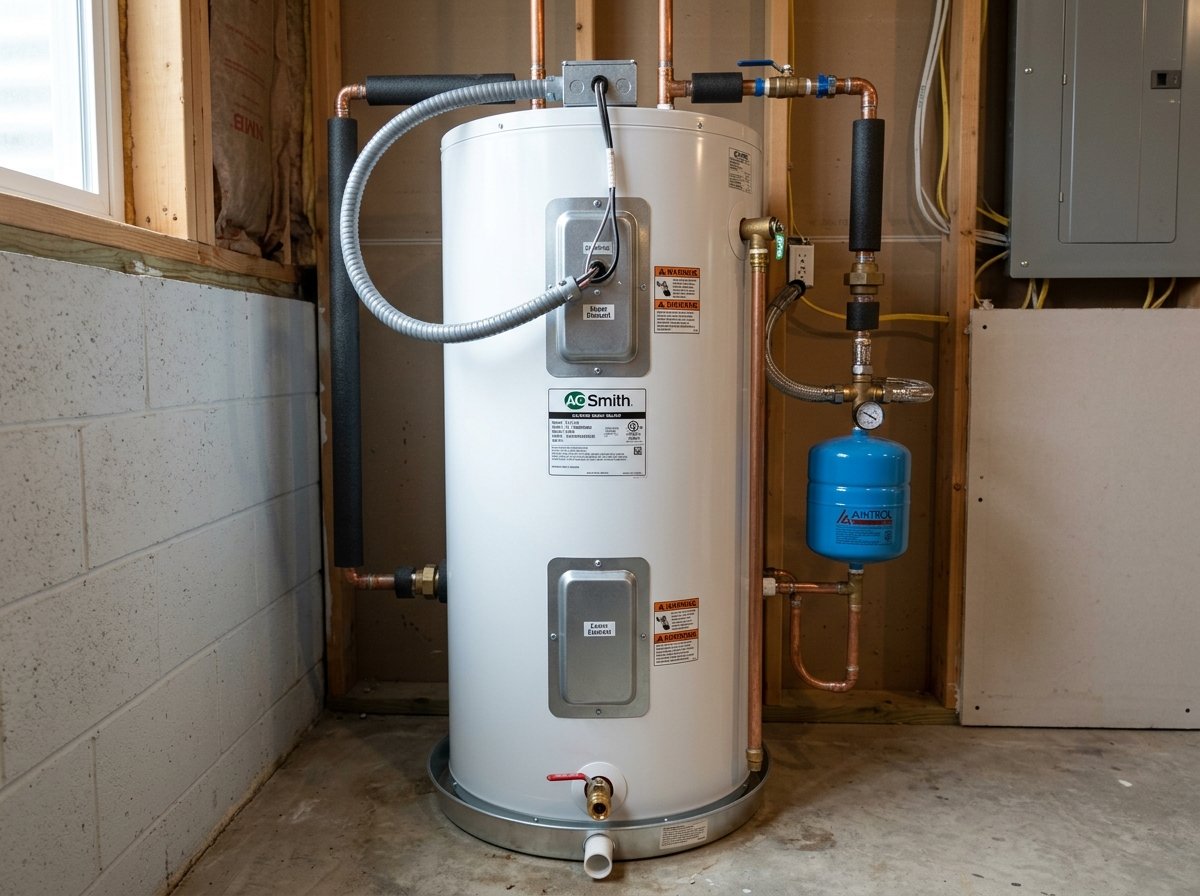
- Thermal Expansion Tank: When a home has a backflow preventer or pressure regulating valve (PRV), it creates a closed plumbing system. Expanding hot water cannot push back into the city main. A pre-pressurized expansion tank is required to absorb thermal expansion safely.
- Sediment Trap (Drip Leg): Gas lines must include a vertical tee fitting with a capped nipple directly before the gas control valve to catch rust flakes, pipe scale, and moisture before they enter the burner.
- Combustion Air Clearances: Gas heaters in closets or confined spaces require dedicated upper and lower combustion air louvers or ducting to ensure proper oxygen supply and draft.
The Permitting and Inspection Process Explained
- Permit Issuance: Licensed contractors pull the permit online through the City of Long Beach LB-COAST portal or at City Hall before or immediately upon installation.
- Installation Completion: The licensed technician completes the installation according to code, tests gas line connections with soap bubble leak solution, and verifies proper flue draft.
- City Building Inspection: An appointment is scheduled with a City of Long Beach building inspector. The inspector verifies seismic straps, venting clearances, T&P discharge piping, and signs off the permit.
Risks of Installing a Water Heater Without a Permit
Unpermitted installations can void manufacturer warranties, complicate future home sales during buyer escrow inspections, and cause homeowner insurance claims to be denied in the event of water or fire damage. Professional plumbers handle all permit paperwork as part of a turnkey installation.
Frequently Asked Questions
City of Long Beach plumbing permits for residential water heaters generally range between $120 and $220, including plan check and inspection fees.
If the water heater is located in an exterior closet or garage, the inspector only needs access to that space. If installed in an interior utility room, the inspector will need brief access to inspect the unit.
Yes, water containment pans with gravity drain lines are required whenever a water heater is installed over a wood subfloor, in finished spaces, or where water leakage could cause structural damage.