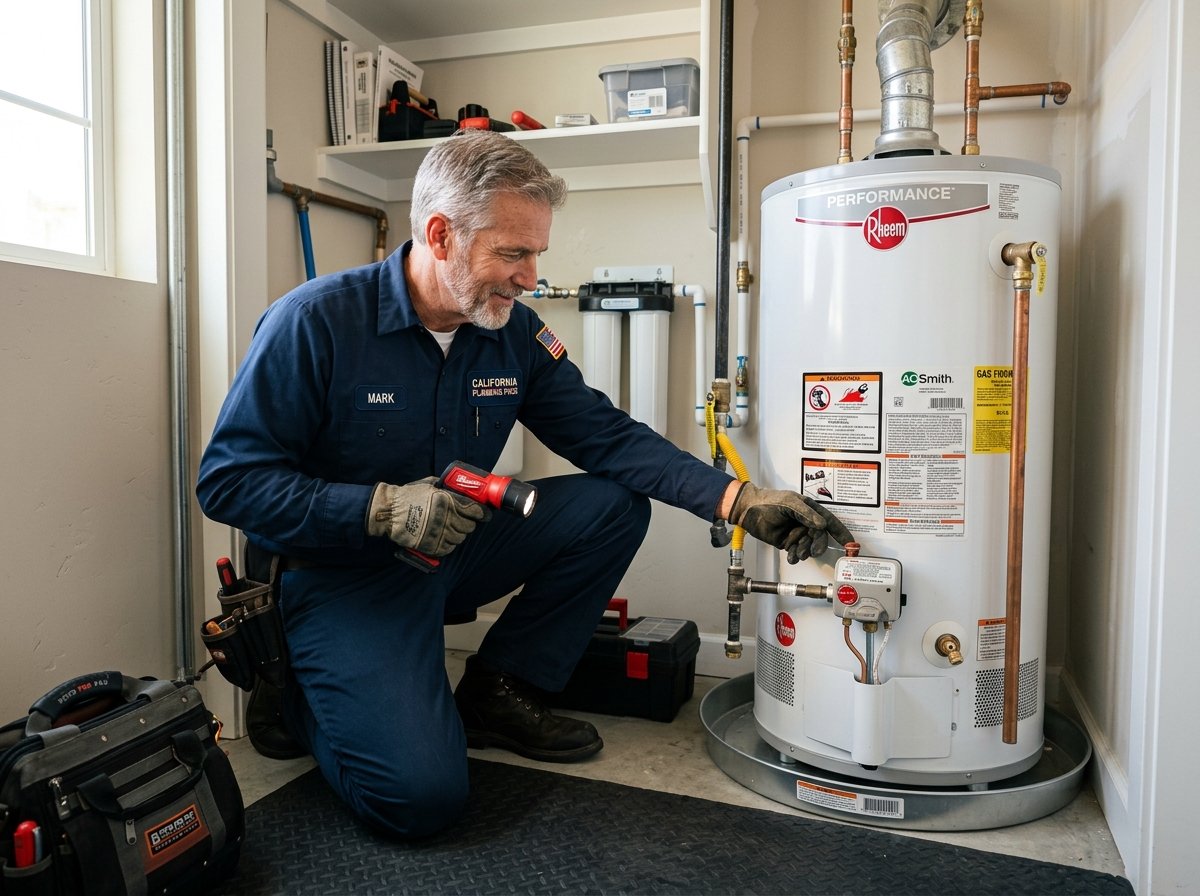
Annual Water Heater Maintenance Schedule
Follow this checklist to keep your gas or electric water heater running reliably year-round:
| Maintenance Task | Frequency | Benefit | Difficulty Level |
|---|---|---|---|
| Flush Bottom Sediment | Every 6 – 12 Months | Prevents popping sounds & restores efficiency | Easy / DIY |
| Test T&P Relief Valve | Every 12 Months | Ensures emergency pressure release works | Easy / DIY |
| Check Thermostat Setting | Every Season | Prevents scalding & reduces standby loss | Easy / DIY |
| Inspect Anode Rod | Every 2 – 3 Years | Prevents internal tank rust-through | Intermediate / Pro |
| Check Gas Connections & Flue | Annually | Ensures proper draft & gas leak safety | Pro Recommended |
| Descale Tankless Exchanger | Every 12 – 18 Months | Maintains continuous heating flow rate | Intermediate / Pro |
Step-by-Step: How to Flush Your Water Heater Tank
Flushing mineral sediment takes less than 30 minutes and protects your tank bottom from premature failure:
- Turn Off the Heat Source: Switch your gas control valve to 'PILOT' or turn off the electric breaker switch.
- Connect a Garden Hose: Attach a standard garden hose to the brass drain valve at the bottom of the heater and run the other end outside or into a floor drain.
- Open the Drain Valve: Turn the drain valve with a flathead screwdriver or handle. Open a nearby hot water faucet to break the vacuum.
- Perform a Power Flush: Turn the cold water inlet valve on in short bursts to stir up and flush out stubborn sediment settled at the bottom.
- Close Valve & Refill: Disconnect the hose, close the drain valve, and turn the cold water valve fully back on. Once water flows smoothly from the open hot water faucet without air splatters, turn the burner or electric power back on.
Testing the Temperature and Pressure (T&P) Valve
The T&P valve is your water heater's primary mechanical safety device. To test it, place a small bucket beneath the discharge pipe and gently lift the test lever. Water should discharge freely into the bucket. Release the lever; the valve should snap shut and stop dripping completely. If it fails to open or continues leaking after testing, replace it immediately.
Signs You Need Professional Water Heater Service
While basic flushing is a great DIY task, certain symptoms require professional diagnosis:
- Yellow, flickering burner flames instead of crisp blue flames (indicating incomplete combustion or soot buildup).
- Strong sulfur or gas smells near the appliance.
- Rust flakes appearing in bathwater or sink aerators.
- Loud knocking, kettling, or hammering noises during heating.
Frequently Asked Questions
The U.S. Department of Energy and safety guidelines recommend 120°F (49°C). This setting provides plenty of hot water for household needs while preventing scalding injuries and saving energy.
Popping or rumbling noises are caused by steam bubbles trapped under a layer of mineral sediment at the bottom of the tank. As the burner heats the metal, trapped water boils through the scale layer like a percolator.
In Southern California, where water contains moderate mineral hardness, tankless water heaters should be descaled with a pump and food-grade vinegar once every 12 to 18 months to prevent heat exchanger scale clogging.