Top Causes for No Hot Water in Gas Water Heaters
Natural gas systems rely on combustion mechanisms that can malfunction due to electrical, gas flow, or safety sensor interruptions:
- Extinguished Pilot Light: Strong drafts, temporary gas pressure dips, or a dirty pilot orifice can extinguish the standing flame. Modern units with sealed combustion chambers require viewing through the sight glass.
- Defective Thermocouple or Flame Sensor: The thermocouple is a critical safety device that detects heat from the pilot flame. If oxidized or faulty, it signals the gas control valve to shut off the gas supply completely.
- Gas Control Valve / Thermostat Malfunction: The electronic gas control valve regulates burner ignition. If the internal sensor fails or displays an error code (such as blinking LED diagnostic codes on Honeywell valves), burner cycling stops.
- Tripped Thermal Switch (Vessel Rollout): Inadequate combustion air or a blocked flue vent can cause combustion chamber overheating, tripping the thermal cut-off switch to prevent carbon monoxide buildup.
Top Causes for No Hot Water in Electric Water Heaters
Electric water heaters utilize dual 240-volt immersion heating elements controlled by upper and lower thermostats:
- Tripped Circuit Breaker: Check your home's main electrical panel. Water heaters draw significant amperage; a loose connection or voltage spike can trip the dual-pole breaker.
- High-Limit Reset Button Tripped: Electric water heaters include a red High-Limit (ECO) safety switch on the upper thermostat. If water temperature exceeds 180°F, it trips to prevent scalding. Resetting it once may restore operation, but repeated tripping indicates a shorted heating element or stuck thermostat.
- Burnt-Out Upper Heating Element: The upper heating element activates first to heat the top third of the tank. If the upper element burns out due to age or dry firing, the water heater will fail to deliver any hot water at all.
- Failed Thermostat: Thermostats can lose electrical calibration or stick in the open position, failing to send 240V power to the heating elements.
Troubleshooting Steps Homeowners Can Safely Try
Before calling for professional repairs, review these basic safety checks:
- Verify the Electrical Supply: Ensure the dedicated breaker switch is firmly in the 'ON' position. For gas units with electronic ignition, verify the power cord is plugged into an active GFCI outlet.
- Check the Gas Supply Valve: Confirm the yellow manual gas shutoff valve handle is parallel with the pipe, indicating it is open.
- Inspect the Temperature Setting: Ensure the thermostat dial is set between 120°F (recommended) and 125°F. Settings on 'VACATION' or 'PILOT' will prevent the burner from firing.
- Check Other Hot Water Fixtures: If only one shower has cold water while the kitchen sink produces hot water, the issue is likely a failed anti-scald shower cartridge rather than the water heater itself.
When to Call a Licensed Plumbing Specialist
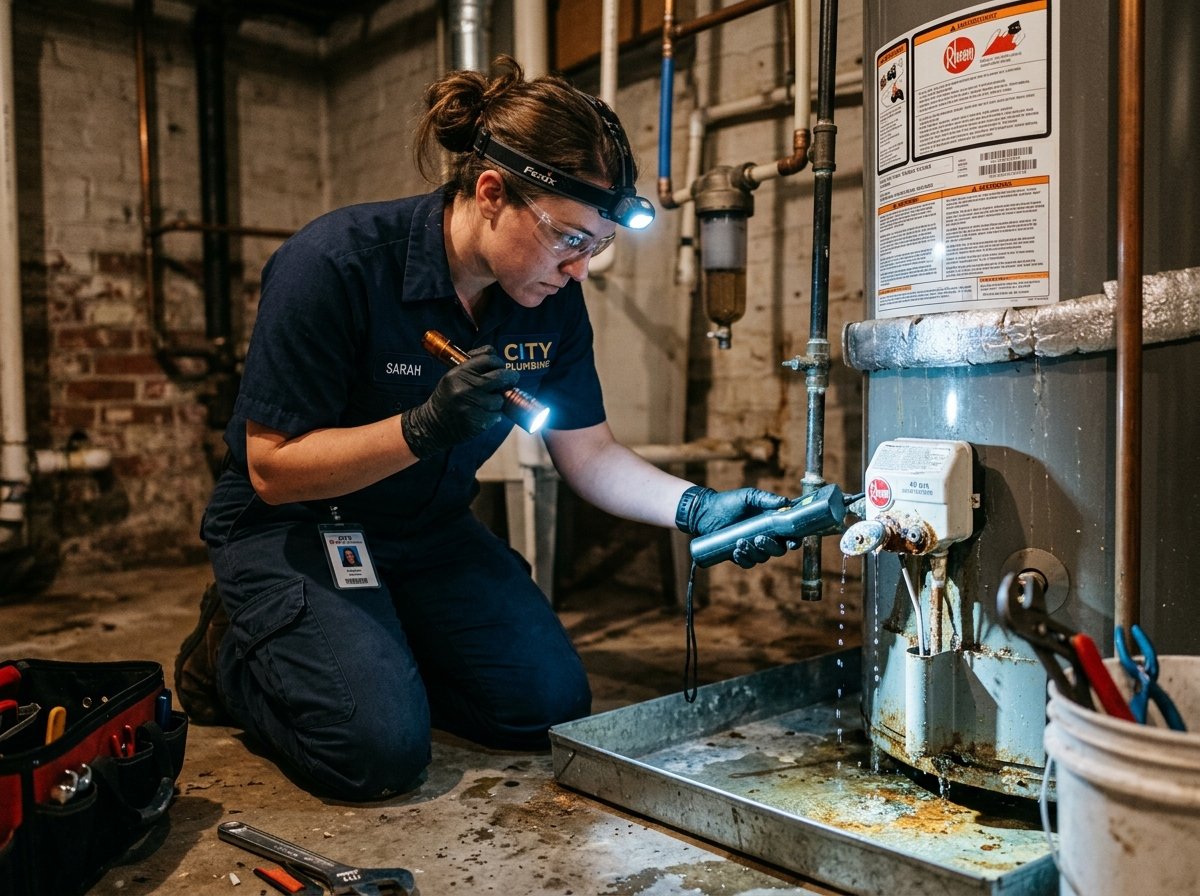
If you smell gas (a rotten-egg sulfur odor), notice scorch marks around the burner chamber, or hear continuous electrical buzzing, turn off the system immediately and contact a qualified technician. Certified technicians carry digital multimeters and gas pressure manometers to diagnose internal component failures safely.
Frequently Asked Questions
Lukewarm water often indicates a failed lower heating element (in electric tanks), a broken cold water dip tube that allows incoming cold water to mix with hot water at the top of the tank, or heavy sediment accumulation insulating the tank bottom.
Yes, provided you strictly follow the manufacturer's lighting instructions printed on the unit's rating plate. If you smell gas, do NOT attempt to light the pilot—shut off the gas supply and ventilate the room.
Tankless systems require a minimum water flow rate (typically 0.4 to 0.6 GPM) to activate. Restricted aerators, mineral buildup in the heat exchanger, or a clogged inlet filter can cause intermittent cold water sandwiches.