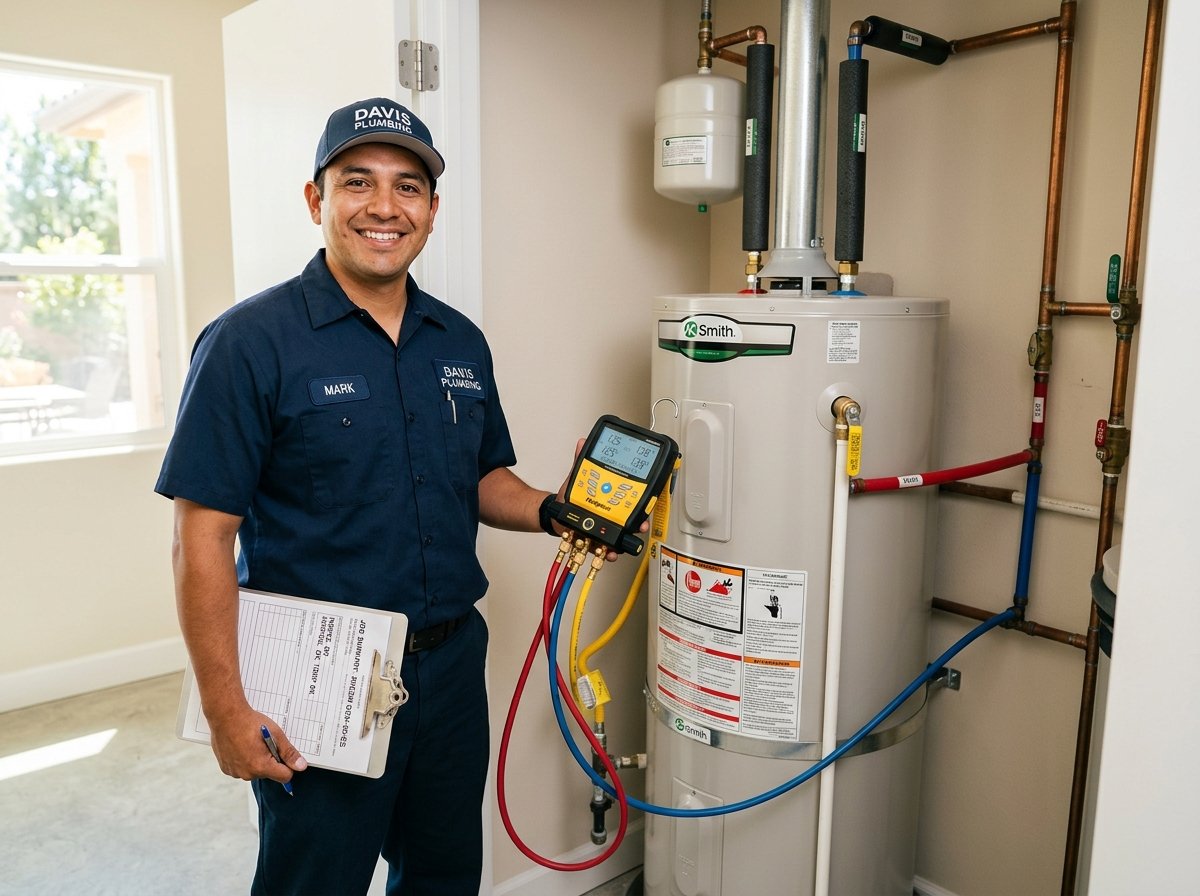
Emergency Action: How to Shut Off a Leaking Water Heater
If you discover water actively pooling around your unit, take these safety steps immediately to prevent structural damage:
- Turn Off the Power or Gas Supply: For electric units, flip the dedicated breaker switch off at the main electrical panel. For gas units, rotate the gas control dial to 'OFF' to prevent burner firing.
- Shut Off the Water Supply: Turn the cold water inlet valve (located on the top right pipe entering the water heater) clockwise until it stops. If the valve is stuck or missing, shut off your home's main water meter valve.
- Avoid Standing in Water: Never step into standing puddles near an electric water heater without cutting the power supply first.
Common Sources of Water Heater Leaks
- Temperature & Pressure (T&P) Relief Valve: Located on the top or upper side of the tank, this valve vents excess pressure or extreme heat. If it drips, it may be worn out, or your municipal water supply pressure may exceed safe operating levels (over 80 PSI).
- Loose Inlet/Outlet Pipe Fittings: Thermal expansion can loosen flex lines or dielectric unions at the top of the tank, causing water to drip down the outer jacket.
- Faulty Drain Valve: The brass or plastic drain valve at the bottom of the tank can leak if mineral sediment prevents the rubber gasket from sealing completely.
- Internal Tank Corrosion (Bottom Leak): If water seeps from underneath the metal tank jacket, the glass-lined steel reservoir has likely corroded through. This indicates irreversible tank failure requiring total unit replacement.
Repairable Leaks vs. Irreversible Tank Failure
The location of the leak dictates whether a cost-effective repair is possible:
| Leak Location | Probable Cause | Recommended Solution |
|---|---|---|
| Top Pipe Connections | Worn dielectric union or supply flex line | Repairable: Replace supply lines & fittings |
| T&P Relief Valve Discharge | High water pressure or defective valve | Repairable: Replace valve or add expansion tank |
| Bottom Drain Spigot | Worn valve washer or stripped threads | Repairable: Install heavy-duty brass ball valve |
| Heating Element Gasket (Electric) | Deteriorated rubber element seal | Repairable: Replace element gasket |
| Bottom Base Seepage | Internal tank wall rust-through | Non-Repairable: Immediate replacement required |
Preventing Future Water Heater Leaks in Long Beach
Long Beach municipal water carries moderate mineral hardness that accelerates internal galvanic corrosion once the sacrificial anode rod depletes. Inspecting the magnesium or aluminum anode rod every 2 to 3 years and replacing it before it corrodes to the core wire protects the steel tank lining for years to come.
Frequently Asked Questions
No. Water heater tanks operate under 50 to 70 PSI of continuous water pressure and undergo thermal expansion. Patching or welding a corroded tank is unsafe and violates plumbing safety codes.
The T&P valve opens when pressure exceeds 150 PSI or temperature exceeds 210°F. If municipal water pressure surges or thermal expansion has no room to expand, the valve discharges water to prevent tank rupture.
New water heaters filled with cold water can produce condensation during initial heating cycles that drips into the burner pan. If the moisture disappears once the tank reaches full operating temperature, it is likely normal condensation.