How Heat Pump Water Heaters Work in Southern California's Climate
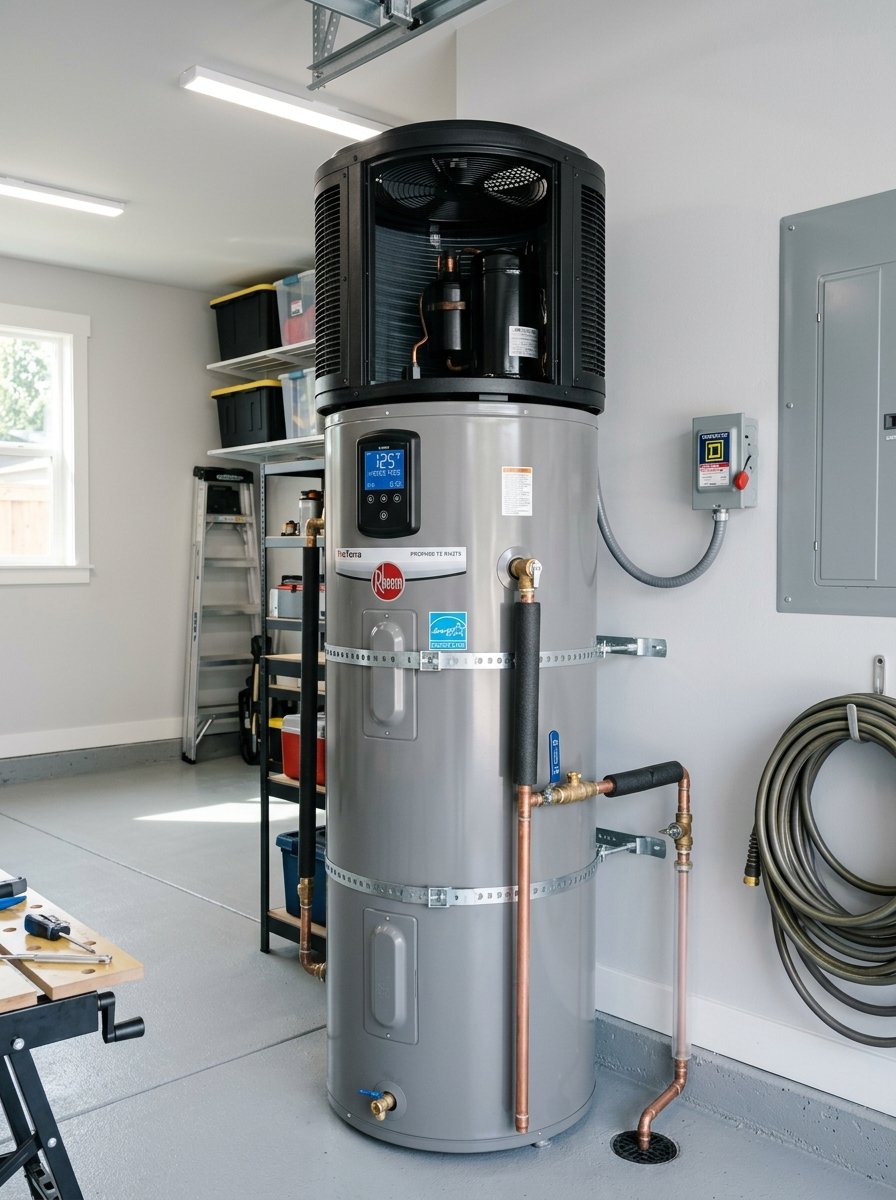
Unlike conventional water heaters that generate heat directly by burning natural gas or electrifying high-resistance elements, a heat pump water heater works like a refrigerator in reverse. Using an integrated compressor and eco-friendly refrigerant, it absorbs ambient warmth from the surrounding air and transfers that concentrated thermal energy into the insulated water storage tank.
Because moving heat requires significantly less electrical energy than creating heat, heat pump water heaters operate at an astounding Uniform Energy Factor (UEF) of 3.5 to 4.2. That means for every 1 unit of electrical energy consumed, the system produces 3.5 to 4.2 units of heating output—representing over 300% to 400% thermal efficiency.
Southern California is the optimal geographic location for heat pumps. In Long Beach, where coastal garage temperatures rarely dip below 50°F even during winter, heat pump units operate in maximum-efficiency heat pump mode year-round without needing to rely on backup electric elements.
2026 Rebates and Tax Incentives: Slashing Your Upfront Cost
The state of California and the federal government have partnered to offer some of the highest clean-energy incentives in the nation, drastically reducing the net installation expense for qualifying homeowners:
| Incentive Program | Funding Source | Estimated Rebate Amount | Eligibility Criteria |
|---|---|---|---|
| TECH Clean California | State of California | $1,000 – $3,100 | Replacing existing gas water heater with Tier 3/4 HPWH |
| Federal IRA Section 25C | U.S. Internal Revenue Service | Up to $2,000 (30% tax credit) | Energy Star certified HPWH installed on primary residence |
| SoCal Edison / Local Utility | Regional Electric Utility | $500 – $1,200 | Service territory customer switching to clean electric |
| Combined Maximum Savings | All Combined Programs | Up to $3,500 – $5,000+ | Qualified retrofit projects with approved contractors |
When combined, these rebates can offset more than 50% of the equipment and installation cost, making a hybrid heat pump system competitively priced with a standard gas replacement.
Annual Operating Cost Comparison: Gas vs. Heat Pump
To determine if a heat pump is worth it, consider the operational cost comparison for an average Long Beach household of four using approximately 60 gallons of hot water per day:
- Older Standard Atmospheric Gas Tank (0.58 UEF): Consumes ~220 therms of gas annually. At Southern California Gas rates (~$1.60 – $2.10/therm), annual operating cost is roughly $350 to $460 per year.
- Standard Electric Resistance Tank (0.92 UEF): Consumes ~3,500 kWh annually. At SCE tiered rates (~$0.28 – $0.35/kWh), annual operating cost is roughly $980 to $1,225 per year.
- Hybrid Heat Pump Water Heater (3.75 UEF): Consumes only ~900 kWh annually. At SCE rates, annual operating cost drops to just $250 to $315 per year.
Homeowners with existing rooftop solar panels benefit even further, effectively powering their domestic water heating with free, self-generated sunshine. To evaluate whether your electrical setup qualifies, schedule an evaluation for heat pump water heater installation in Long Beach.
Installation Requirements and Space Considerations
While heat pump water heaters offer stellar performance, they have specific installation requirements that must be addressed during planning:
- Air Volume Clearance: Because the heat pump extracts warmth from ambient air, it requires approximately 700 to 1,000 cubic feet of surrounding air space (equivalent to a standard 10x10-foot room or garage). If installed in a tight closet, louvered doors or dedicated ducting kits are mandatory.
- Dedicated 240-Volt Electrical Circuit: Standard hybrid models require a dedicated 240V / 30-amp electrical circuit. Homes replacing gas water heaters may require an electrical panel addition or dedicated conduit run from the breaker panel. (New 120V plug-in models are also emerging for select applications).
- Condensate Drainage: As the heat pump cools ambient air, it dehumidifies the room, generating small amounts of condensate water. A drain line running to a floor drain, utility sink, or exterior condensate pump is required.
- Cooling & Dehumidification Effect: The unit exhausts cool, dry air (typically 5 to 8 degrees cooler than room temperature). In a garage, this free air conditioning and moisture removal is a welcome bonus!
If your home cannot easily accommodate a 240V run or adequate air volume, exploring a high-efficiency electric water heater installation or modern gas alternative remains a dependable path.
Frequently Asked Questions
Heat pump water heaters typically last 13 to 15 years, compared to 8 to 12 years for conventional gas storage tanks. Most premium brands provide 10-year manufacturer tank and parts warranties.
Modern heat pump water heaters operate at approximately 45 to 50 decibels, comparable to a modern quiet dishwasher or background refrigerator hum. When installed in a garage, utility room, or basement, the sound is rarely noticeable inside main living areas.
Yes, especially when leveraging California's TECH rebates and federal tax credits. While natural gas historically had low volumetric rates, increasing regional gas delivery charges combined with heat pump efficiency (over 300%) make hybrid units significantly cheaper to operate over a 10-year period.