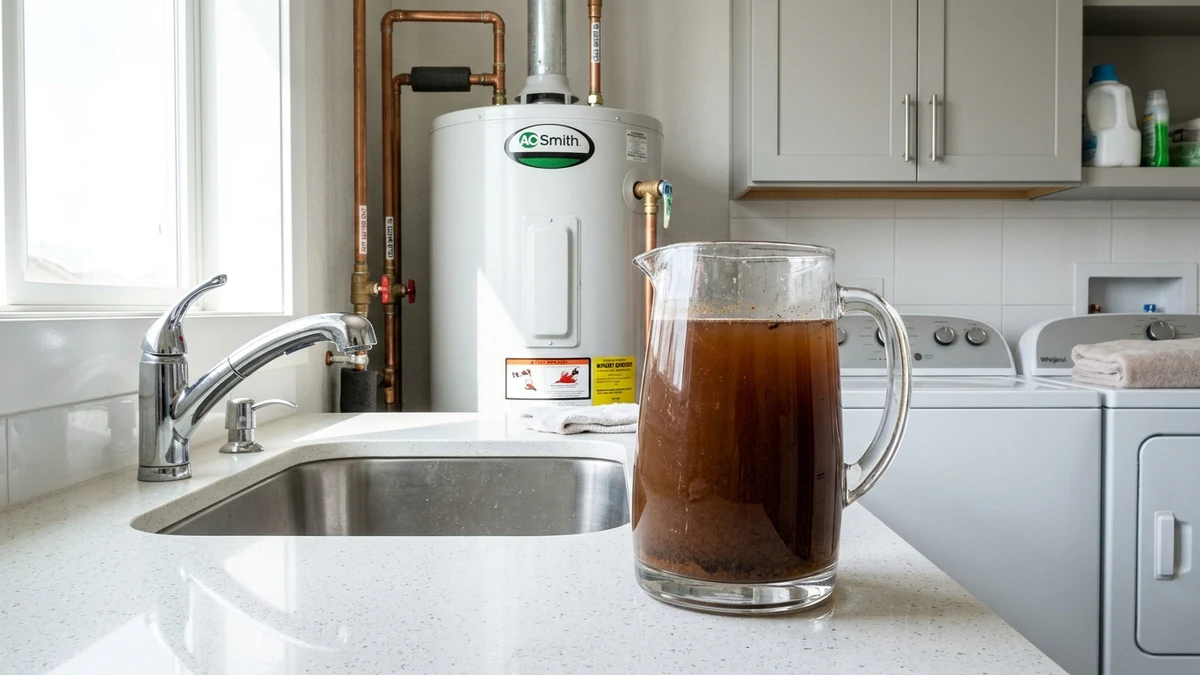
Quick Diagnostic: Signs Your Dip Tube Has Failed
The two unmistakable symptoms of a failed dip tube are: (1) Rapid loss of hot water (showers turn lukewarm in under 5 minutes because incoming cold water mixes directly at the top of the tank), and (2) Tiny white or yellowish plastic flakes clogging faucet aerators, washing machine filter screens, and showerheads.
- The Aerator Test: Unscrew your bathroom aerator; crumble the white flakes between your fingers. If they smash into plastic crumbs, it is your dip tube.
- The Float Test: Calcium mineral scale sinks in water; plastic dip tube fragments float.
- Low-Cost Repair: A replacement PEX cross-linked dip tube costs under $35 in parts and takes under an hour to install.
What Is a Water Heater Dip Tube and How Does It Work?
In all storage tank water heaters, cold water enters the tank at the top through the cold water supply fitting. However, basic thermodynamics dictate that heat rises.
To ensure proper heating, a long plastic pipe called the dip tube extends from the cold water inlet port straight down to within 6 to 8 inches of the tank bottom. This forces incoming cold tap water directly to the bottom where the gas burner or lower electric heating element can heat it. The heated, buoyant water naturally rises to the top, where the hot water outlet pipe draws it into your home.
The Failure Mechanism: Why Dip Tubes Break Down
Between 1993 and 1997, a major manufacturing defect affected millions of water heaters across the United States when a primary supplier manufactured dip tubes using defective polypropylene plastic that deteriorated rapidly.
However, even in modern water heaters, dip tubes can fail due to three primary causes:
- Excessive Water Temperature: Operating water heaters above 140°F causes thermal embrittlement, turning flexible polypropylene brittle and fragile.
- Municipal Chlorine & Chloramines: Long Beach municipal water uses chloramines for disinfection. Over 8 to 12 years, aggressive oxidizers break the chemical polymer bonds of the plastic.
- Physical Fracture: Thermal expansion cycling and turbulent water inlet pressure eventually snap the tube near the top connection fitting.
4 Tell-Tale Symptoms of Dip Tube Failure
Review the four symptoms that confirm a failed dip tube in your home:
| Symptom | What Is Physically Happening | How to Confirm |
|---|---|---|
| Rapid Loss of Hot Water | Broken tube dumps cold water at top of tank, short-circuiting straight into hot outlet | Hot water runs cold after 3–5 minutes despite full burner operation |
| White Plastic Particles | Brittle tube disintegrates into thousands of microscopic curved flakes | Particles found inside unscrewed sink aerator screens |
| Showerhead Pressure Drop | Plastic shards jam showerhead flow restrictors and cartridge ports | Shower pressure drops suddenly while other taps have normal pressure |
| Clogged Washing Machine Valves | Debris collects in inlet solenoid mesh screens | Washing machine takes 30 minutes to fill with warm water |
The Aerator & Float Test: Plastic vs. Calcium Scale
Homeowners frequently confuse dip tube fragments with hard water calcium scale. You can distinguish between them with two simple household tests:
- The Float Test: Drop a few white particles into a cup of tap water. Calcium carbonate mineral scale is dense and sinks to the bottom. Polypropylene plastic dip tube particles are lighter than water and will float on the surface.
- The Flame Test: Place a fragment on the tip of a butter knife and touch it with a lighter flame. Calcium scale will not melt or burn. A plastic dip tube fragment will instantly melt, curl up, and emit the faint smell of burning candle wax (polypropylene).
Upgrade to Cross-Linked PEX or Curved Diffuser Tubes
When replacing a broken dip tube, never reinstall a cheap straight polypropylene replacement. Professional plumbers install cross-linked polyethylene (PEX) dip tubes or hydro-dynamically curved diffuser tubes (like Bradford White's Hydrojet). PEX is virtually impervious to chlorine attack, handles temperatures up to 200°F, and features a flared or vortex bottom nozzle that actively scours sediment from the tank floor.
Dip Tube Replacement vs. Whole Heater Replacement
If your water heater is less than 8 to 10 years old and the tank shows zero signs of external rust or bottom leakage, replacing the dip tube is a fast, highly economical repair (typically $150 to $250 professionally).
However, if your water heater is over 12 years old, exhibits heavy tank bottom rumbling, or the tank fittings are severely corroded, investing in a dip tube replacement is often counterproductive—the tank itself is near the end of its useful lifespan and should be upgraded to a modern, energy-efficient model.
Frequently Asked Questions
No. The plastic is non-toxic food-grade polypropylene. While not hazardous to health, the flakes will severely clog plumbing fixtures, mixing valves, and appliance solenoid inlets.
After replacing the dip tube, unscrew every faucet aerator and showerhead in the house. Run the hot water wide open for 3 to 5 minutes to flush all debris out of the lines before reinstalling the cleaned screens.
No. The water heater is still heating water normally, but the cold water enters at the top and exits immediately into your hot supply pipes before the burner can heat the rest of the tank.
A licensed plumber can replace a water heater dip tube in approximately 45 to 60 minutes, including system draining and line flushing.
A heavy-duty pipe wrench or 1-1/16" socket is used to unthread the cold water dielectric nipple on top of the tank. The dip tube is integrated directly beneath the nipple and pulls straight out.