Comparing gas and electric tankless water heaters reveals fundamental infrastructure differences: gas tankless systems deliver high whole-home hot water volume (6.5 to 11.0 GPM at 199,000 BTUs) requiring adequate gas piping and exhaust venting, whereas electric tankless systems require enormous electrical capacity (120 to 150 amps across three or four dedicated 40A double-pole breakers), typically necessitating a costly 200A to 300A main service panel upgrade while delivering limited flow (2.5 to 4.5 GPM). In Long Beach, gas tankless is generally the superior whole-home choice, while electric tankless is best suited for point-of-use applications.
- Fundamental Technology & Heating Capacity Differences
- Electric Tankless: The 120A–150A Service Panel Barrier
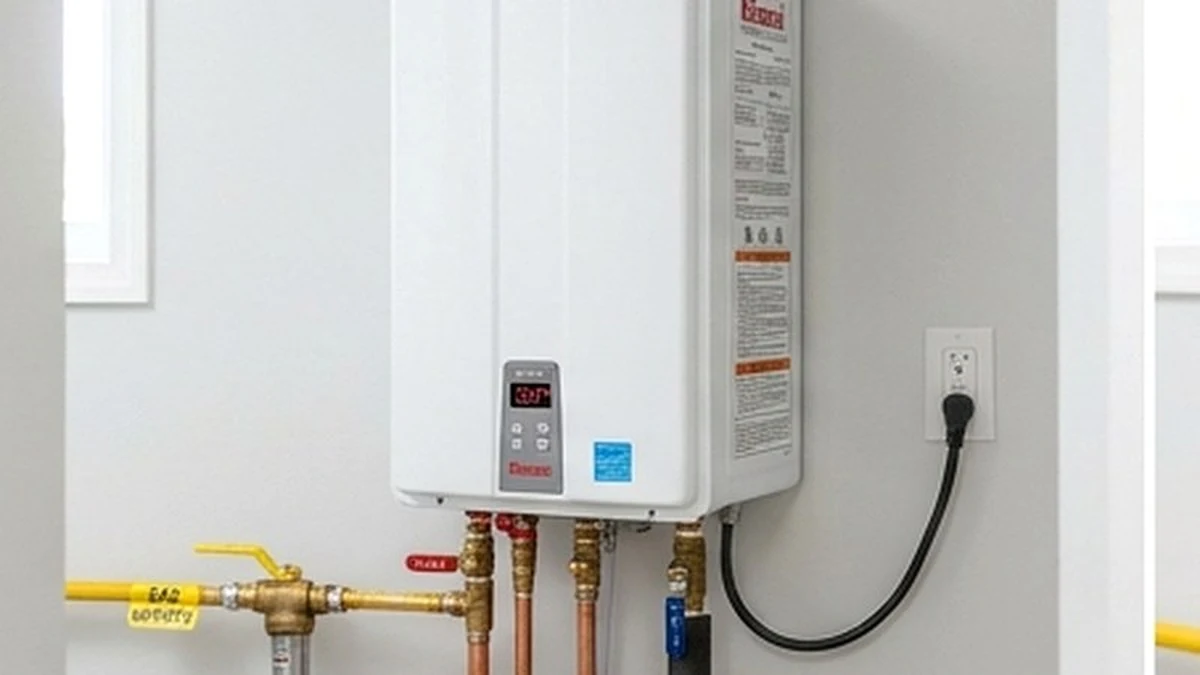
- Gas Tankless: Gas Supply Piping & Direct Venting
- Real-World GPM Delivery in Southern California
- Installation & Monthly Utility Cost Breakdown
- Selecting the Right System for Your Long Beach Property
- Frequently Asked Questions
Fundamental Technology & Heating Capacity Differences
Both gas and electric tankless water heaters eliminate the standby energy losses of storage tanks by heating water on demand. However, the thermodynamic mechanics required to instantly heat high-velocity water streams create vastly different infrastructure requirements:
Natural gas contains immense energy density: burning natural gas in a modulated 199,000 BTU burner instantly transfers tremendous thermal energy into water passing through finned copper heat exchangers. Conversely, an electric tankless water heater must force hundreds of amperes of electrical current through multi-stage copper immersion heating arrays to match that heat output.
Electric Tankless: The 120A–150A Service Panel Barrier
The biggest obstacle to installing a whole-home electric tankless water heater in Long Beach is electrical panel capacity. A unit capable of supplying two simultaneous showers (approx. 27 kW to 36 kW) draws between 112 and 150 continuous amperes at 240 volts.
To safely supply this enormous load, building codes require:
- Three to Four Dedicated 40-Amp Double-Pole Breakers: Taking up 6 to 8 full breaker slots in your panel.
- Heavy-Gauge Copper Wiring: Multiple runs of 8-gauge copper wire from the main panel to the appliance.
- Main Electrical Service Upgrade: Most Long Beach homes built before 1980 possess 100-amp or 125-amp electrical panels. Installing a 150-amp water heater requires upgrading the main electrical panel to 200-amp or 300-amp service, often adding $3,000 to $6,000 in electrical contractor and utility engineering fees.
Gas Tankless: Gas Supply Piping & Direct Venting
Gas tankless water heaters do not strain your electrical panel (drawing only 40 to 80 watts of 120V electricity to power electronic controls and fans). Instead, their primary installation considerations focus on gas fuel supply and exhaust combustion venting:
- Gas Supply Line: A 199,000 BTU unit requires a 3/4-inch dedicated natural gas supply line. While modern units (like Navien NPE-A2) can operate on existing 1/2-inch gas lines up to 24 feet, longer runs require upsizing gas pipe to avoid burner starvation.
- Exhaust Venting: High-efficiency condensing units vent through lightweight 2-inch or 3-inch PVC or polypropylene pipes routed horizontally through exterior sidewalls or vertically through existing roof jacks.
- SCAQMD Rule 1121 Compliance: In the South Coast Air Basin, all new gas water heaters must meet strict ultra-low NOx emission standards (under 14 ng/J).
Real-World GPM Delivery in Southern California
| Criteria | Gas Condensing Tankless (199K BTU) | Electric Tankless (27 kW / 112A) |
|---|---|---|
| Winter GPM (65°F Rise) | 5.8 – 6.5 GPM (2–3 Showers) | 2.8 – 3.2 GPM (1 Shower max) |
| Summer GPM (45°F Rise) | 8.5 – 9.8 GPM (4+ Fixtures) | 4.2 – 4.8 GPM (2 Fixtures) |
| Required Electrical Service | Standard 120V 15A Outlet (40–80W) | Three 40A 240V Dedicated Breakers |
| Panel Upgrade Needed? | No | Yes (Almost always 200A+ needed) |
| Exhaust Venting Required? | Yes (PVC/Polypropylene direct vent) | No venting required |
Installation & Monthly Utility Cost Breakdown
When calculating the true cost of ownership, operational fuel costs in Southern California heavily favor natural gas:
Natural gas through Long Beach Energy Resources is substantially more cost-effective per thermal unit than residential tier-rated electricity through Southern California Edison (SCE). Heating water with an electric tankless unit in Long Beach typically costs $75 to $120 per month in electricity charges, whereas heating the same volume of water with a gas condensing tankless unit costs only $20 to $35 per month in natural gas.
Selecting the Right System for Your Long Beach Property
To choose the right technology for your application:
- Choose Gas Tankless: For single-family homes, duplexes, and multi-bathroom properties with existing natural gas service where whole-house simultaneous hot water delivery is required.
- Choose Electric Tankless: For remote detached guest cottages (ADUs), workshop sinks, office lavatories, or specific point-of-use fixtures where gas service is absent and hot water demand is limited to one fixture at a time.
- Consider a Hybrid Heat Pump: If your goal is whole-home electrification without spending thousands on 150-amp electrical panel upgrades.
Frequently Asked Questions
Can an electric tankless water heater power a whole house in California?
Only if your home possesses a 200-amp or 300-amp electrical panel and your simultaneous hot water demand is limited to 1 or 2 low-flow fixtures during winter months. For most 2+ bathroom Southern California homes, electric tankless units struggle to keep up.
Why is gas tankless water heater installation more expensive upfront than a tank?
Gas tankless installations require specialized dedicated direct venting, 3/4-inch gas line sizing, electrical outlet placement, condensate drain routing, and specialized isolation service valves.
Do gas tankless water heaters work during an electrical blackout?
Standard gas tankless water heaters require 120V power to operate electronic circuit boards, ignition sparkers, and exhaust fans. However, they can easily be kept running during a power outage using a small portable battery backup (UPS) or generator.
Need Help With Your Water Heater?
Whether you are dealing with hot water loss, diagnosing a strange noise, or planning an energy-efficient upgrade, our certified local plumbing partners across Long Beach, CA are on standby for prompt telephone dispatch.