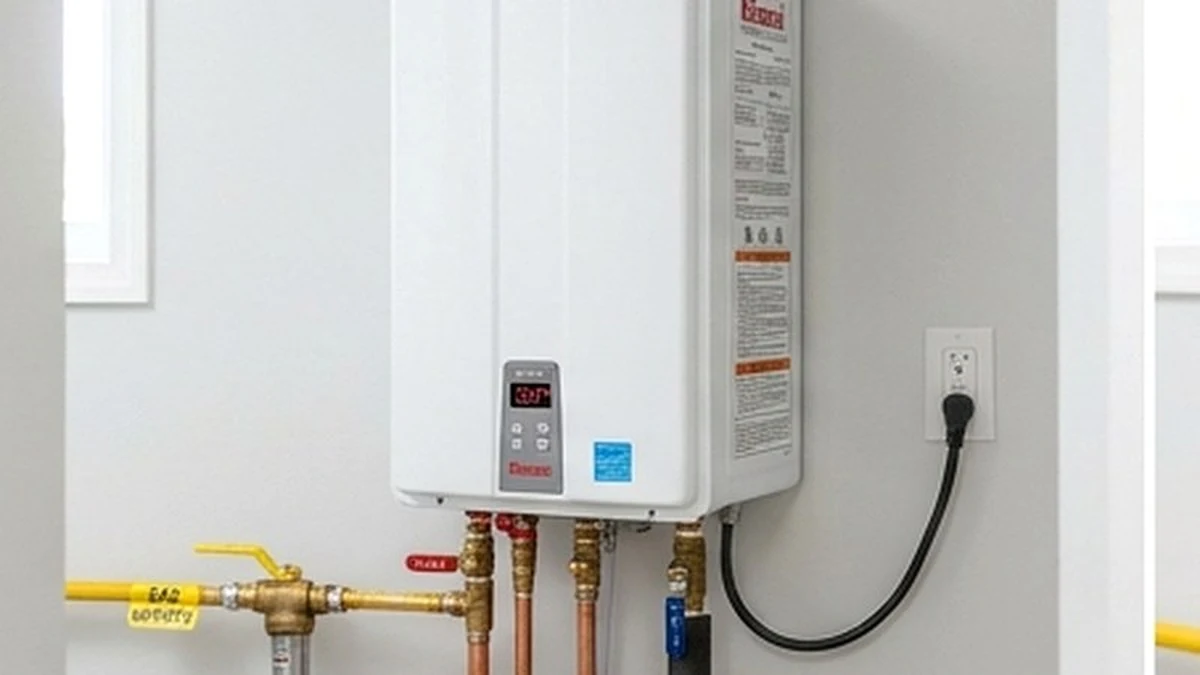
Sizing a tankless water heater for a Long Beach home requires calculating two core metrics: maximum simultaneous hot water Flow Rate (Gallons Per Minute or GPM) and required Temperature Rise (Delta-T). In Long Beach, where winter groundwater enters around 55°F and typical household setpoints are 120°F (a 65°F temperature rise), a 1–2 bathroom home needs a 5.0 to 6.5 GPM unit (140,000–160,000 BTU), while a 3–4 bathroom home requires an 8.0 to 11.0 GPM condensing unit (199,000 BTU) to run multiple showers and appliances simultaneously.
The Two Core Sizing Metrics: GPM & Delta-T
Unlike traditional storage water heaters sized purely by tank gallon capacity (e.g., a 40-gallon or 50-gallon tank), sizing an on-demand tankless water heater requires determining how much hot water your household needs at any single peak instant.
Correct sizing requires balancing two interconnected engineering calculations:
- Flow Rate (GPM): The cumulative volume of hot water in gallons per minute demanded by all fixtures operating simultaneously during your home's busiest hour.
- Temperature Rise (Delta-T / ΔT): The number of degrees Fahrenheit the heater must add to incoming cold groundwater to reach your target delivery temperature (typically 120°F).
Household Fixture Flow Rates (GPM Guide)
To determine your household's peak GPM demand, add together the flow rates of all appliances that might reasonably run at the same time (such as two people showering while the dishwasher runs):
| Plumbing Fixture / Appliance | Typical Flow Rate (GPM) | California Title 24 Water-Saving Flow |
|---|---|---|
| Standard Showerhead | 2.0 – 2.5 GPM | 1.8 GPM (Title 24 Compliant) |
| Luxury Multi-Head / Rainfall Shower | 3.5 – 5.0 GPM | 2.5 – 3.5 GPM |
| Bathroom Vanity Lavatory Sink | 1.0 – 1.5 GPM | 1.2 GPM |
| Kitchen Prep Sink Faucet | 1.5 – 2.2 GPM | 1.8 GPM |
| Automatic Clothes Washer | 2.0 – 3.0 GPM | 2.0 GPM |
| Residential Dishwasher | 1.0 – 1.5 GPM | 1.2 GPM |
Long Beach Groundwater Temperatures & Delta-T
Groundwater temperatures fluctuate seasonally across coastal Southern California. In Long Beach, municipal water delivered from Metropolitan Water District imports and local groundwater wells varies throughout the year:
- Summer Groundwater: Averages 68°F to 72°F. Achieving a 120°F setpoint requires only a 50°F Temperature Rise.
- Winter Groundwater: Drops to 53°F to 58°F during December through February cold snaps. Achieving a 120°F setpoint requires a 65°F to 67°F Temperature Rise.
Crucial Rule: A tankless water heater must always be sized for worst-case winter groundwater conditions. If sized only for warm summer temperatures, hot water will drop in flow or turn lukewarm as soon as coastal winter arrives.
Tankless Sizing Matrix: 1 to 4+ Bathrooms
| Home Size & Bathrooms | Peak Simultaneous Demand | Recommended GPM (@ 65°F Rise) | Recommended BTU Rating |
|---|---|---|---|
| 1–1.5 Baths (Condo / Small Home) | 1 shower + 1 sink | 3.5 – 5.0 GPM | 120,000 – 140,000 BTU |
| 2–2.5 Baths (Single Family Home) | 2 showers + 1 appliance | 5.5 – 7.5 GPM | 160,000 – 180,000 BTU |
| 3–3.5 Baths (Large Home / Family) | 3 showers + laundry | 8.0 – 9.8 GPM | 199,000 BTU (Condensing) |
| 4+ Baths / Luxury Coastal Estate | 3–4 showers + multiple appliances | 10.0 – 14.0+ GPM | Dual 199,000 BTU Cascaded Units |
Condensing vs. Non-Condensing Capacity Impact
When selecting your tankless equipment, understanding the difference between condensing and non-condensing technology is essential:
- Non-Condensing (0.82 UEF): Uses a single copper heat exchanger. Hot exhaust gases (350°F) exit immediately through expensive Category III stainless steel venting. Because roughly 18% of heat is lost up the flue, a 199,000 BTU non-condensing model delivers less usable GPM at high temperature rises.
- Condensing (0.93–0.96 UEF): Features a secondary stainless steel heat exchanger that captures latent heat from exhaust gases before they leave. Exhaust temperatures drop below 120°F, allowing low-cost PVC/polypropylene venting while producing up to 15% more continuous hot water per cubic foot of gas burned.
Gas Line & Meter Capacity: 199,000 BTU Verification
A standard 40-gallon gas tank requires only 36,000 to 40,000 BTUs. In contrast, a whole-home tankless water heater requires up to 199,000 BTUs when firing at full capacity.
Before installing a tankless unit, a licensed plumber must calculate your home's total connected gas load—including furnace, gas range, dryer, and pool heater. In Long Beach, homes with older 1/2-inch gas piping or older standard 175 CFH (Cubic Feet per Hour) gas meters may require upgrading the line to 3/4-inch or 1-inch, and requesting a free gas meter upgrade from Long Beach Energy Resources (LBER).
Frequently Asked Questions
Can a tankless water heater support two showers at the same time in Long Beach?
Yes. A 180,000 to 199,000 BTU condensing tankless unit delivers 7.0 to 9.5 GPM, easily supporting two or three low-flow (1.8 GPM) showers running simultaneously even during colder winter months.
What happens if a tankless water heater is undersized?
If undersized, opening multiple hot faucets forces the unit to either reduce water pressure through internal flow restrictors or deliver lukewarm water across all fixtures because it cannot heat the volume passing through.
Do I need to upgrade my gas meter for a tankless water heater?
Often yes. If your total household gas appliances combined with a 199,000 BTU tankless heater exceed 250,000 BTUs, Long Beach Energy Resources will typically replace your gas meter with a higher-capacity 400 CFH meter at no utility charge.
Need Help With Your Water Heater?
Whether you are dealing with hot water loss, diagnosing a strange noise, or planning an energy-efficient upgrade, our certified local plumbing partners across Long Beach, CA are on standby for prompt telephone dispatch.