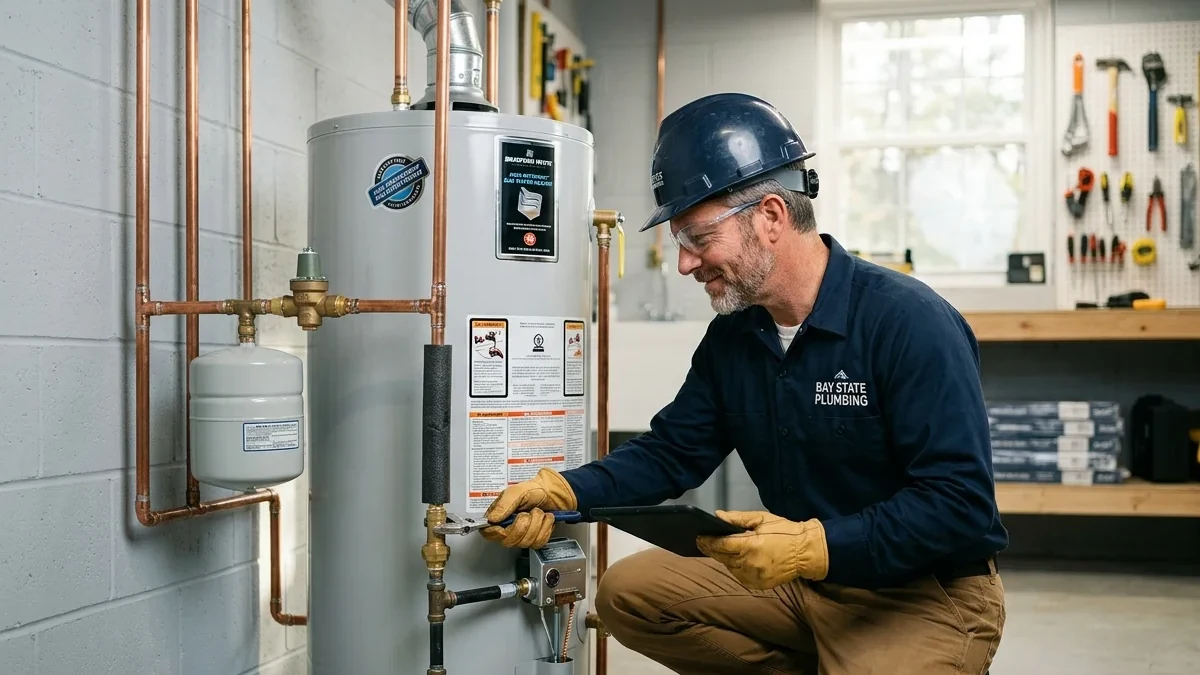
Gas water heater burner problems present warning signs such as lazy yellow or orange flames, heavy black soot deposits around the burner chamber or draft hood, loud rumbling or booming ignition noises, and acrid exhaust odors. A healthy natural gas burner should produce a steady, quiet, predominantly blue flame; yellow flames signify incomplete combustion and dangerous carbon monoxide production.
Anatomy of a Residential Gas Burner
The burner assembly is the combustion engine of a gas water heater. Situated directly below the tank inside a sealed combustion chamber, it consists of a cast iron or stamped steel burner head with precision flame ports, an air shutter for oxygen mixing, a brass fuel orifice, a pilot tube, and a thermocouple or spark igniter.
When the thermostat calls for heat, the gas control valve opens the main internal port, sending gas rushing through the burner orifice. This high-velocity gas stream pulls in atmospheric oxygen through the air shutter, creating an optimal air-fuel mixture that ignites smoothly across the burner surface.
Flame Color Diagnostics: Blue vs. Yellow Flames
Inspecting the combustion flame through the glass viewport at the base of the water heater provides immediate diagnostic feedback:
- Healthy Blue Flame: A properly tuned natural gas burner produces crisp, steady blue flames with sharp inner cones. Occasional flecks of orange or yellow are normal dust particles burning off, but the base and body of the flame should remain vivid blue.
- Lazy Yellow or Orange Flames: A tall, wavering, luminous yellow flame indicates incomplete combustion caused by oxygen starvation. Incomplete combustion produces unburned carbon particulates (soot) and dangerous levels of carbon monoxide gas.
Delayed Ignition & Booming Startup Noises
If you hear a startling 'boom,' 'pop,' or metallic thump when your water heater begins firing, the unit is suffering from delayed ignition.
Delayed ignition occurs when the main gas valve opens, but the gas does not ignite instantaneously across the burner ports. Natural gas builds up inside the sealed combustion chamber for 3 to 10 seconds before finally contacting the pilot flame, resulting in a miniature gas explosion that shakes the tank jacket. Delayed ignition can crack the glass lining, blow open inspection doors, or extinguish the pilot flame.
Soot Accumulation & Carbon Monoxide Hazards
When burners burn rich due to restricted airflow, heavy black carbon soot accumulates inside the combustion chamber, coats the thermocouple probe, and blocks the vertical exhaust flue baffle. If you observe powdery black soot around the base of the tank or along the draft hood opening, immediately turn off the gas valve and schedule professional service.
Burner Diagnostic Matrix
Reference this guide for evaluating gas burner performance:
| Symptom | Probable Cause | Safety Risk |
|---|---|---|
| Steady blue flame, quiet operation | Proper air-fuel mixture | Normal safe operation |
| Wavering yellow flame with soot | Combustion air starvation / clogged arrestor | High CO risk; shut down unit |
| Loud booming noise at ignition | Delayed ignition; dirty pilot or misaligned ports | Combustion chamber damage risk |
| Hissing or sizzling sounds | Condensation dripping onto hot burner plate | Normal during initial tank fill |
SCAQMD Rule 1121 Ultra-Low NOx Burner Standards
Under South Coast Air Quality Management District (SCAQMD) Rule 1121, all natural gas-fired residential water heaters installed in Long Beach and the greater Los Angeles basin must comply with Ultra-Low NOx emissions standards (emitting less than 10 nanograms of nitrogen oxides per joule of heat output).
Ultra-Low NOx burners utilize specialized ceramic fiber mats or radial wire mesh screens to lower combustion flame temperatures. These specialized burners are sensitive to lint and dust accumulation and require professional cleaning protocols.
Professional Burner Cleaning & Replacement
Servicing a gas burner assembly involves disconnecting gas flare nuts, pulling the entire burner manifold tray, chemically cleaning the flame arrestor screen, vacuuming scale from the chamber floor, and re-sealing the combustion door with fire-rated high-temperature gaskets. Contact our Long Beach team for expert gas burner servicing.
Frequently Asked Questions
Why does my gas water heater make a booming sound when it turns on?
A loud booming noise at startup indicates delayed ignition. Gas is accumulating inside the burner chamber before igniting all at once. This requires urgent professional service to clean burner ports and align the pilot flame.
Is a yellow flame on my water heater dangerous?
Yes. A yellow flame signifies incomplete combustion, which generates dangerous carbon monoxide gas instead of harmless carbon dioxide. Have a licensed plumber inspect the air intake and burner immediately.
How often should a gas water heater burner be cleaned in Long Beach?
In garages and utility rooms where laundry lint and coastal dust circulate, burner chambers and air arrestor screens should be inspected and vacuumed annually during routine maintenance flushes.
Need Help With Your Water Heater?
Whether you are dealing with hot water loss, diagnosing a strange noise, or planning an energy-efficient upgrade, our certified local plumbing partners across Long Beach, CA are on standby for prompt telephone dispatch.