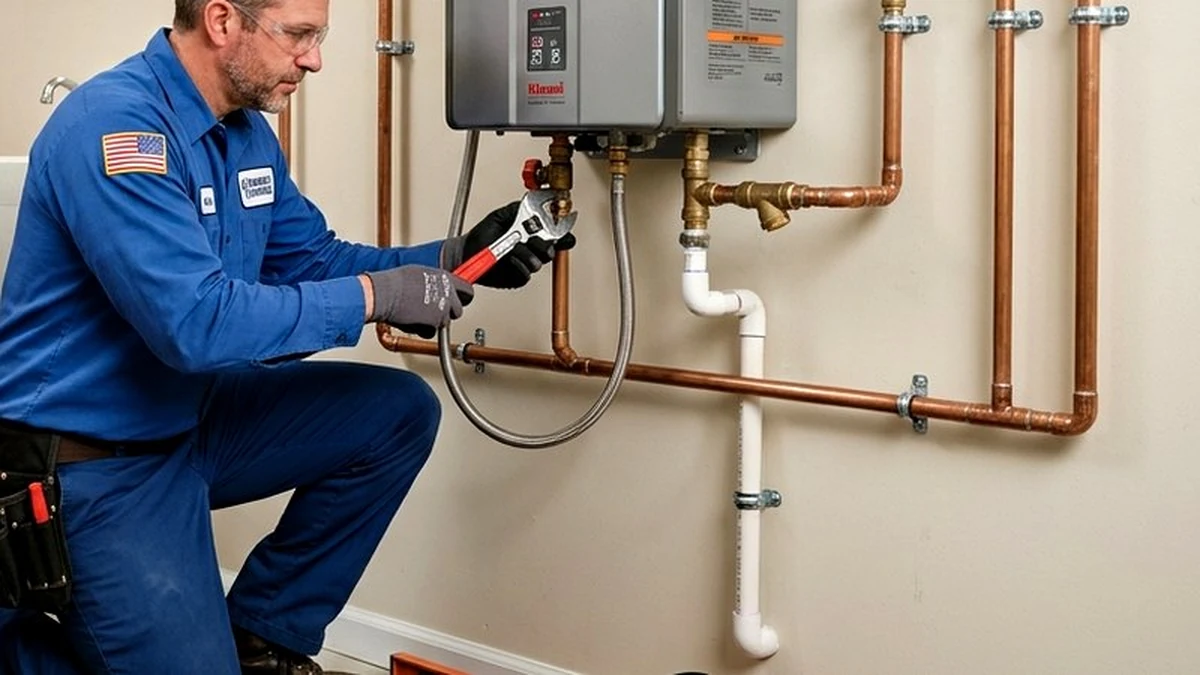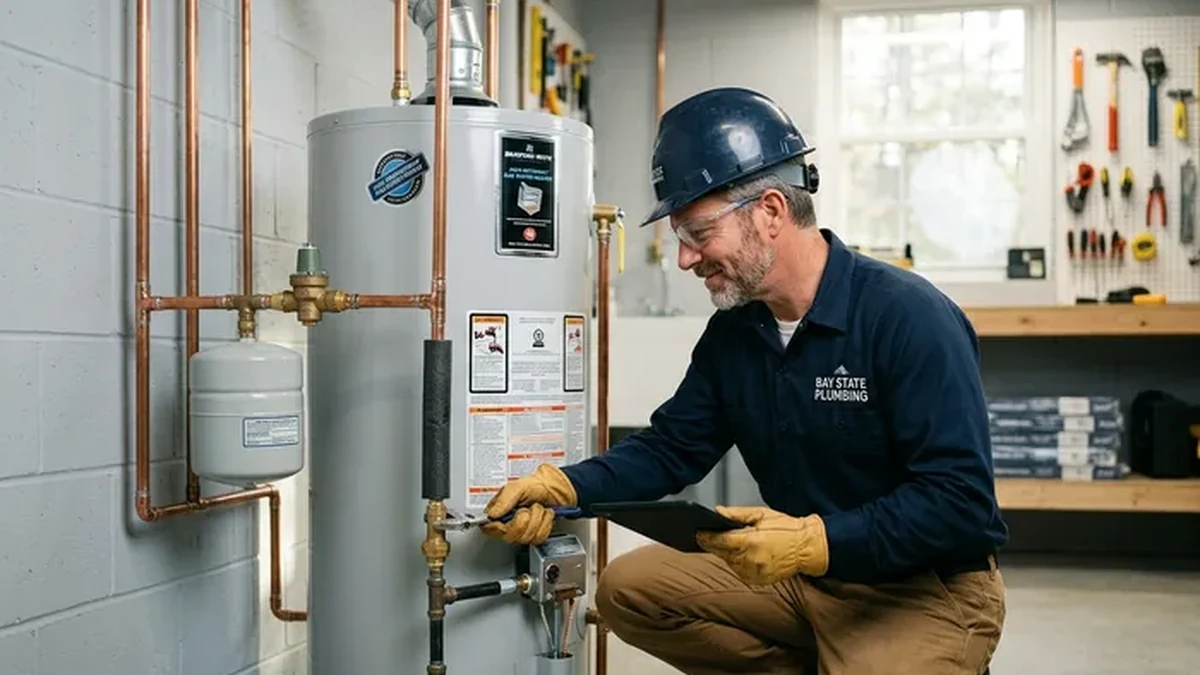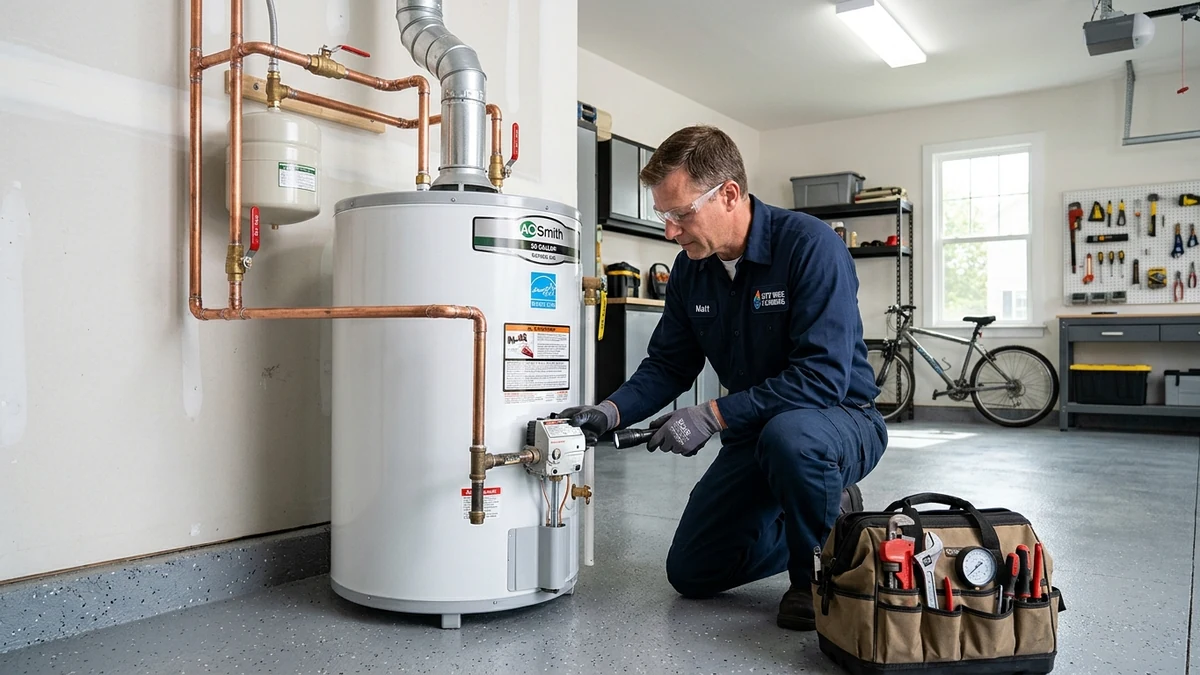
A tankless water heater should be professionally serviced once every 12 months in Long Beach, California. Because Long Beach municipal water has moderate to severe water hardness (12 to 16 grains per gallon), annual chemical descaling is necessary to dissolve calcium carbonate crust inside the narrow copper heat exchanger. Annual service also includes cleaning the cold water inlet screen, testing flame sensors, inspecting intake and exhaust flues, flushing condensate traps, and verifying manifold gas pressures.
- Why Annual Service Is Non-Negotiable in Coastal Southern California
- Long Beach Water Hardness: The 12 to 16 GPG Challenge
- The Recommended 12-Month Maintenance Schedule
- What Happens When You Skip Annual Tankless Service
- DIY Homeowner Maintenance vs. Certified Professional Tune-Ups
- Preserving Your 15-Year Manufacturer Warranty
- Frequently Asked Questions
Why Annual Service Is Non-Negotiable in Coastal Southern California
Unlike traditional tank water heaters that can quietly sit uninspected in a garage for years, an on-demand tankless water heater is a high-performance, precision-engineered machine. When you open a hot water tap, water rushes through micro-channel copper or stainless steel tubing exposed to 199,000 BTUs of intense natural gas combustion.
To sustain peak Uniform Energy Factor (UEF) efficiency ratings, maintain quiet whisper-level operation, and achieve their full 20-year design life, tankless manufacturers (including Rinnai, Navien, Noritz, and Rheem) universally mandate a comprehensive maintenance inspection every 12 months.
Long Beach Water Hardness: The 12 to 16 GPG Challenge
The primary factor driving the 12-month maintenance requirement in Long Beach is local water chemistry. Long Beach Water Department data indicates that municipal water contains between 200 and 280 parts per million (PPM) of total dissolved solids, translating to 12 to 16 grains per gallon (GPG) of water hardness.
When hard water is heated above 120°F, dissolved calcium and magnesium ions instantly precipitate out of solution, forming rock-hard calcite scale on the interior walls of the heat exchanger tubes. In homes without a whole-house water softener, this scale accumulates rapidly, requiring yearly chemical circulation to dissolve.
The Recommended 12-Month Maintenance Schedule
| Maintenance Frequency | Service Component | Description & Purpose |
|---|---|---|
| Every 3 to 6 Months | Cold Water Inlet Filter Screen | Rinse mesh filter to remove sediment, rust flakes, and pipe debris |
| Every 6 Months | Air Intake Grille & Coils | Inspect exterior termination hoods for lint, leaves, and cobwebs |
| Every 12 Months | Heat Exchanger Descaling Flush | Circulate food-grade virgin descaler through isolation valves for 60–90 min |
| Every 12 Months | Flame Rectification Sensor & Igniter | Clean oxide buildup off the flame rod and inspect spark gap |
| Every 12 Months | Condensate Trap & Neutralizer | Flush internal condensate trap and replenish calcium carbonate media |
| Every 24 Months | Gas Pressure & Combustion Analysis | Verify dynamic gas manifold pressure and check draft sensor calibrations |
What Happens When You Skip Annual Tankless Service
Neglecting annual maintenance leads to a predictable sequence of operational degradation:
- Month 12–18: Mineral scale insulates heat exchanger tubes. The unit consumes 10% to 15% more natural gas to heat the same volume of water.
- Month 18–24: Water flow becomes restricted. Internal temperatures spike, triggering loud 'kettle-boiling' rumbling sounds and intermittent Code LC / 00 scale error lockouts.
- Month 24–36: Excessive localized heat causes severe thermal stress, resulting in micro-fractures and pinhole leaks in the primary heat exchanger, destroying the unit.
DIY Homeowner Maintenance vs. Certified Professional Tune-Ups
While homeowners can easily rinse the cold water inlet screen every few months, a comprehensive annual tune-up requires specialized commercial tools and chemical handling:
Professional Equipment Protocol
Certified technicians use 1/6-HP submersible utility pumps, reinforced washing machine hoses, and concentrated food-grade phosphoric or citric acid solutions. They circulate descaler through dedicated brass isolation service valves while monitoring return fluid coloration and pH levels, ensuring 100% of scale is dissolved without corroding internal copper and rubber seals.
Preserving Your 15-Year Manufacturer Warranty
Every major tankless manufacturer (including Navien, Rinnai, Noritz, and Takagi) includes a specific hard-water maintenance clause in their warranty fine print: failures directly caused by mineral scale accumulation or lack of documented periodic descaling are explicitly excluded from warranty coverage.
Retaining service receipts from licensed plumbing technicians documenting annual descaling flushes provides vital proof of proper care, ensuring that if an internal component fails during the 10 to 15-year warranty period, replacement parts and labor claims will be honored without dispute.
Frequently Asked Questions
How much does professional tankless water heater maintenance cost in Long Beach?
A comprehensive annual tankless maintenance tune-up and chemical descaling flush typically ranges from $180 to $280 in Long Beach, including all equipment, virgin descaling chemical solution, and multi-point safety inspections.
Can I use grocery store vinegar to descale my tankless water heater?
Yes, 3 to 4 gallons of undiluted white food-grade vinegar can be used. However, professional plumbers generally use concentrated food-grade citric or phosphoric acid solutions that dissolve heavy calcite scale up to 3 times faster and more thoroughly than mild vinegar.
How long does a professional tankless maintenance service call take?
A full maintenance appointment typically takes 75 to 90 minutes. The chemical descaling solution must circulate through the heat exchanger for a minimum of 45 to 60 minutes to completely dissolve mineral deposits.
Need Help With Your Water Heater?
Whether you are dealing with hot water loss, diagnosing a strange noise, or planning an energy-efficient upgrade, our certified local plumbing partners across Long Beach, CA are on standby for prompt telephone dispatch.