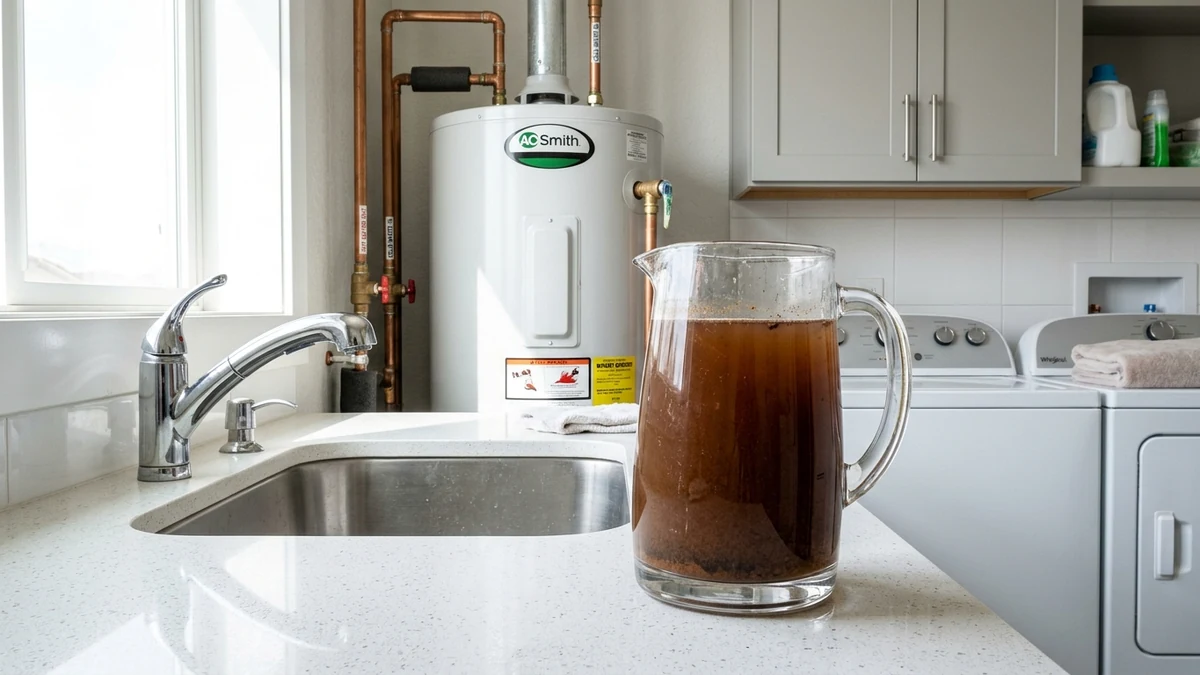
Rusty or brown hot water from your taps indicates either an exhausted sacrificial anode rod that has allowed internal tank corrosion to begin, or oxidation within aging galvanized iron water distribution pipes. If brown water appears ONLY when running the hot water tap, the water heater is the direct source. If brown water flows from both hot and cold taps, municipal water main flushing or municipal supply lines are the likely cause.
The Hot vs. Cold Tap Isolation Test
Discovering reddish-brown, tea-colored, or metallic-smelling water filling your bathtub or kitchen sink is an alarming experience. Before assuming your water heater has ruptured, you should perform a simple isolation test that pinpoint whether the contamination originates inside your water heater or elsewhere in the plumbing system:
- Test the Cold Tap First: Turn on a cold-water faucet in your bathroom and let it run for 60 seconds into a clear glass. If the cold water runs crystal clear, your incoming municipal water supply and cold distribution pipes are clean.
- Test the Hot Tap Next: Turn on the hot water tap at the same fixture and run it for 60 seconds into a second clear glass. If the water runs cloudy, yellow, or rusty brown, the oxidation is originating directly within your water heater or dedicated hot distribution loop.
- Both Taps Rusty: If both hot and cold water run brown, the source is likely municipal line maintenance by the Long Beach Water Department, a neighborhood water main break, or extensive corrosion throughout older galvanized steel piping across your entire property.
The Sacrificial Anode Rod & Tank Chemistry
Every standard glass-lined steel water heater features a vital component called the sacrificial anode rod. Made of magnesium, aluminum, or zinc wrapped around a steel core wire, this rod hangs suspended inside the tank.
Through galvanic electrolysis, the anode rod corrodes intentionally to protect the surrounding steel tank. Because magnesium and aluminum are electrochemically more active than steel, corrosive ions in the water attack the anode rod first. As long as sufficient anode metal remains, the steel tank shell remains untouched.
However, sacrificial anode rods have a finite lifespan—typically 3 to 5 years in Southern California's mineral-rich water. Once the sacrificial metal is completely consumed down to its bare wire, corrosive minerals immediately begin eating the steel tank cylinder. The rusty flakes and iron oxide dissolve into your heated water, creating brown discolored water.
Galvanized Supply Lines vs. Tank Breakdown
Many classic mid-century homes in Long Beach neighborhoods like Bixby Knolls, Belmont Shore, and California Heights were plumbed with galvanized iron water pipes. Over decades, the internal zinc coating on galvanized pipes flakes away, causing severe internal rust buildup.
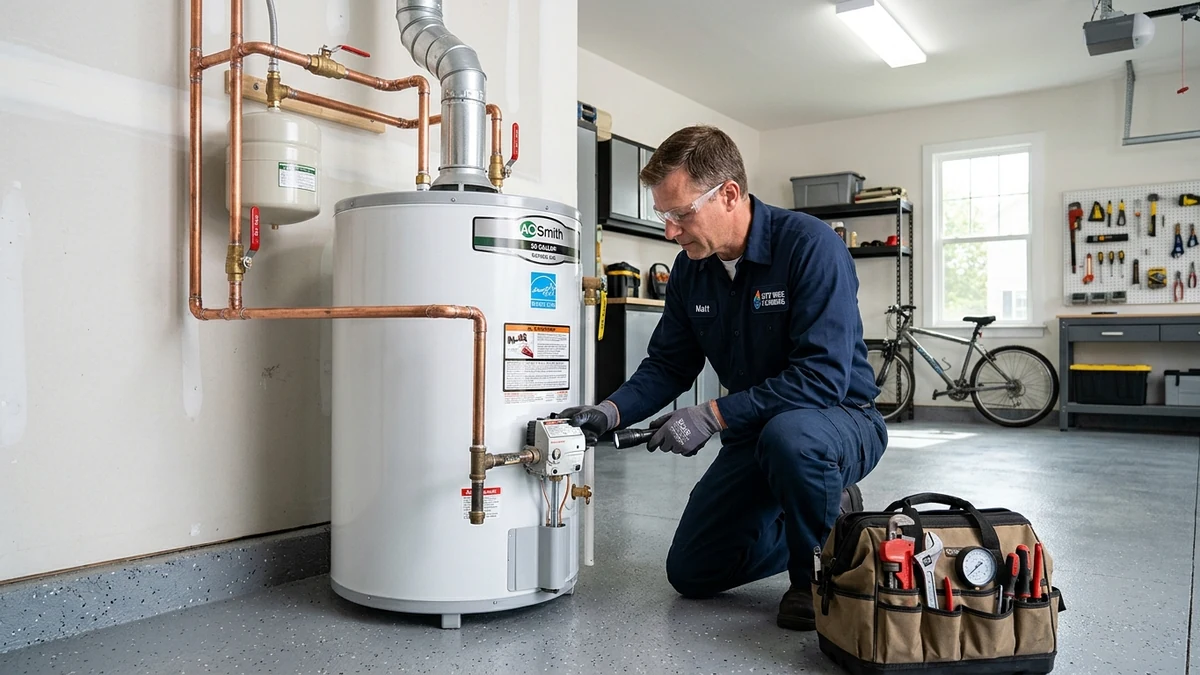
Hot water accelerates oxidation significantly compared to cold water. Consequently, hot supply pipes corrode much faster than cold pipes. A licensed plumbing technician can inspect the dielectic nipples connecting your water heater to the distribution lines to confirm whether pipe oxidation or tank corrosion is the true source.
Is Rusty Water Dangerous to Use?
While iron oxide is not classified as an acute toxic poison by health authorities, bathing in or drinking rusty hot water is strongly discouraged:
- Skin Irritation: High mineral and iron concentrations can cause itching, dryness, and skin irritation, particularly for children and individuals with eczema.
- Staining: Rusty water permanently stains porcelain sinks, acrylic tubs, tile grout, and laundered white fabrics.
- Fixture Clogging: Loose rust flakes travel through your plumbing lines, jamming shower anti-scald cartridges, faucet aerators, and dishwasher solenoid valves.
Corrosion Assessment Checklist
Review this assessment checklist to determine how urgently your rusty water requires professional evaluation:
| Observation | Corrosion Severity | Next Step |
|---|---|---|
| Water clears up after running tap for 60 seconds | Minor pipe rust accumulation during quiet hours | Flush tank; inspect galvanized nipples |
| Water remains persistently tea-colored or reddish | Anode completely exhausted; active tank corrosion | Schedule professional anode & tank inspection |
| Rust flakes visible alongside moisture around tank base | Structural tank wall compromise / imminent rupture | Urgent shutoff; contact emergency repair |
Coastal Moisture & Long Beach Salt Air
Long Beach's proximity to the Pacific Ocean creates unique atmospheric corrosion challenges. Salt spray and high coastal humidity accelerate external rust on water heaters located in unconditioned spaces like garages or exterior utility closets. If you observe rust on the outside fittings, flue collar, or bottom rim, moisture from the marine layer is likely compounding internal wear.
Corrective Steps: Anode Replacement vs. New Tank
If caught early—while the tank cylinder itself has not yet suffered deep structural pitting—installing a fresh sacrificial anode rod (especially an aluminum/zinc combination rod) and performing a complete chemical sediment flush will clear the water and extend equipment life by several years.
However, if the water heater is more than 8 to 10 years old and the internal glass lining has cracked, rust signifies that the steel tank wall is actively thinning. In this scenario, anode replacement cannot undo structural decay, and planning a water heater replacement in Long Beach is the only reliable way to prevent catastrophic flooding.
Frequently Asked Questions
Can I drink or shower in rusty hot water?
Drinking rusty water is not recommended due to metallic taste and potential contaminants. While showering will not cause severe poisoning, it can cause skin dryness, scalp irritation, and stain your bathroom fixtures.
How often should a water heater anode rod be inspected in Long Beach?
Due to Long Beach's moderate-to-hard water chemistry, anode rods should be inspected every 2 to 3 years and replaced as soon as more than 50% of the sacrificial metal has eroded.
Will flushing my water heater remove rusty water?
Flushing can remove loose sediment and rust particles from the bottom of the tank. However, if the sacrificial anode is depleted and the tank walls are actively rusting, the discoloration will return within days until the underlying issue is resolved.
Need Help With Your Water Heater?
Whether you are dealing with hot water loss, diagnosing a strange noise, or planning an energy-efficient upgrade, our certified local plumbing partners across Long Beach, CA are on standby for prompt telephone dispatch.