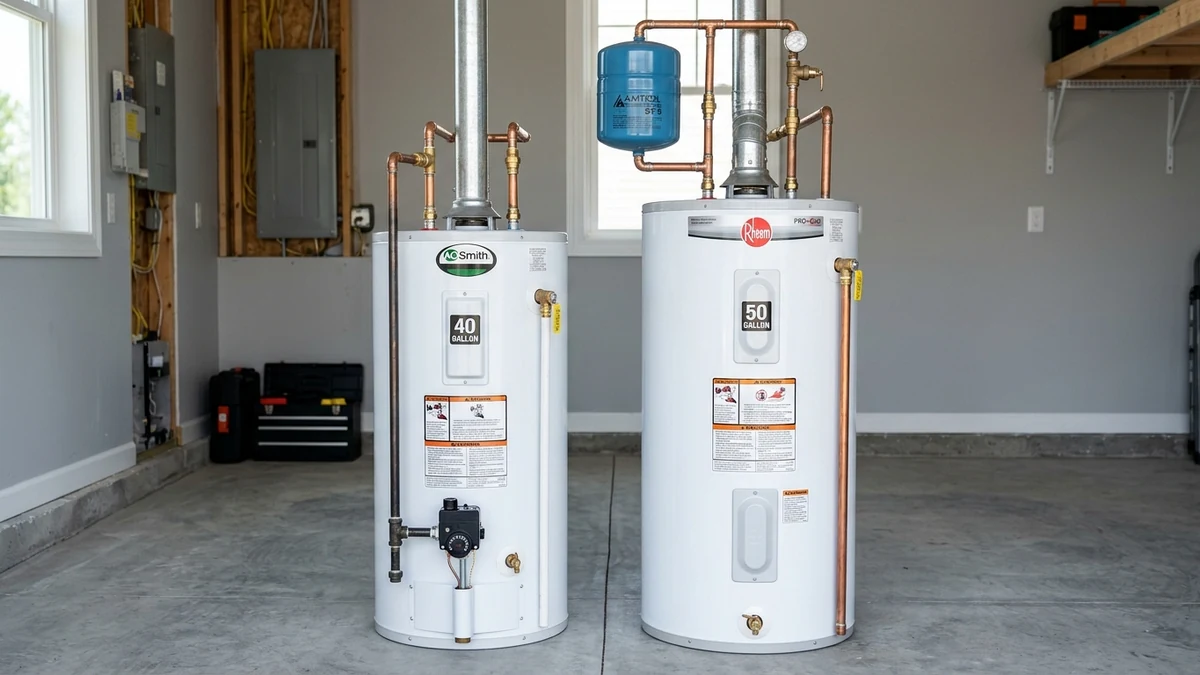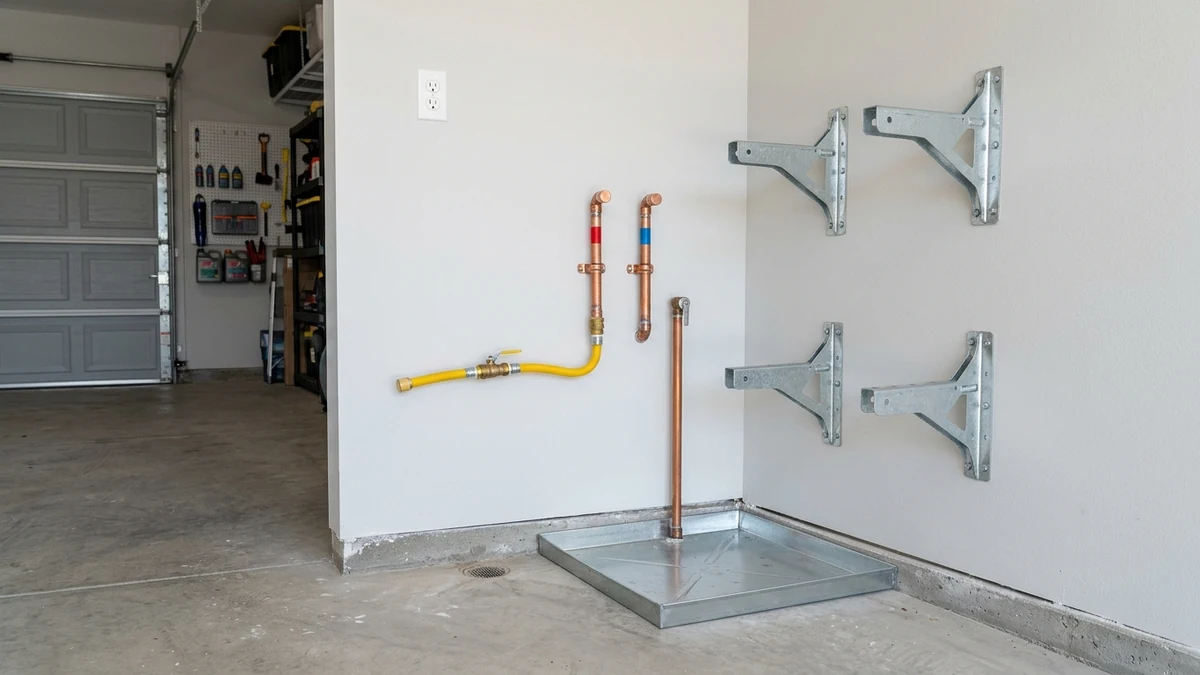
The best location to install a water heater depends on fuel type and property layout. Garages are the most common and versatile location in Long Beach, offering easy access, drainage, and ventilation. Interior closets save space but require strict combustion air louvers and safety drain pans. Dedicated exterior utility closets are popular in coastal bungalows but require weatherproof enclosures and earthquake bracing.
Garage Water Heater Placement: Benefits & Codes
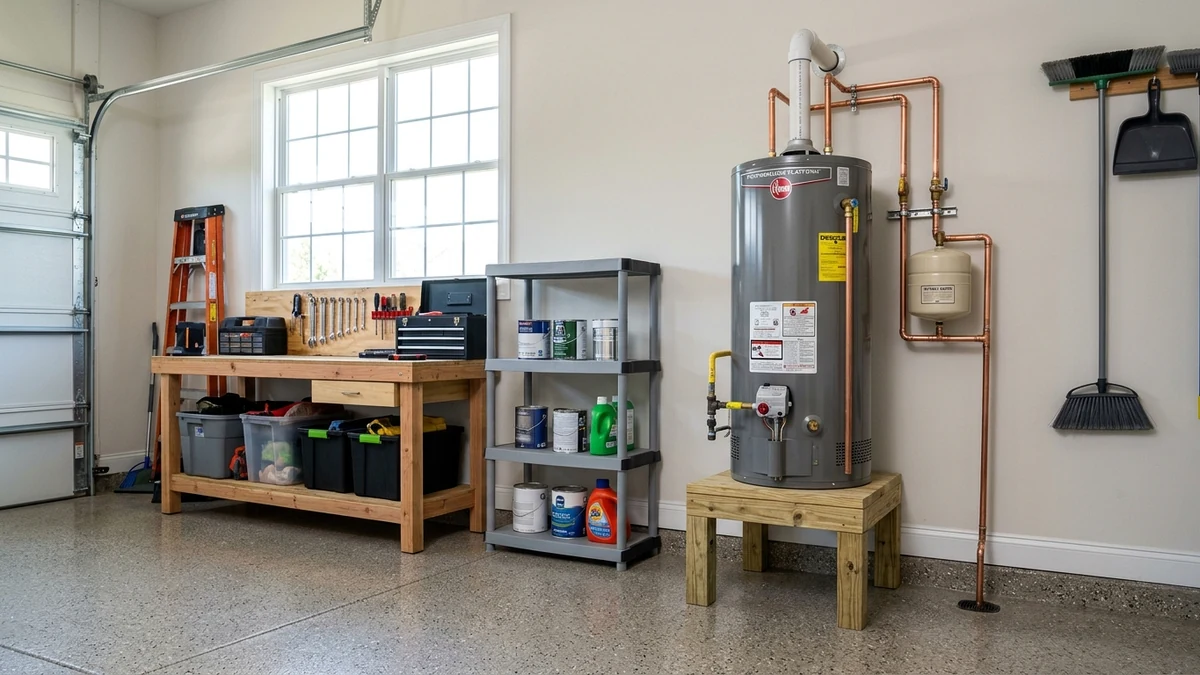
In Long Beach single-family residences, the attached or detached garage is the overwhelming favorite for water heater placement. Installing a water heater in a garage provides several distinct advantages:
- Spill Safety: A minor leak or catastrophic tank rupture discharges onto a concrete slab rather than hardwood floors, carpets, or subflooring.
- Equipment Sizing Flexibility: Garages easily accommodate wider 50-gallon tanks, high-efficiency hybrid heat pump water heaters, or exterior expansion tanks without stealing indoor closet space.
- Service Accessibility: Technicians can access, inspect, and service the unit with minimal disruption to your household living areas.
However, garage installations must comply with the California Plumbing Code's 18-inch ignition source elevation rule: if a gas water heater has an open pilot or burner that is not Flammable Vapor Ignition Resistant (FVIR), its combustion chamber must sit at least 18 inches above the garage floor to avoid igniting heavier-than-air gasoline vapors.
Interior Closet Placement: Safety & Airflow
In Long Beach condominiums, townhomes, and compact mid-century homes without garages, water heaters are often housed in dedicated interior utility closets. While interior placement saves space and delivers hot water rapidly to nearby fixtures, it introduces strict safety considerations:
- Combustion Air Louvers: Gas water heaters require substantial fresh air to support complete combustion. Confined interior closets must feature upper and lower louvers communicating with an unconfined space or ducting to the outdoors to prevent dangerous carbon monoxide generation.
- Mandatory Drain Pans: An interior water heater MUST sit inside a watertight drain pan with a 3/4-inch PVC drain pipe plumbed to the exterior to prevent disastrous domestic flooding if the tank fails.
- Direct Vent / Sealed Combustion: For closet installations inside living quarters, direct-vent gas units that draw 100% of combustion air from outdoors and vent exhaust directly through an exterior wall are strongly recommended.
Exterior Utility Closets & Coastal Enclosures
Many historic bungalows in Belmont Heights, Naples, and the East Village feature water heaters installed in outdoor alcoves or exterior weather sheds. While this eliminates all indoor footprint and noise, coastal marine air accelerates exterior jacket rust. When replacing an outdoor unit in Long Beach, an outdoor-rated stainless steel tankless unit or a weather-tight insulated enclosure is necessary to protect against salt fog and thermal loss.
Location Comparison Matrix
Compare the practical trade-offs of each installation location:
| Location | Key Advantages | Primary Code Requirements |
|---|---|---|
| Garage | Concrete floor, easy ventilation, zero indoor noise | 18" platform (if non-FVIR), vehicle impact bollard, seismic strapping |
| Interior Closet | Short plumbing runs, protected from coastal elements | Watertight drain pan piped to exterior, combustion air louvers |
| Exterior Alcove | Zero interior footprint, no indoor combustion hazards | Weatherproof enclosure, freeze protection, coastal corrosion coating |
Combustion Air & Ventilation Requirements
Gas appliances consume oxygen rapidly. The California Mechanical Code specifies that an unconfined space must provide at least 50 cubic feet of room volume per 1,000 BTU/hr of total appliance input. If your water heater shares a closet with a gas furnace, dedicated combustion air ducts to the attic or crawlspace are required by city building inspectors.
Water Damage Mitigation by Location
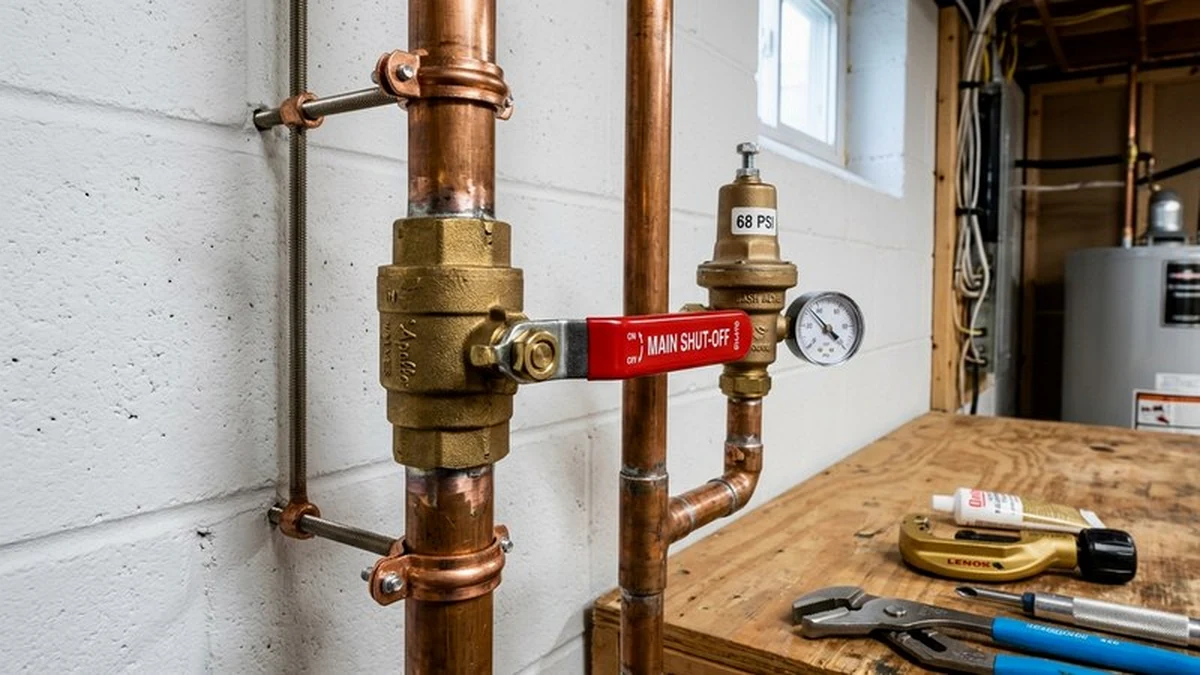
Regardless of where your water heater is installed, proactive flood mitigation devices protect your property. Automatic water shutoff valves with moisture sensors can detect water pooling around the tank base and cut the cold supply within 5 seconds, preventing tens of thousands of dollars in water damage.
Selecting the Ideal Spot for Your Long Beach Home
If you are remodeling or relocating your water heater, consult with our local installation specialists. We evaluate structural walls, gas pipe sizing, electrical panel proximity, and city venting codes to determine the safest, most efficient location for your new water heating system.
Frequently Asked Questions
Can a water heater be installed in a bedroom closet in California?
No. Under the California Plumbing Code, gas water heaters with atmospheric burners cannot be installed in bedrooms, bathrooms, or clothes closets unless they are 100% direct-vent sealed combustion units drawing air entirely from outdoors.
Why do garage water heaters have to be elevated 18 inches?
Gasoline vapors from cars, lawnmowers, and chemical storage are heavier than air and pool along the garage floor. Elevating ignition sources 18 inches above the floor prevents flammable vapors from reaching the burner pilot.
Is it better to relocate a water heater to the garage during replacement?
If you currently have an interior closet water heater, relocating it to the garage can free up interior storage space and eliminate domestic flood risk, provided gas and water piping can be routed affordably.
Need Help With Your Water Heater?
Whether you are dealing with hot water loss, diagnosing a strange noise, or planning an energy-efficient upgrade, our certified local plumbing partners across Long Beach, CA are on standby for prompt telephone dispatch.