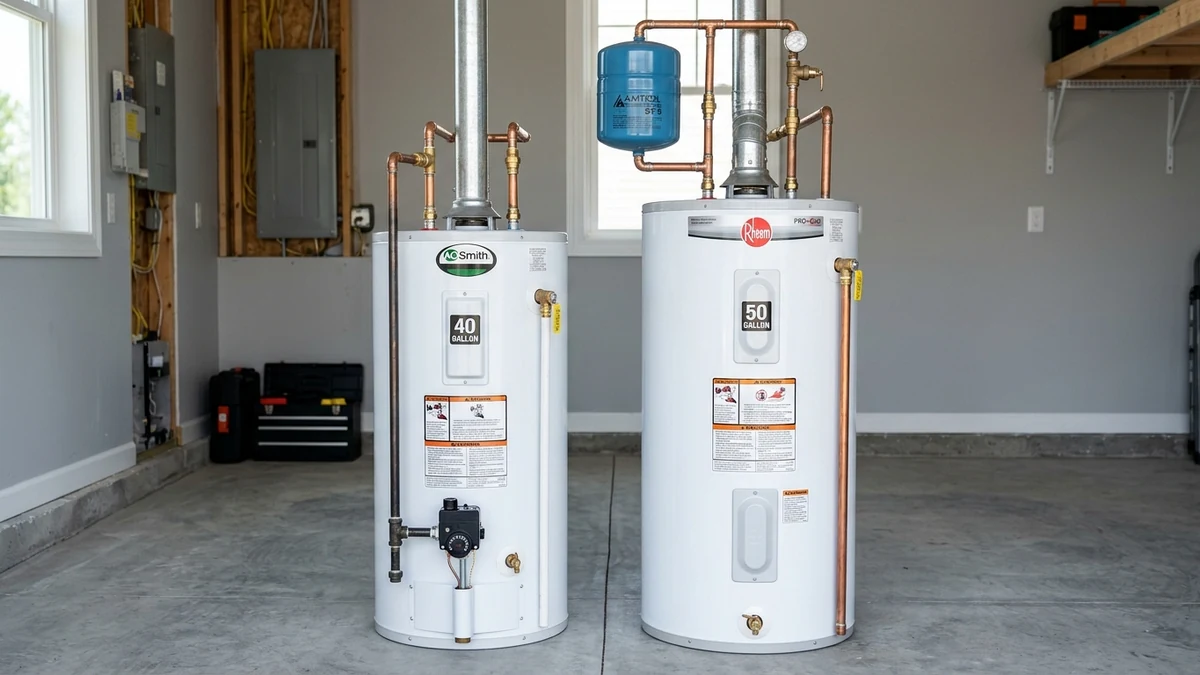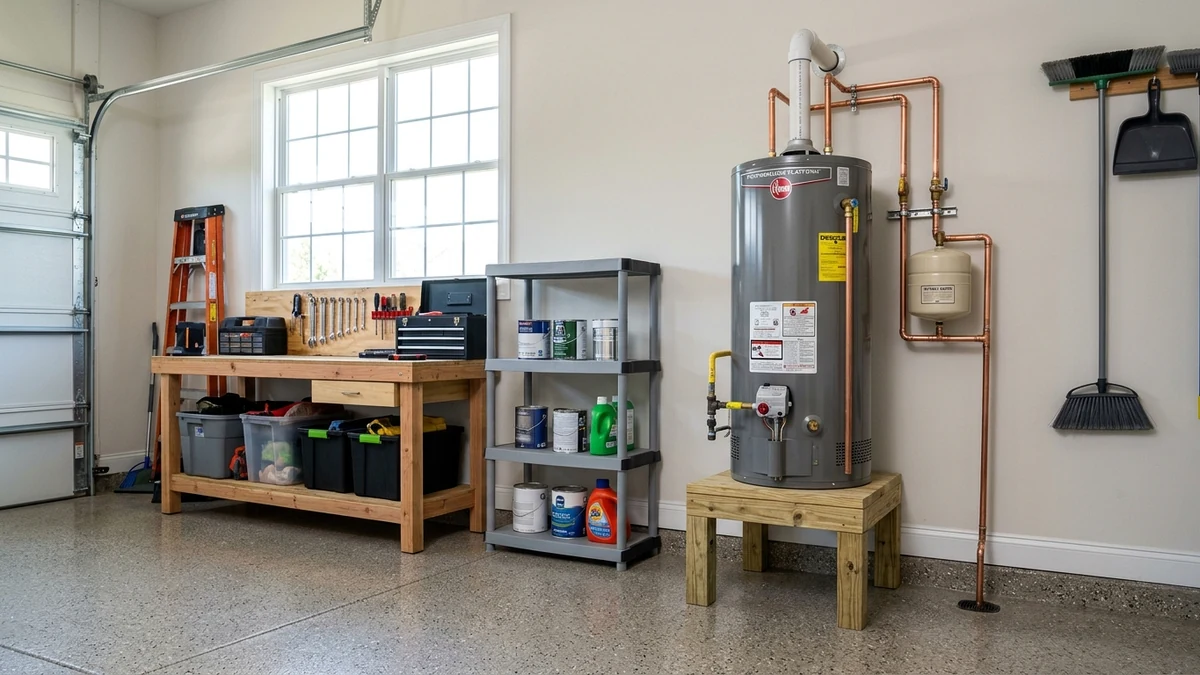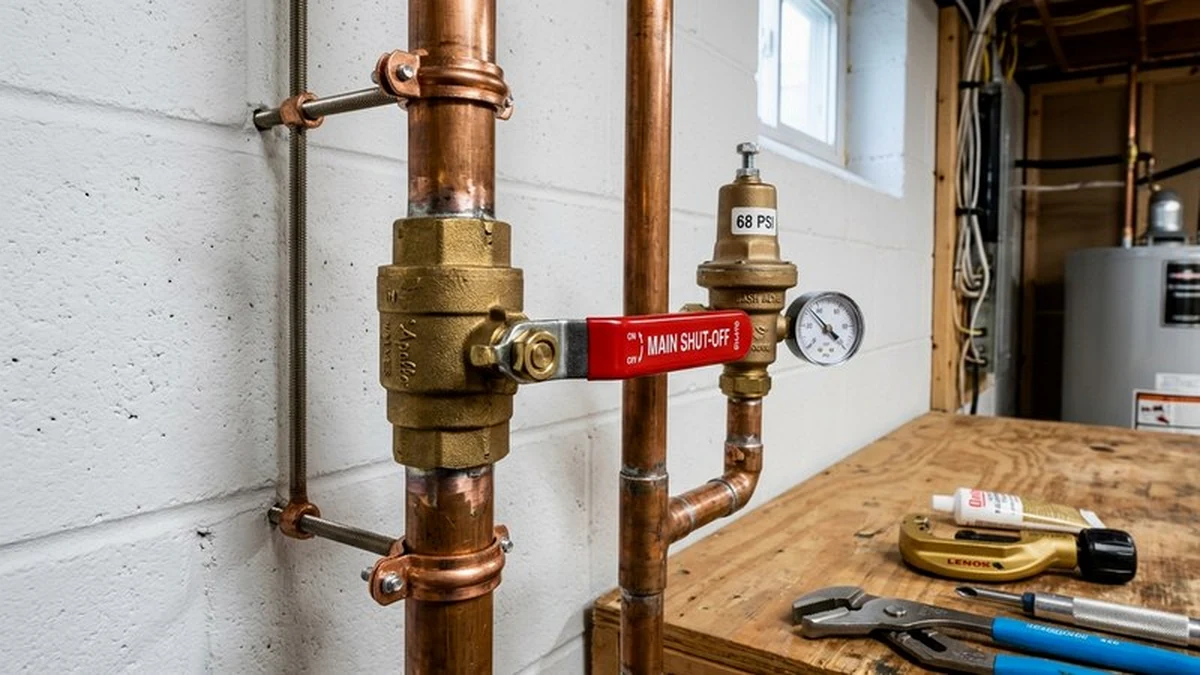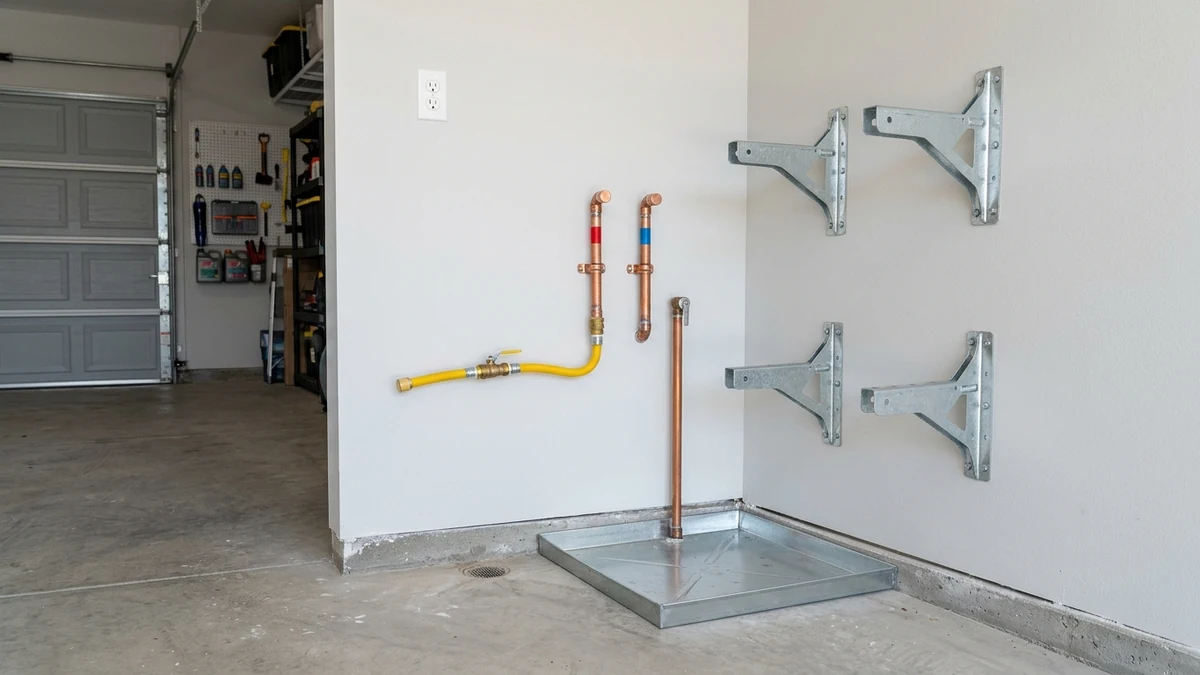
Key preparation steps before a new water heater installation include clearing a 3-foot perimeter around the installation closet or garage platform, verifying that the main water shutoff valve operates smoothly, checking electrical service panel capacity or gas supply line shutoffs, and ensuring seismic strapping wall studs are structurally accessible to comply with Long Beach building safety codes.
Physical Clearance & Pathway Access
A residential water heater replacement involves transporting heavy, bulky equipment into and out of your home. A drained 50-gallon water heater coated with sediment can weigh in excess of 160 pounds, while a crated replacement unit measures nearly five feet tall and over two feet wide.
To ensure a smooth, safe installation day, prepare the physical access pathway:
- Clear Hallways and Stairs: Move laundry baskets, storage bins, rugs, and decorative furniture away from the path between the exterior entry and the installation location.
- Clear the Immediate Workspace: Ensure technicians have at least 3 feet of unobstructed working space around the existing tank. In garages, move vehicles, bicycles, and lawn equipment outside.
- Secure Pets: Ensure pets are safely sequestered in a quiet room, as entry doors will remain propped open during equipment transport.
Water, Gas & Electrical Shutoff Readiness
Before technicians can disconnect your old water heater, domestic utilities must be safely isolated. Homeowners should verify the location and functionality of three primary shutoffs:
Main Water Meter Shutoff: The technician will need to shut off the cold water supply to the entire home while cutting into existing copper pipes. Verify that your main house shutoff valve (near the front hose bib or water meter box) turns smoothly without sticking.
Gas Shutoff Valve: For gas water heaters, the dedicated gas ball valve located on the rigid iron supply pipe must be accessible. If the valve is corroded or frozen open, notify your technician in advance.
Electrical Panel: For electric or heat pump water heaters, ensure the main breaker panel is unlocked and accessible so the 240V dedicated circuit breaker can be locked out safely.
California Seismic Earthquake Strapping Prep
Under the California Plumbing Code (Health and Safety Code Section 19211), all residential water heaters installed in the state must be securely braced, strapped, or anchored to resist horizontal displacement caused by earthquake ground shaking.
Compliance requires two heavy-duty steel seismic straps: one in the upper one-third of the tank and one in the lower one-third (maintaining at least 4 inches of clearance above the gas control valve). Ensure the drywall behind the water heater is free of hanging shelves or obstructions so lag screws can anchor directly into solid wall studs.
Drain Pans & T&P Discharge Routing
If your water heater is installed inside a living space closet, attic, or multi-story structure where tank leakage could cause structural ceiling damage, code requires installing a corrosion-resistant galvanized steel or composite drain pan beneath the unit. The pan must connect to a dedicated drain pipe routed to an approved exterior termination point or floor drain.
Homeowner Pre-Installation Checklist
Follow this printable pre-installation checklist prior to your technician's arrival:
| Preparation Task | Why It Matters | Status |
|---|---|---|
| Clear 3-foot workspace around tank | Allows safe positioning of heavy dolly and tools | Required |
| Test main domestic water shutoff | Prevents flooding during plumbing line cuts | Required |
| Clear exterior pathways and garage entry | Prevents accidental wall gouges or tripping hazards | Required |
| Ensure wall studs behind tank are clear | Essential for mandatory Title 24 seismic double strapping | Required |
City of Long Beach Permits & Inspections
The City of Long Beach Development Services Department mandates building permits for all residential water heater replacements. This municipal oversight ensures that critical combustion ventilation, seismic bracing, thermal expansion tanks, and gas flex line connections comply fully with current life-safety standards. Our referral partners manage all municipal permit filings on your behalf.
What to Expect on Installation Day
A standard residential water heater replacement typically takes 3 to 4 hours from start to finish. The technician will drain the old unit, remove it from the premises, install code-compliant flex connectors and seismic bracing, fill and pressure-test the new tank, bleed air from the distribution pipes, and verify proper burner ignition and venting draft before leaving your home spotless.
Frequently Asked Questions
How long will my water be shut off during water heater installation?
Water to your home is typically turned off for only 45 to 90 minutes while the technician cuts and solders the cold and hot water supply connections. Once the new isolation ball valve is in place, main water can be restored while the installation finishes.
Do I need a permit to replace a water heater in Long Beach, CA?
Yes. The City of Long Beach requires a plumbing permit for all water heater installations to ensure seismic strapping, gas shutoffs, and carbon monoxide ventilation meet safety regulations.
Will the installation team remove and haul away my old water heater?
Yes. Professional installation includes disconnecting, removing, and recycling your old water heater in an environmentally compliant manner.
Need Help With Your Water Heater?
Whether you are dealing with hot water loss, diagnosing a strange noise, or planning an energy-efficient upgrade, our certified local plumbing partners across Long Beach, CA are on standby for prompt telephone dispatch.