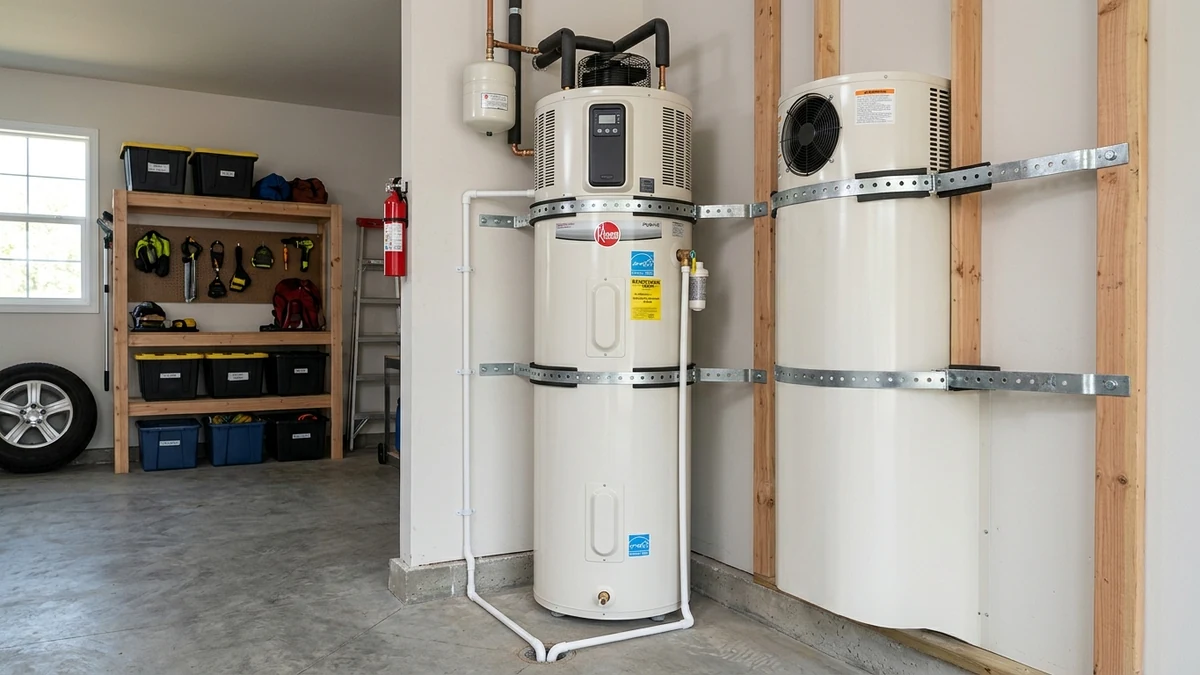
Comparing a hybrid heat pump to a conventional electric water heater reveals substantial differences: while conventional electric tanks have a lower initial equipment cost ($700–$1,200 vs. $1,800–$3,200), hybrid heat pumps cost roughly $250 to $350 per year to operate compared to $950 to $1,150 for conventional tanks. Over a 10-year lifespan, a hybrid heat pump saves between $6,000 and $8,000 in Southern California electricity bills, fully recovering its upfront investment within 2 to 4 years.
- Upfront Costs: Equipment, Labor & Electrical Prep
- Energy Efficiency: 0.93 UEF vs. 3.8+ UEF
- Southern California Annual Electricity Operating Costs
- Hot Water Recovery Rates: Gallons Per Hour
- Lifespan, Durability & Warranty Coverage
- The Verdict: Which System Fits Your Long Beach Home?
- Frequently Asked Questions
Upfront Costs: Equipment, Labor & Electrical Prep
When evaluating water heater replacements, property owners must weigh initial purchase and installation expenses against long-term operational costs:
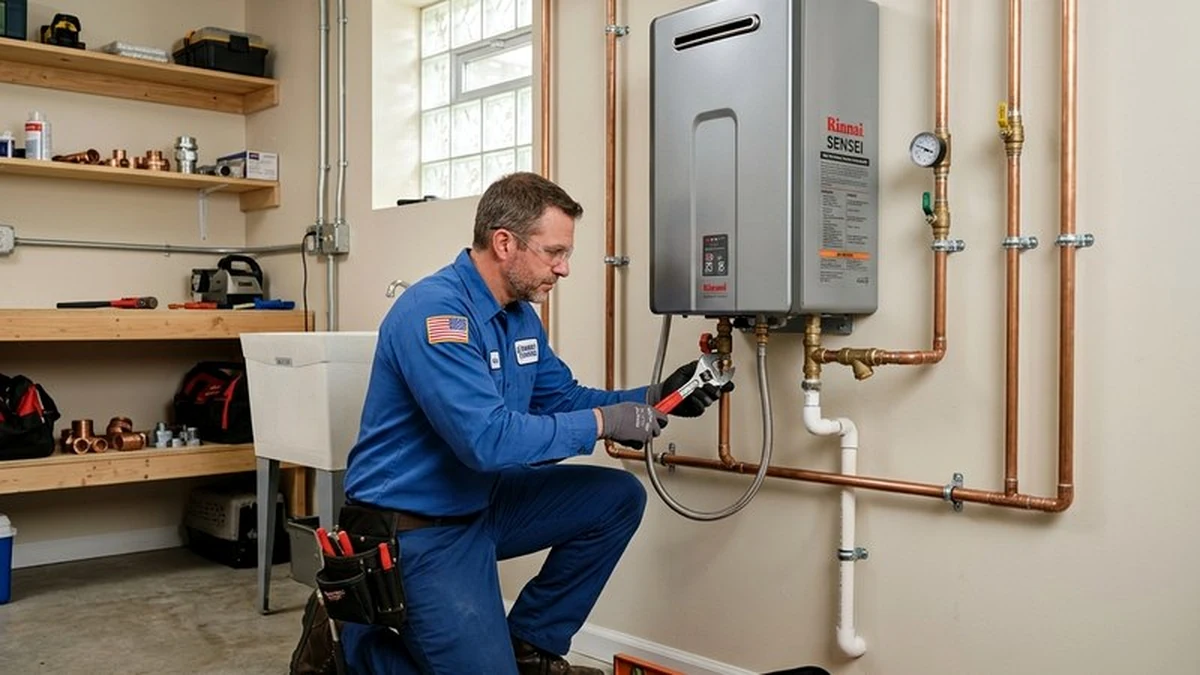
- Conventional Electric Water Heater: Retail equipment costs range from $650 to $1,100 for a quality 50-gallon tank. Installation is straightforward and typically completed in 2 to 4 hours, resulting in an all-inclusive installed investment between $1,400 and $2,200.
- Hybrid Heat Pump Water Heater: Equipment costs range from $1,800 to $3,200 due to the integrated compressor, computerized controls, and high-efficiency coils. Specialized installation requiring condensate drain plumbing and ducting brings typical installed investments to $2,800 to $4,500.
However, lucrative federal tax credits under Section 25C (up to $2,000) and regional California clean energy rebates often reduce the net out-of-pocket difference to less than $500 to $800.
Energy Efficiency: 0.93 UEF vs. 3.8+ UEF
Uniform Energy Factor (UEF) is the standardized metric established by the Department of Energy to quantify water heating efficiency:
Conventional electric water heaters achieve UEF ratings between 0.92 and 0.95. For every 100 units of electrical energy sent to the elements, roughly 92 to 95 units become hot water, while the remainder is lost through tank wall standby radiation. While technically efficient, resistance heating remains an inherently power-hungry conversion.
In contrast, Tier 4 hybrid heat pumps deliver UEF ratings between 3.45 and 4.02. Because the system primarily moves existing heat rather than creating it from electricity, it delivers roughly 350% to 400% effective thermodynamic efficiency—slashing electrical draw by nearly three-quarters.
Southern California Annual Electricity Operating Costs
Residential electricity rates under Southern California Edison (SCE) tier structures typically range from $0.28 to over $0.42 per kWh during peak Time-Of-Use (TOU) windows. Under these rates, the operating cost divide is dramatic:
| Criteria | Conventional Electric Tank | Hybrid Heat Pump Water Heater | 10-Year Homeowner Advantage |
|---|---|---|---|
| Avg. Annual kWh Draw | 4,100 kWh | 1,050 kWh | 30,500 kWh Saved |
| Est. Monthly Electric Bill | $85 – $115 / month | $22 – $32 / month | ~$80 / month Cheaper |
| Est. Annual Operating Cost | $1,050 – $1,350 | $260 – $380 | $790 – $970 Annual Savings |
| 10-Year Operational Total | $10,500 – $13,500 | $2,600 – $3,800 | $7,900 – $9,700 Cumulative Savings |
Hot Water Recovery Rates: Gallons Per Hour
First Hour Rating (FHR) measures the volume of hot water a system can supply starting with a fully heated tank. Conventional electric tanks have a first hour rating of 55 to 65 gallons, recovering approximately 20 to 22 gallons per hour at a 90°F temperature rise.
Hybrid heat pumps operating in pure heat pump mode recover water slightly more gradually—delivering 12 to 16 gallons per hour. However, when set to Hybrid Mode, the smart onboard computer monitors hot water depletion. If multiple showers run back-to-back, the system automatically energizes upper and lower electric resistance elements, achieving an FHR of 65 to 75 gallons, matching or exceeding conventional electric performance.
Lifespan, Durability & Warranty Coverage
Standard electric resistance tanks typically last 8 to 12 years in Long Beach municipal water conditions, backed by standard 6-year manufacturer warranties. Sacrificial anode rods degrade over 3 to 5 years, requiring regular replacement to protect the glass lining.
Hybrid heat pumps feature premium commercial-grade components, heavier tank insulation, and advanced electronic cathodic protection systems. Most major brands (Rheem ProTerra, Bradford White AeroTherm, A.O. Smith Voltex) carry 10-year comprehensive tank and parts warranties, with anticipated operational lifespans reaching 13 to 16 years when properly maintained.
The Verdict: Which System Fits Your Long Beach Home?
While hybrid heat pumps represent the clear future of residential hot water, the right choice depends on your property layout:
- Choose a Hybrid Heat Pump If: Your unit is located in a garage, basement, or large ventilated utility space; your home is transitioning to solar power or clean electrification; and you want to lock in thousands of dollars in cumulative utility savings.
- Choose a Conventional Electric Tank If: Space is severely constrained inside a small interior bedroom closet where louvering or ducting is structurally impossible, or if you require an emergency replacement with the absolute lowest immediate upfront outlay.
Frequently Asked Questions
Will a heat pump water heater work with my home solar panels?
Yes! Hybrid heat pumps pair exceptionally well with residential rooftop solar. Because they draw only 400 to 550 watts during compressor heating cycles, your solar array can easily cover 100% of your water heating power during daytime hours.
Can I install a heat pump water heater in a condominium?
Installing in a condo is possible if the utility closet meets the 700+ cubic foot air volume requirement or allows exterior ducting/louvers, and if the HOA permits condensate drain routing.
What is the payback period for a hybrid heat pump in California?
With high Southern California electricity rates and available federal tax credits ($1,000–$2,000) plus local utility rebates, the payback period is typically just 2 to 4 years.
Need Help With Your Water Heater?
Whether you are dealing with hot water loss, diagnosing a strange noise, or planning an energy-efficient upgrade, our certified local plumbing partners across Long Beach, CA are on standby for prompt telephone dispatch.